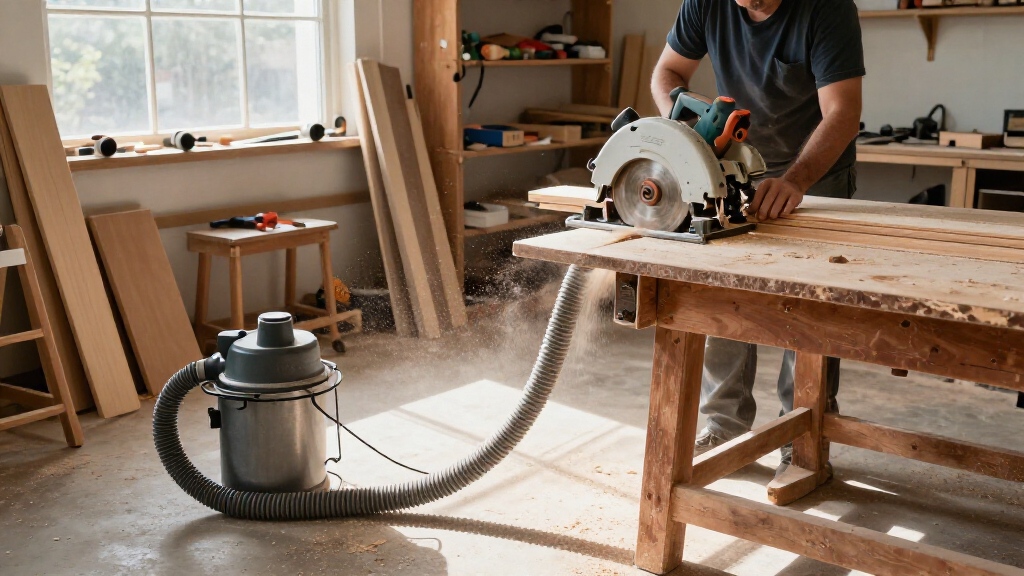

Portable jobsite dust extractors differ most in how they balance mobility, capacity, filtration, and filter maintenance. I’d put the Bosch VAC140AH first for its 14-gallon capacity, HEPA filter, and automatic filter cleaning; the Festool CT 15 is a strong choice for a more compact mobile setup, while the 3M Xtract brings a larger 9-gallon industrial-vac format. The smaller Festool CT SYS favors easy transport over long runtimes between emptying, while the remaining models offer other capacity and feature tradeoffs. The right pick depends on whether you value easy carrying, fewer interruptions, or a filtration and cleaning setup that suits your work. Read on for the full comparison and guidance on matching an extractor to your tools and jobsite.

Get business pricing on tools and workshop supplies
- Business-only prices and quantity discounts
- Tax-exempt purchasing
- Multiple users, one account, clear invoices
Complete the kit



Key Takeaways
- The Bosch VAC140AH leads for sustained jobsite work: its 14-gallon capacity and automatic filter cleaning favor longer sessions, though its size is a poor match for workers prioritizing compact transport.
- The Festool CT SYS puts portability first: its compact format makes it easier to carry and stow than the larger-capacity options, but buyers should accept more frequent emptying.
- The Festool CT 15 and 3M Xtract serve different mobile-work priorities: the CT 15 is the compact-capacity middle ground, while the 3M is a 9-gallon industrial-vac option.
- Filter maintenance separates the workday experience: the Bosch’s automatic cleaning can reduce interruptions, while buyers of other models should check how their filter is cleaned and maintained.
- Capacity labels alone do not determine the best fit: the 8-gallon ECOMAX and Dapper Supply, 12-gallon DYNAVEX, and larger models must also be judged by filtration, mobility, tool connection, and intended material.
| Festool CLEANTEC CT SYS HEPA Dust Extractor |  | Best Compact Extractor | Filtration: Full-unit HEPA certification | Motor power: 1000 W | Voltage: 120 V | VIEW LATEST PRICE | See Our Full Breakdown |
| 3M Xtract Portable Dust Extractor (64256) – 9 Gallon Industrial Vacuum with HEPA Filter |  | Best for Industrial Sanding | Capacity: 9 gallons (35 liters) | Filter type: HEPA Class H | Maximum suction: 102 inches | VIEW LATEST PRICE | See Our Full Breakdown |
| Festool CT 15 HEPA Mobile Dust Extractor |  | Best for Indoor and Outdoor Cleanup | Filtration: HEPA | Capacity: 15 liters (3.96 gallons) | Power source: Corded electric | VIEW LATEST PRICE | See Our Full Breakdown |
| Bosch VAC140AH Portable 14-Gallon Dust Extractor with Auto Filter Clean and HEPA Filter |  | Best Overall for High-Volume Jobsites | Capacity: 14 gallons | Filtration: HEPA; captures 99.97% of particles at 0.3 microns | Maximum airflow: 150 CFM | VIEW LATEST PRICE | See Our Full Breakdown |
| ECOMAX 8-Gallon HEPA Shop Vac and Dust Extractor |  | Best for Mixed Cleanup and Tool Use | Capacity: 8 gallons | Power: 6.5 HP | Voltage and amperage: 120 V, 15 A | VIEW LATEST PRICE | See Our Full Breakdown |
| Dapper Supply 8-Gallon Wet/Dry Dust Extractor with HEPA Filter |  | Best for Wet-and-Dry Versatility | Capacity: 8 gallons | Filter: HEPA | Filter cleaning: Automatic, every 25 seconds | VIEW LATEST PRICE | See Our Full Breakdown |
| DYNAVEX 10-Amp Portable Woodworking Dust Extractor, 12-Gallon |  | Best for High-Capacity Woodworking Cleanup | Tank capacity: 12 gallons | Motor: 1.5 HP | Airflow: 142 CFM | VIEW LATEST PRICE | See Our Full Breakdown |
| portable jobsite dust extractor | Capacity | Filtration | Filter cleaning | Noise level |
|---|---|---|---|---|
| Festool CLEANTEC CT SYS HEPA D | 0.92 gallons | Full-unit HEPA certification | — | 67 dB |
| 3M Xtract Portable Dust Extrac | 9 gallons (35 liters) | — | Automatic, without flow stoppage | 75 dB |
| Festool CT 15 HEPA Mobile Dust | 15 liters (3.96 gallons) | HEPA | AutoClean system | — |
| Bosch VAC140AH Portable 14-Gal | 14 gallons | HEPA; captures 99.97% of particles at 0.3 microns | Automatic cycle every 15 seconds | 65 dB |
| ECOMAX 8-Gallon HEPA Shop Vac | 8 gallons | HEPA | Semi-automatic | 75 dB |
| Dapper Supply 8-Gallon Wet/Dry | 8 gallons | — | Automatic, every 25 seconds | — |
| DYNAVEX 10-Amp Portable Woodwo | — | 0.5-micron HEPA filter | — | — |
More Details on Our Top Picks
Festool CLEANTEC CT SYS HEPA Dust Extractor
The Festool CLEANTEC CT SYS is the portability-first choice here: its 0.92-gallon capacity, shoulder strap, integrated storage, and Systainer compatibility make it easier to carry between rooms or up stairs than the larger Bosch VAC140AH. Full-unit HEPA certification and automatic activation with connected Festool tools suit focused trim, sanding, and punch-list work where fine-dust control matters more than long stretches between emptying. At 67 dB, it is also quieter than the 3M Xtract, though the 3M’s 9-gallon tank is far better for sustained industrial sanding. The tradeoff is clear: this compact canister needs frequent emptying on larger jobs, and its automatic tool activation is specified for connected Festool tools rather than every tool brand.
Pros:- Full-unit HEPA certification for fine-dust collection
- Shoulder strap, hose and cord storage, and Systainer compatibility simplify transport
- Automatic tool activation works with connected Festool tools
- 67 dB operation is quieter than the 3M Xtract and ECOMAX
Cons:- 0.92-gallon capacity means frequent emptying on larger jobs
- Automatic tool activation is specified for connected Festool tools, limiting its appeal for mixed-brand setups
Best for: Festool users doing short sanding, trim, and repair tasks across multiple rooms who need a lightweight, easy-to-carry HEPA extractor.
Not ideal for: Crews handling high-volume cutting or long sanding runs, since the 0.92-gallon container fills much sooner than the Bosch VAC140AH or 3M Xtract.
- Filtration:Full-unit HEPA certification
- Motor power:1000 W
- Voltage:120 V
- Capacity:0.92 gallons
- Noise level:67 dB
- Form factor:Canister
- Tool activation:Automatic activation with connected Festool tools
- Portability features:Shoulder strap, integrated hose and cord storage, Systainer compatibility
Our verdict“Choose the CT SYS for highly portable, low-volume Festool work; pick the Bosch VAC140AH or 3M Xtract when larger capacity matters more.”
3M Xtract Portable Dust Extractor (64256) – 9 Gallon Industrial Vacuum with HEPA Filter
For sustained sanding and fabrication work, the 3M Xtract 64256 brings a combination the smaller Festool CLEANTEC CT SYS cannot match: a 9-gallon tank and automatic filter cleaning designed to maintain suction without stopping airflow. Its HEPA Class H filters and compatibility with pneumatic and electric sanders make it a more specialized production tool than the general-use Bosch VAC140AH. At 17.5 pounds, it is portable for an industrial extractor, but its 75 dB noise level is higher than the Bosch and the Festool CT SYS. The stated single power level also gives less adjustment than the Bosch’s Power Broker dial. This model is explicitly intended for occupational or industrial use, so it is a poor fit for casual home cleanup or buyers seeking a broadly versatile household vacuum.
Pros:- 9-gallon capacity supports longer work between emptying
- Automatic filter cleaning maintains airflow without stopping extraction
- HEPA Class H filtration and included HEPA filter cartridges
- Automatic on/off compatibility with compatible pneumatic and electric sanders
Cons:- 75 dB operation is louder than the Bosch VAC140AH and Festool CT SYS
- Single power level offers less suction adjustment than the Bosch Power Broker dial
- Intended for industrial or occupational use rather than general consumer use
Best for: Sanding and fabrication crews who need a HEPA extractor with a large tank, continuous filter cleaning, and compatible sander activation.
Not ideal for: Home users or buyers needing adjustable suction and quiet indoor cleanup; the unit is occupational-use focused, runs at 75 dB, and has one power level.
- Capacity:9 gallons (35 liters)
- Filter type:HEPA Class H
- Maximum suction:102 inches
- Noise level:75 dB
- Weight:17.5 lbs
- Voltage:110 V
- Filter cleaning:Automatic, without flow stoppage
- Included hose:Conductive hose
Our verdict“Choose the 3M Xtract for demanding, compatible sanding work where long runtime and automatic filter cleaning outweigh noise and limited suction adjustment.”
Festool CT 15 HEPA Mobile Dust Extractor
The Festool CT 15 HEPA occupies the middle ground between the tiny CT SYS and larger jobsite tanks: its 15-liter capacity gives it more working time than the CT SYS, while the compact chassis and included crevice nozzle and upholstery brush make it useful for cleanup beyond tool-connected sanding. Automatic tool start and an AutoClean system add dust-extraction capability, though the product data does not specify a tool-compatibility range. Compared with the 3M Xtract, the CT 15 is presented for both indoor and outdoor cleaning rather than industrial sanding alone, but it has less capacity than the 3M’s 9-gallon tank. The corded design restricts movement, and its single power level leaves less suction control than the Bosch VAC140AH. It suits users who want one HEPA unit for varied cleanup, not a cordless or highly adjustable extractor.
Pros:- 15-liter container holds more than the Festool CT SYS’s 0.92-gallon capacity
- HEPA filtration with an AutoClean system
- Automatic tool start supports connected tool extraction
- Includes crevice nozzle and upholstery brush for detail cleanup
Cons:- Corded power limits movement around large or changing work areas
- One power level provides less adjustment than the Bosch VAC140AH
- 15-liter capacity is smaller than the 3M Xtract’s 9-gallon tank
Best for: Tradespeople who need a compact corded HEPA extractor for tool cleanup plus indoor and outdoor spot cleaning, with included detail attachments.
Not ideal for: Crews needing extended extraction between emptying or variable suction control; the 3M Xtract has a larger tank and the Bosch offers a suction dial.
- Filtration:HEPA
- Capacity:15 liters (3.96 gallons)
- Power source:Corded electric
- Tool activation:Automatic tool start
- Filter cleaning:AutoClean system
- Included hose:27/32 × 3.5 m suction hose
- Included attachments:Crevice nozzle and upholstery brush
- Usage:Indoor and outdoor
Our verdict“Pick the CT 15 for versatile, compact HEPA cleanup with tool-start capability, but choose a larger extractor for long production runs.”
Bosch VAC140AH Portable 14-Gallon Dust Extractor with Auto Filter Clean and HEPA Filter
The Bosch VAC140AH earns the broadest jobsite role in this group by pairing a 14-gallon capacity with automatic filter cleaning every 15 seconds, tool activation, and a Power Broker dial for matching suction to the task. That combination makes it more adaptable for silica-dust collection and longer work sessions than the compact Festool CT SYS, whose small tank favors short tasks. The Bosch also lists 150 CFM airflow and HEPA capture of 99.97% of particles at 0.3 microns, giving buyers useful extraction and filtration figures. It is heavier in scale than compact carry-focused options and is specified for indoor use only. Its single power-level setting also means the dial adjusts suction rather than offering multiple motor speeds. For buyers prioritizing capacity and jobsite controls, it is the most balanced pick here.
Pros:- 14-gallon capacity supports longer jobs between tank changes
- Automatic filter cleaning runs every 15 seconds to help maintain suction
- HEPA filter captures 99.97% of particles at 0.3 microns
- Power tool activation and Power Broker suction adjustment broaden task fit
Cons:- Specified for indoor use only
- Single power-level setting offers less motor-speed choice than a multi-speed extractor
- Large 14-gallon format is less convenient to carry than the Festool CT SYS
Best for: Contractors doing extended indoor cutting, sanding, or silica-dust work who want a large tank, automatic filter cleaning, and tool activation.
Not ideal for: Tradespeople who regularly move between floors or work outdoors, since this is an indoor-use corded canister rather than a shoulder-carried compact unit like the Festool CT SYS.
- Capacity:14 gallons
- Filtration:HEPA; captures 99.97% of particles at 0.3 microns
- Maximum airflow:150 CFM
- Maximum static pressure:97.3 inches
- Noise level:65 dB
- Voltage:120 V
- Filter cleaning:Automatic cycle every 15 seconds
- Tool control:Power tool activation and Power Broker suction dial
Our verdict“Choose the Bosch VAC140AH for high-volume indoor jobsite extraction and adjustable suction, rather than frequent carry or outdoor cleanup.”
ECOMAX 8-Gallon HEPA Shop Vac and Dust Extractor
The ECOMAX 8-Gallon HEPA Shop Vac is the lineup’s flexible wet-dry option: it switches between general vacuuming and connected-tool extraction, then starts automatically when the tool turns on. That dual role and its broad accessory set give it a wider cleanup remit than the more specialized 3M Xtract, which is aimed at sanding and fabrication. Its 8-gallon polymer tank, anti-static hose, semi-automatic filter cleaning, and dust-full indicator make it a practical fit for shops that alternate between tool work and floor or detail cleanup. The tradeoff is less capacity than the Bosch VAC140AH or 3M Xtract, plus corded operation and a stated 75 dB noise level. This is a useful all-rounder, not the quietest or longest-running choice for continuous extraction.
Pros:- Switches between general vacuuming and power-tool dust extraction
- Automatic tool activation starts extraction with a connected tool
- HEPA filter, semi-automatic filter cleaning, and dust-full indicator support dust management
- Includes anti-static hose, multiple nozzles, extension wands, and disposable filter bags
Cons:- Corded power limits mobility around larger jobsites
- 8-gallon tank is smaller than the Bosch VAC140AH and 3M Xtract
- 75 dB noise level is higher than the Bosch VAC140AH and Festool CT SYS
Best for: Small-shop tradespeople who want one corded HEPA unit for connected power-tool extraction and general wet-dry cleanup, with varied attachments included.
Not ideal for: Crews working far from outlets or running prolonged high-volume extraction; the cord restricts movement and its 8-gallon tank is smaller than the Bosch VAC140AH and 3M Xtract.
- Capacity:8 gallons
- Power:6.5 HP
- Voltage and amperage:120 V, 15 A
- Filtration:HEPA
- Hose length:10 feet
- Noise level:75 dB
- Tank material:Polymer
- Filter cleaning:Semi-automatic
- Included accessories:Anti-static hose, two extension wands, floor nozzle, universal adapter, crevice nozzle, round brush, three disposable filter bags, HEPA filter, utility nozzle, and foam filter
Our verdict“Choose the ECOMAX when a shop needs one accessory-rich HEPA vacuum for both tool extraction and general cleanup, not maximum capacity or cordless mobility.”
Dapper Supply 8-Gallon Wet/Dry Dust Extractor with HEPA Filter
The Dapper Supply makes the most sense for crews who need one rolling extractor for both wet and dry cleanup, rather than a unit focused only on woodworking dust. Its automatic HEPA filter cleaning every 25 seconds is designed to help maintain airflow during longer tasks, while the tool-activated outlet can start and stop extraction alongside a compatible tool. Compared with the DYNAVEX 12-gallon model, this one gives up tank capacity but accepts wet cleanup and offers a longer listed hose. The tradeoff is the outlet’s 5.5A tool limit, which rules out some higher-draw tools; the DYNAVEX also has a defined one-hour continuous-use limit through its linked setup, while this product data does not list one. At 31 pounds, it is portable, though not a lightweight carry-in option.
Pros:- Wet-and-dry capability covers more cleanup tasks than a dry-dust-only setup.
- Automatic HEPA filter cleaning is specified to run every 25 seconds during operation.
- Tool-activated outlet can synchronize extraction with compatible power tools.
- Rolling base with rear wheels and front casters supports movement around a jobsite.
Cons:- The tool outlet is limited to compatible tools rated up to 5.5A.
- Eight-gallon capacity is smaller than the DYNAVEX’s 12-gallon tank.
- At 31 pounds, it is less suited to frequent stair carries than a smaller portable extractor.
Best for: Jobsite crews who move between dry dust extraction and occasional wet cleanup, and use compatible tools drawing no more than 5.5A.
Not ideal for: Users who need to connect high-draw power tools, or who want the larger debris capacity of the DYNAVEX 12-gallon tank.
- Capacity:8 gallons
- Filter:HEPA
- Filter cleaning:Automatic, every 25 seconds
- Motor power:1200W
- Airflow:Up to 140 CFM
- Suction:20 kPa
- Tool outlet support:Up to 5.5A
- Hose and power cord:13.1 ft hose; 19.7 ft power cord
- Weight:31 pounds
Our verdict“Choose the Dapper Supply if wet-and-dry flexibility and automatic filter cleaning matter more than maximum tank capacity or support for higher-draw tools.”
DYNAVEX 10-Amp Portable Woodworking Dust Extractor, 12-Gallon
For woodworking crews that would rather empty less often, the DYNAVEX’s 12-gallon steel tank is its clearest advantage over the Dapper Supply’s 8-gallon wet/dry unit. Its 142 CFM airflow and 0.5-micron HEPA filter are aimed at collecting fine woodworking dust, while the included hose fittings and replacement paper filters give buyers a useful set of connection and maintenance parts. The capacity comes with a specific limitation: connected-tool use through the auto-start outlet is capped at 550 watts and one hour continuously. That makes it a less flexible match for longer linked-tool sessions than its tank size might suggest. Wheels are included as fittings but require installation, unlike the Dapper’s ready-to-roll base. I’d favor it for substantial dry cleanup, not as a wet/dry all-purpose extractor.
Pros:- 12-gallon steel tank holds more debris between emptying than the Dapper Supply’s 8-gallon tank.
- 0.5-micron HEPA filter is specified for fine-particle filtration.
- Auto-start outlet synchronizes the extractor with compatible tools.
- Includes a hose, connector fittings, filter cartridge, and replacement paper filters.
Cons:- Connected tools must not exceed 550 watts.
- Continuous use through the linked setup is limited to one hour.
- Wheel fittings require installation before the extractor can be rolled.
Best for: Woodworkers handling larger volumes of dry sawdust who want a 12-gallon tank, HEPA filtration, and an auto-start connection for tools within the stated limit.
Not ideal for: Crews needing wet pickup, users with tools above 550 watts, or anyone who needs linked-tool operation beyond the stated one-hour continuous-use limit.
- Tank capacity:12 gallons
- Motor:1.5 HP
- Airflow:142 CFM
- Filtration:0.5-micron HEPA filter
- Current and power:10A; 1200W
- Auto-start tool limit:550 watts
- Continuous linked use:Limited to 1 hour
- Weight:29.9 pounds
- Dimensions:15.75 × 15.75 × 24.4 inches
Our verdict“Pick the DYNAVEX for larger-volume dry woodworking cleanup if its 550-watt tool limit and one-hour linked-use restriction fit your workflow.”
How We Picked
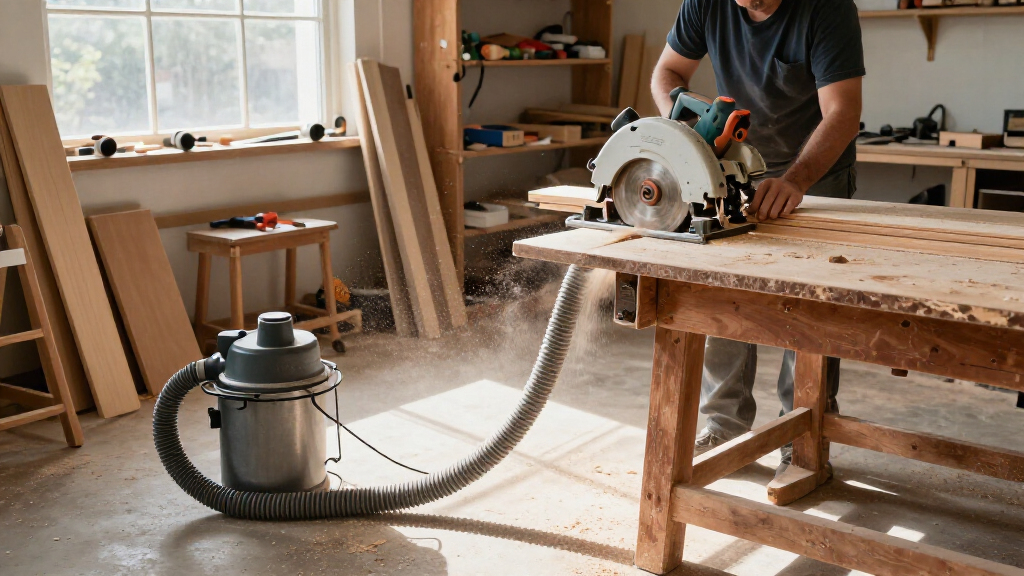
I ranked these portable jobsite dust extractors by how well their stated design and features address practical jobsite needs: collecting dust near a tool, moving the unit between work areas, managing filter upkeep, and avoiding excessive emptying. I gave weight to HEPA filtration, stated capacity, automatic filter cleaning where listed, and the balance between a compact footprint and longer work sessions. I also looked at how clearly each model’s format suits a particular buyer, rather than treating a larger tank as an automatic advantage.
The order reflects versatility for common jobsite use first, followed by more specialized strengths. The Bosch ranks highest for its combination of capacity and automatic filter cleaning; the Festool models place well for buyers who value mobile, tool-oriented setups, with the CT SYS trading capacity for compactness. The 3M, ECOMAX, Dapper Supply, and DYNAVEX add alternatives at different capacities, but buyers should verify tool compatibility, filter-care details, and the type of dust they plan to collect before choosing among them.
| portable jobsite dust extractor | Filter cleaning |
|---|---|
| Festool CLEANTEC CT SYS HEPA D | — |
| 3M Xtract Portable Dust Extrac | Automatic, without flow stoppage |
| Festool CT 15 HEPA Mobile Dust | AutoClean system |
| Bosch VAC140AH Portable 14-Gal | Automatic cycle every 15 seconds |
| ECOMAX 8-Gallon HEPA Shop Vac | Semi-automatic |
| Dapper Supply 8-Gallon Wet/Dry | Automatic, every 25 seconds |
| DYNAVEX 10-Amp Portable Woodwo | — |
Factors to Consider When Choosing Portable Jobsite Dust Extractors
Choosing an extractor is less about finding the biggest tank and more about matching the machine to the dust, tool, and movement your work requires. I’d settle the following questions before narrowing the shortlist.
Match Filtration to the Material and Work
Start with the material you cut, sand, or grind and any dust-control requirements attached to the work. A HEPA label can matter for fine dust, but it does not by itself tell you whether the complete setup is appropriate for a particular task or regulated environment. Check the extractor’s documentation, compatible filters, and tool connection requirements rather than relying on the word “HEPA” alone. Fine dust can also load filters faster than larger debris, changing how often you need to pause for cleaning. If your work varies, a model with clear filter-maintenance guidance may be a better everyday choice than one selected by capacity alone. Match the hose and accessories to your tool so dust reaches the extractor instead of escaping at the source.
Choose Capacity Around Your Work Rhythm
Capacity affects how often you stop to empty the extractor, but a larger tank also tends to take up more room and can be harder to move. Think about whether you work in long, continuous sessions or move between short tasks and tight rooms. For repeated cuts or sanding in one location, fewer emptying breaks may matter more than a compact footprint. For punch-list work or transport in a crowded vehicle, a small unit can save space even if it needs more frequent attention. Do not assume the advertised tank capacity equals usable capacity for every kind of debris; bulky material can fill a container quickly. Choose around your typical workday, not an occasional unusually large cleanup.
Account for Filter Cleaning and Maintenance
Filter upkeep affects both collection performance and how often work is interrupted. Automatic filter cleaning, when included, can be useful during dusty tasks, but it adds a feature whose operation and maintenance you should understand before purchase. With manual cleaning, check how accessible the filter is and whether the process is practical on a busy jobsite. Also look at replacement-filter availability and the maker’s instructions for collecting fine dust or wet material. A filter that is poorly maintained can undermine the performance you expected from the extractor. Build cleaning time and consumables into your ownership decision, especially if the machine will run daily.
Check Mobility Beyond the Word Portable
“Portable” can mean a compact unit that is easy to carry, or a larger vacuum that can roll between work areas. Consider stairs, vehicle storage, doorways, and how far the extractor will travel during a typical shift. A large tank may reduce emptying but become awkward to lift into a van or carry upstairs. A smaller model may be easier to stow yet require more trips to empty it. Look for practical details such as handles, wheels, overall footprint, and how the hose and cord are managed. If you work across several floors, carrying comfort may matter more than capacity.
Confirm Tool, Hose, and Power Compatibility
Before buying, check that the extractor can connect securely to the tools you use and that the hose size and included adapters fit your setup. A loose or mismatched connection can let dust escape even when the extractor has suitable filtration. Tool-triggered operation may also affect convenience, so verify whether it is supported and whether extra adapters are needed. Check the power requirements and any jobsite limits that apply to your work area. Buyers often focus on the vacuum body and overlook the cost and availability of compatible hoses, bags, and filters. A model that connects cleanly to your existing tools can be a better fit than one with a longer feature list.
Decide When Extra Capacity or Features Are Worth It
Paying for a larger unit or added filter features makes sense when they address a repeated work problem, such as frequent emptying or pauses to clean a filter. If you use an extractor only for occasional short tasks, a compact, simpler model may be easier to store and move. Conversely, daily fine-dust collection can make maintenance features and dependable accessory support more valuable over time. Compare the full setup you need, including bags, filters, hoses, and adapters, rather than judging by the machine alone. Avoid paying for capacity that your work rarely uses if the larger footprint will make transport harder. The best upgrade is the one that removes a real bottleneck in your routine.
Frequently Asked Questions
Is a HEPA filter enough for collecting hazardous or regulated dust?
Not by itself. A HEPA filter is one part of a dust-control setup, and suitability can depend on the extractor’s full design, filter installation, accessories, and the rules for the material and workplace. Check the product documentation and applicable safety requirements before using any model for hazardous dust. Use compatible bags, hoses, and filters as directed, and avoid modifying the collection path. If the job has specific exposure-control rules, follow those requirements rather than relying on a general product label.
Should I choose the Bosch VAC140AH or the smaller Festool CT SYS?
Choose based on whether capacity or carrying ease creates the bigger problem in your workday. The Bosch’s 14-gallon tank and automatic filter cleaning suit longer sessions where fewer interruptions matter, while the CT SYS is the more compelling direction when compact transport and storage take priority. The tradeoff is that a compact unit can need more frequent emptying, while a larger extractor can be less convenient to move. Check your vehicle space, stairs, and typical dust volume before deciding. Neither format is a universal winner for every jobsite.
Does a larger tank always mean better performance?
No. Tank capacity mainly indicates how much collected material the container can hold; it does not alone establish airflow, filtration quality, or how well the extractor pairs with a tool. A larger tank can reduce emptying stops, but it may be heavier and harder to transport. Fine or bulky debris can also fill a container differently from dense material. Compare capacity with the stated filter setup, tool connections, and maintenance needs. Pick the size that fits your work rhythm rather than choosing the largest number.
When is automatic filter cleaning worth prioritizing?
It is most useful when your work generates enough fine dust to load the filter during extended sessions and interruptions would slow the job. The Bosch VAC140AH is the model in this lineup that specifically lists automatic filter cleaning. For occasional short tasks, a simpler cleaning routine may be acceptable if the filter is accessible and maintained as directed. Check how the system operates and what upkeep it requires instead of treating the feature as maintenance-free. The value depends on how often you run the extractor and what materials you collect.
Can one portable extractor handle both wet and dry cleanup?
Do not assume so from the product category or tank size. The Dapper Supply model is described as a wet/dry extractor, but buyers should still follow its instructions for changing filters or accessories between wet and dry use. Other models may have different limits, and collecting liquid with a dry-only setup can damage equipment or create a safety issue. Confirm that the exact model supports the material you plan to collect and follow the manufacturer’s procedure. For regular wet cleanup alongside fine-dust collection, weigh the convenience against the added need to manage filters and the container correctly.
Conclusion
For the broadest mix of capacity and filter upkeep, I’d choose the Bosch VAC140AH as best overall, especially for longer dusty sessions. The best premium fit is the Festool CT 15 for buyers who want a mobile, compact-capacity option; the Festool CT SYS is my pick for the most compact setup when carrying and storage matter more than fewer emptying stops. For best value, compare the ECOMAX and Dapper Supply by the included accessories, filter details, and your need for wet/dry use rather than tank size alone. The best choice for beginners is the model whose instructions, tool connections, and filter maintenance are clearest for your tools; verify those details before buying. For a larger-capacity alternative outside the Bosch, look at the DYNAVEX 12-gallon, while the 3M Xtract suits shoppers seeking a 9-gallon industrial-vac format. Pick the machine that fits your material, daily movement, and cleanup routine—not just the biggest capacity on the page.