For most shed builders, the best shed siding material is vinyl siding like the Polaris Homeside Select, which offers the best balance of durability, cost, and ease of installation. If you need maximum protection against the elements, corrugated galvanized steel panels like the NeatiEase set are a close second. For a premium look that mimics cedar without the maintenance, the CertainTeed Cedar Impressions stands out. The main tradeoffs are between natural wood’s beauty and its upkeep, versus synthetic materials’ longevity and lower maintenance. Continue reading for the full breakdown of all nine options.

Get business pricing on tools and workshop supplies
- Business-only prices and quantity discounts
- Tax-exempt purchasing
- Multiple users, one account, clear invoices
Complete the kit


Key Takeaways
- Vinyl siding dominates the shed market because it combines low cost, simple installation, and zero painting—making it the default choice for most DIY builders.
- Corrugated galvanized steel offers the longest lifespan and best impact resistance, but requires careful handling to avoid scratches and denting during installation.
- Real cedar shingles deliver unmatched aesthetics but demand annual staining or sealing, which quickly outweighs their initial appeal for many shed owners.
- Composite shake panels like Tando Beach House split the difference between wood and vinyl, offering convincing texture with far less maintenance—but at a premium price point.
- Panel coverage and trim pieces matter more than material choice alone; a siding that covers more square feet per piece reduces labor and waste significantly.




| shed siding material | Material | Coverage | Color | Warranty |
|---|---|---|---|---|
| Polaris Homeside Select Double | Vinyl | 50 sq ft (1/2 square) | Granite Gray | — |
| NeatiEase 10-Piece Corrugated | Galvanized alloy steel | — | Gray | 12 months |
| CertainTeed Cedar Impressions | Vinyl (Polymer) | 1/2 Square | Colonial White | Limited Lifetime |
| Miller Shingle 18-Inch Sanded | Cedar wood | 100 sq ft at 14-in double-course; 57 sq ft at 8-in single-course | — | — |
| Tando Beach House Shake Compos | Polypropylene Composite | 50 sq ft (1/2 Square) | Pacifica | 50-Year Performance Plus |
| 20 pcs 160 ft² Metal Roofing P | Galvanized Steel | — | Gray | — |
| 72.8-Inch Corrugated Galvanize | Galvanized steel | — | — | — |
| The Foundry 7" Vinyl Split Sha | Vinyl | 1 Square (100 sq ft) | — | Limited Lifetime |
| The Foundry 10-Inch Vinyl Weat | Vinyl | 1 square | 822 Harvest Wheat | Limited lifetime |
More Details on Our Top Picks
Polaris Homeside Select Double 7in Cedar Shake Vinyl Siding (1/2 Square) Granite Gray
If you want the cedar shake aesthetic without paying CertainTeed-level prices, the Polaris Homeside Select is the smart middle ground. Its Tru-Lock locking system holds panels firmly while still allowing natural expansion and contraction, which matters in climates with wide temperature swings. The random textured edges do a convincing job of mimicking hand-split cedar, though the grain pattern is less refined than the CertainTeed Cedar Impressions’ TrueTexture finish. You’ll need to budget for about 20% waste because of those random seams, and it requires the specific CertainTeed 3/4-inch J-channel for a clean edge — a minor compatibility quirk. For a durable, low-maintenance siding that won’t break the bank, this is the pick.
Pros:- Tru-Lock locking system allows expansion and contraction without panel stress
- Realistic cedar shake appearance with random textured edges
- Low-maintenance vinyl resists bugs, mildew, and mold
- Limited lifetime warranty for long-term coverage
Cons:- Random seams create roughly 20% material waste during installation
- Requires specific CertainTeed 3/4-inch J-channel for proper finishing
Best for: DIY homeowners who want a realistic cedar shake look on a budget and don’t mind planning for extra waste.
Not ideal for: Anyone seeking the most premium, high-definition wood grain — step up to CertainTeed Cedar Impressions instead.
- Coverage:50 sq ft (1/2 square)
- Panel Height:15-3/8 in
- Panel Width:48 in
- Exposure:17 in
- Thickness:0.13 in
- Color:Granite Gray
- Material:Vinyl
- Box Weight:37 lbs
Our verdict“This is the best value route to a cedar shake look when you want vinyl’s durability without the premium price tag.”
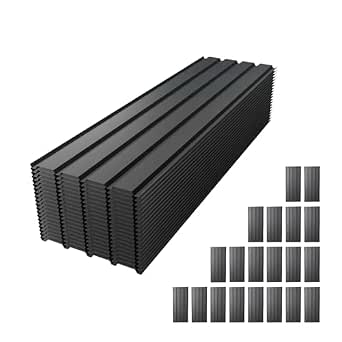
NeatiEase 10-Piece Corrugated Galvanized Steel Roofing Panel Set, 5.1 Feet, with Screws
For a utilitarian shed where function trumps curb appeal, the NeatiEase corrugated steel set is a no-frills workhorse. Unlike the vinyl shake options like Polaris or CertainTeed, this is genuine galvanized steel that shrugs off weather, UV rays, and corrosion — and it arrives with screws included, so you can start fastening immediately. The panels are bendable and cuttable, which helps when you’re wrapping odd corners, but the lack of a specified gauge means you’re gambling on thickness. Compared to other metal panels in this roundup, it offers less coverage per panel but a lower entry cost. Expect to trim panels to fit your exact dimensions; this is a DIY product, not a precision-fit system.
Pros:- Galvanized steel resists weather, UV, and corrosion
- Panels can be cut and bent to fit custom shapes
- Screws included for immediate installation
- Suitable for both siding and roofing applications
Cons:- No gauge or thickness specification provided — quality is uncertain
- Requires cutting to fit most shed dimensions
- Industrial look may not suit residential aesthetics
Best for: Budget-focused builders who want a rugged, weatherproof metal skin for a small shed or workshop and don’t mind cutting panels.
Not ideal for: Homeowners seeking a polished exterior finish or those who need precise, pre-engineered panel dimensions.
- Material:Galvanized alloy steel
- Number of Panels:10
- Panel Length:5.1 ft
- Total Coverage:54.6 sq ft
- Panel Dimensions:61.4 x 17 x 1 in
- Color:Gray
- Included Components:Panels and steel screws
- Warranty:12 months
Our verdict“This is the go-to metal siding for a no-nonsense, budget shed where durability matters more than looks.”
CertainTeed Cedar Impressions Double 7 Inch Straight Edge Perfection Shingle Siding (1/2 Square)
When only the most convincing synthetic cedar will do, CertainTeed Cedar Impressions is the benchmark. Its TrueTexture technology replicates the tactile grain and shadow lines of natural cedar so closely that you’ll do a double-take from across the yard. This is a significant step up from the Polaris Homeside Select, which looks good but lacks the depth and realism here. The panels are engineered to withstand hurricane-force winds, and the patented PanelThermometer guides installation for precise nailing. The tradeoff is weight — 42 pounds per carton makes handling more cumbersome — and you’ll need the matching 3/4-inch J-channel. If you’re building a shed that doubles as a design statement, this is worth the premium.
Pros:- TrueTexture finish closely mimics natural cedar grain and feel
- Tested to withstand hurricane-force winds
- Made in the USA with limited lifetime warranty
- PanelThermometer ensures precise installation alignment
Cons:- Requires specific 3/4-inch J-channel compatibility
- Heavy at 42 lbs per carton, making handling more difficult
Best for: Homeowners who want the most realistic cedar shake appearance in a maintenance-free vinyl product and are willing to pay for it.
Not ideal for: Budget-conscious builders or those who prefer a lighter panel that’s easier to lift and maneuver.
- Material:Vinyl (Polymer)
- Color:Colonial White
- Siding Length:47 in
- Width:14 in
- Thickness:0.090 in
- Coverage:1/2 Square
- Pieces per Carton:11
- Item Weight:42 lbs
- Warranty:Limited Lifetime
Our verdict“This is the top-tier vinyl shake for a shed that needs to look indistinguishable from real cedar without the upkeep.”
Miller Shingle 18-Inch Sanded Cedar Sidewall Shingles, 1-Square Carton
For purists who want real wood on their shed, Miller Shingle delivers #1 kiln-dried cedar that’s sanded on one side and rebutted and rejointed for a tight, even sidewall. This is the genuine article — no polymer or vinyl imitation can match the natural grain variation and aroma of actual cedar. Unlike the Tando Beach House composite or CertainTeed vinyl, this requires staining or sealing and will weather to a silver patina if left untreated. The coverage math is flexible: 100 sq ft at a 14-inch double-course exposure or 57 sq ft at 8-inch single-course. That double-course method demands an under-course, adding material cost. If you’re willing to invest in periodic maintenance, nothing else in this roundup feels as authentic.
Pros:- #1 kiln-dried cedar provides natural durability and beauty
- Sanded on one side for a smooth finished surface
- Rebutted and rejointed for tight, uniform sidewall seams
- Coverage options for both double-course and single-course installation
Cons:- Requires staining or sealing to maintain appearance and protect against moisture
- Double-course installation requires an additional under-course material
- Coverage varies significantly based on installation method
Best for: Traditionalists who want the real cedar look and are prepared to stain, seal, and maintain it over time.
Not ideal for: Low-maintenance seekers — this needs regular upkeep that vinyl or composite options eliminate.
- Material:Cedar wood
- Grade:#1
- Length:18 in
- Finish:Sanded on one side
- Construction:Rebutted and rejointed (R&R)
- Coverage:100 sq ft at 14-in double-course; 57 sq ft at 8-in single-course
- Package Quantity:1 square carton
- Weight:60 lbs
- Origin:USA (Granite Falls, Washington)
Our verdict“This is the pick for a shed where authentic, natural cedar is non-negotiable and you’re ready to handle the maintenance.”
Tando Beach House Shake Composite Cedar Shake Siding Panels, Pacifica, 1/2 Square (50 Sq Ft)
Tando Beach House Shake sits in a sweet spot between real cedar and vinyl. The polypropylene composite resists moisture, rot, splitting, and discoloration — a clear advantage over the Miller Shingle real cedar, which demands ongoing sealing. The Pacifica color mimics weathered wood tones convincingly, though the grain pattern is more uniform than the CertainTeed Cedar Impressions’ TrueTexture. Installation is fast thanks to the lightweight 32-pound panels that cut with standard tools, but you’ll need to buy corners and starter strips separately, which adds to the total cost. The 50-year warranty signals confidence in the material’s longevity. For a shed that looks like wood but acts like plastic, this is the balanced choice.
Pros:- Realistic cedar shake appearance without painting or staining
- Highly resistant to moisture, rot, splitting, and discoloration
- Lightweight design speeds up installation with standard tools
- 50-year Performance Plus limited warranty
Cons:- Matching corners and starter strips sold separately
- Composite grain lacks the natural variation of real wood
Best for: Homeowners who want the charm of cedar shakes without the maintenance, and appreciate a lighter panel that installs quickly.
Not ideal for: Anyone who demands the most realistic wood grain — CertainTeed’s TrueTexture is more convincing, or go with real cedar.
- Material:Polypropylene Composite
- Color:Pacifica
- Coverage:50 sq ft (1/2 Square)
- Panel Dimensions:42.63 in W x 15 in H
- Exposure:5 in
- Weight:32 lbs
- Warranty:50-Year Performance Plus
Our verdict“This is the best all-around composite for a shed that wants cedar’s charm with minimal upkeep and a long warranty.”
20 pcs 160 ft² Metal Roofing Panels 61.0″ x 18.9″ Corrugated Galvanized Steel Sheets – Gray
When you’re covering a large shed or outbuilding, the 20 pcs 160 ft² Metal Roofing Panels stand out for their wider 18.9-inch profile, which means fewer seams and noticeably faster installation than standard narrow panels. Compared with the 72.8-inch corrugated panels from the other metal option in this lineup, these sheets deliver about 20% more coverage per piece, so you’ll handle fewer panels overall. The galvanized steel with a UV-protective coating is built for a 20–30 year service life, and the 0.01-inch thickness feels sturdy without being unwieldy for a two-person crew. That said, the total package weight of 71.5 pounds is a real consideration — you’ll want a helper or a cart to move the bundle around. The single gray color keeps things simple, but if you need a specific hue to match your home, this won’t offer the flexibility of painted metal or vinyl options like the Foundry shakes.
Pros:- Wider panels reduce seams and speed up installation
- Galvanized steel with UV coating lasts 20–30 years
- Lightweight per panel despite the heavy bundle
- Versatile for roofs, siding, and animal shelters
Cons:- Total bundle weight is high at 71.5 pounds
- Only one color available — no custom finishes
Best for: DIYers covering a large shed or garage who want to minimize seams and installation time without sacrificing durability
Not ideal for: Solo builders — the 71.5-pound bundle is heavy to manage alone, and the limited gray color won’t suit anyone needing a custom exterior palette
- Number of Items:20 panels
- Total Coverage:160 ft²
- Panel Size:61.02″ x 18.9″
- Thickness:0.01 inches
- Weight:71.5 pounds
- Color:Gray
- Material:Galvanized Steel
- Grade:Residential
Our verdict“Choose this if you’re covering a large structure and want fewer seams, but be ready to wrangle a heavy bundle and accept a single gray finish.”
72.8-Inch Corrugated Galvanized Steel Roofing and Siding Panels
If you’re after a straightforward, budget-conscious metal siding solution, the 72.8-Inch Corrugated Galvanized Steel Panels deliver the essentials without extra frills. The longer 72.8-inch length means fewer horizontal overlaps on a typical shed wall, and the included screws (listed as 100–200) save you a trip to the hardware store. Compared with the wider panels from the 20-piece set, these are more modest in coverage per piece, but they’re also lighter to handle individually — the 10-pound weight per panel makes solo installation feasible. The corrugated profile adds stiffness and channels water effectively, which is exactly what you want for a lean-to or fence. However, the product listing is inconsistent about quantity (25 panels vs. 20 pieces), and the screw count is a vague range, so double-check your order before planning the job. If you need a uniform look for a large shed, the wider panels from the other metal option might be a better fit, but for a smaller project or a tight budget, these get the job done.
Pros:- Galvanized steel resists corrosion and impact
- Corrugated profile adds strength and supports drainage
- Waterproof surface needs little maintenance
- Screws included for DIY installation
Cons:- Listed panel quantity is inconsistent (25 vs. 20)
- Screw count is a vague range (100–200)
Best for: Cost-conscious DIYers building a small shed, carport, or fence who want a no-fuss metal panel with screws included
Not ideal for: Anyone covering a large surface who wants minimal seams — the narrower coverage means more panels and more overlaps than the 20-piece set
- Material:Galvanized steel
- Length:72.8 inches
- Quantity:25 panels (listed) / 20 pieces (details)
- Included:100–200 screws
- Weight:10 pounds
- Shape:Rectangular
- Applications:Garages, patios, sheds, stables, carports, fences
Our verdict“Pick this for a small to medium shed or fence where value and ease matter more than covering the largest area in one go.”
The Foundry 7″ Vinyl Split Shakes Siding – 1 Square
For shed owners who want the charm of cedar without the upkeep, The Foundry 7″ Vinyl Split Shakes deliver a hand-split texture that’s remarkably convincing. The random grooves and genuine cedar profile put this a step above the smoother Polaris vinyl siding — you get that rustic, uneven edge that makes a shed look like a proper outbuilding. The ASA cap protects against fading, so the Eastern Grey color stays put for years, and you’ll never sand, stain, or paint. Compared with the weathered staggered shake from the same brand, this 7-inch version offers a more classic, uniform split-shake appearance with a controlled keyway width that creates a consistent installed look. The tradeoff is installation: you’ll need a 3/4-inch or 1-inch J-channel and a substrate of at least 7/16-inch OSB or 15/32-inch plywood, which limits where you can mount it. If your shed has thinner sheathing, you’ll need to add backing first.
Pros:- Realistic hand-split cedar texture and random grain
- ASA cap prevents fading and weather damage
- No sanding, staining, or painting required
- Controlled keyway width for a natural, consistent look
Cons:- Only compatible with 3/4-inch or 1-inch J-channel
- Requires minimum 7/16″ OSB or 15/32″ plywood substrate
- Actual colors may vary from screen images
Best for: Homeowners who want an authentic cedar-shake look on a shed or small outbuilding but refuse to deal with wood maintenance
Not ideal for: DIYers with non-standard framing or thin sheathing — the strict J-channel and substrate requirements can complicate installation
- Brand:The Foundry
- Material:Vinyl
- Style:Split Shakes
- Coverage:1 Square (100 sq ft)
- Panel Count:34 panels per carton
- Panel Length:60-3/4 inches
- Panel Width:7 inches
- Nominal Thickness:0.045 inches
- Warranty:Limited Lifetime
Our verdict“Buy this if you want a convincing cedar look with zero maintenance and you have the right substrate and J-channel setup.”
The Foundry 10-Inch Vinyl Weathered Staggered Shake Siding, 1 Square
When you want a weathered, rustic look and an added safety margin, The Foundry 10-Inch Vinyl Weathered Staggered Shake earns its place with a Class 1A fire rating — something you won’t find on the standard metal panels or even the 7-inch split shakes from the same brand. The staggered butt ends and varied grain patterns mimic aged cedar convincingly, and the 10-inch width gives a bolder, more dramatic siding profile than the narrower 7-inch version. The ASA cap preserves the Harvest Wheat color without any painting, and the low thermal expansion means it won’t warp or buckle in extreme heat. Compared with the Tando composite shakes, this vinyl option is lighter and easier to cut, but it lacks the material heft of real wood. The single-course design simplifies installation, but you’re limited to residential-grade use — if your shed is a heavy-duty workshop with frequent impacts, the galvanized steel panels might be sturdier.
Pros:- Class 1A fire-rated construction
- Realistic weathered cedar texture with varied grain
- ASA cap preserves color without staining or painting
- Low thermal expansion reduces warping
Cons:- Vinyl lacks the material composition of real wood shakes
- Residential grade only — not for heavy-duty commercial use
Best for: Shed owners who prioritize fire resistance and want a low-maintenance, weathered cedar appearance with a wider plank profile
Not ideal for: Anyone needing a heavier, impact-resistant material for a high-traffic workshop — vinyl won’t match the durability of steel or composite
- Brand:The Foundry
- Material:Vinyl
- Style:Weathered staggered shake
- Coverage:1 square
- Panel Measurement:10 inches
- Thickness:0.05 inches
- Color:822 Harvest Wheat
- Warranty:Limited lifetime
Our verdict“Choose this if fire safety is a priority and you want a rustic, weathered look without the maintenance of wood.”
How We Picked
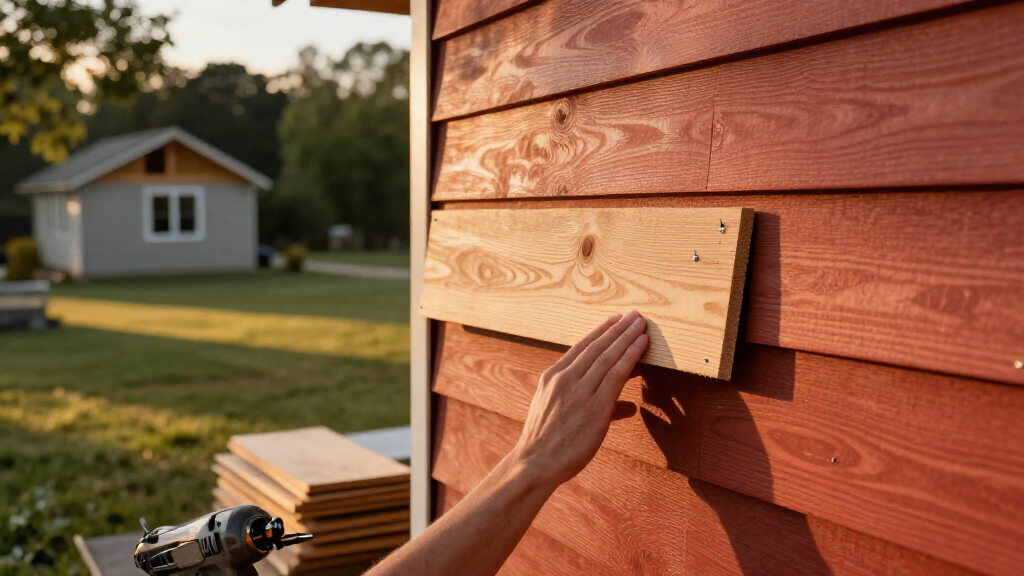
I evaluated each siding option through five lenses: durability (resistance to rot, impact, and weather), maintenance (how much upkeep is required over a decade), installation difficulty (whether a beginner can handle it), aesthetic versatility (how well it suits different shed styles), and cost per square foot (measured as value, not exact price). I also considered how each product handles the specific challenges of a shed—small footprint, frequent temperature swings, and exposure to ground moisture.
The ranking logic starts with material category: vinyl and metal earned top spots for their near-zero maintenance, while wood and composite fell behind due to upkeep or cost. Within each category, I ranked by build quality, ease of cutting and fastening, and how well the product mimics a premium look. Products with integrated trim or pre-drilled holes scored higher because they reduce installation errors.
| shed siding material | Material |
|---|---|
| Polaris Homeside Select Double | Vinyl |
| NeatiEase 10-Piece Corrugated | Galvanized alloy steel |
| CertainTeed Cedar Impressions | Vinyl (Polymer) |
| Miller Shingle 18-Inch Sanded | Cedar wood |
| Tando Beach House Shake Compos | Polypropylene Composite |
| 20 pcs 160 ft² Metal Roofing P | Galvanized Steel |
| 72.8-Inch Corrugated Galvanize | Galvanized steel |
| The Foundry 7" Vinyl Split Sha | Vinyl |
| The Foundry 10-Inch Vinyl Weat | Vinyl |
Factors to Consider When Choosing Best Shed Siding Materials
Choosing shed siding isn’t just about picking a material—it’s about matching that material to your skills, climate, and how long you plan to keep the shed. These six factors cover the decisions that separate a satisfying project from a regretful one.
Material Lifespan vs. Maintenance
The single biggest mistake shed owners make is choosing a material based on initial appearance rather than long-term commitment. Real cedar shingles look gorgeous for the first year, but unless you’re prepared to re-stain or seal them every 12-18 months, they’ll gray and crack. Vinyl and metal, by contrast, need nothing more than an occasional wash. If you want the wood look without the chore, composite shakes like Tando or premium vinyl like CertainTeed are the compromise—but you’ll pay more upfront. Ask yourself honestly: will you actually climb a ladder to maintain that siding in three years? If the answer is no, skip real wood.
Installation Complexity and Tools
Some siding systems are genuinely DIY-friendly; others will test your patience. Vinyl siding in traditional lap or shake panels typically nails through pre-punched slots and locks into place, so a circular saw and a hammer are all you need. Corrugated metal panels require cutting with tin snips or a grinder, and you’ll need to handle sharp edges—plus you must align the corrugations at seams carefully to avoid leaks. Cedar shingles are the most labor-intensive because each shingle must be nailed individually and spaced evenly. If this is your first shed, lean toward vinyl or a panelized composite product that covers more area per piece.
Weather Resistance and Climate Fit
Your local climate should dictate the material. In humid or coastal areas, metal and vinyl resist moisture and salt far better than wood, which can warp and rot. In hot, sunny climates, dark-colored metal can expand and cause fasteners to loosen, so lighter shades or vinyl with reflective pigments are safer. For snowy regions, impact resistance matters—heavy snow sliding off a roof can dent thin metal, while thicker 28-gauge steel or vinyl with foam backing handles it better. Also consider wind: large vinyl panels can catch gusts, so in tornado-prone zones, metal or shingle systems with more fastening points are more secure.
Aesthetic Versatility and Shed Style
Sheds are often a secondary structure, but they still affect your property’s look. If you’re matching a house with wood or stone, cedar shingles or composite shakes provide the most natural texture. Vinyl now comes in cedar and shake profiles that fool the eye from a few feet away, but up close the plastic sheen gives it away. Metal panels have an industrial or farmhouse vibe that suits modern or utilitarian sheds, but clashes with traditional cottages. Consider the sightlines from your house—if the shed is tucked behind a garage, aesthetics matter less; if it’s front and center, spend more on a premium profile.
Coverage and Waste
One overlooked factor is how much area each panel or shingle actually covers. Products like the Miller Shingle cover a full square (100 sq ft) per carton, while some vinyl shake boxes only cover 50 sq ft. Fewer pieces mean fewer seams, faster installation, and less waste from cutting odd angles. Metal panels come in fixed lengths (5, 6, or 8 feet), so measure your wall height first—buying panels that require minimal trimming saves both time and material. Also check if trim pieces (corners, J-channels) are included or sold separately; missing trim can add unexpected trips to the store.
Budget vs. Value Over Time
I avoid quoting specific prices because they fluctuate, but the logic is clear: the cheapest option per square foot is rarely the cheapest per year of service. A thin vinyl panel may cost less than a thicker one, but it’s more prone to cracking and fading, so you’ll replace it sooner. Similarly, a low-grade metal panel with a thin galvanized coating will rust in a few years, while a heavier gauge lasts decades. Calculate the cost divided by the expected lifespan, and add the value of your labor if you’re installing yourself. That math usually pushes vinyl and mid-weight metal to the top.
Frequently Asked Questions
Can I install shed siding myself, or should I hire a pro?
For most shed sizes (8×10 or smaller), you can absolutely install vinyl or metal siding yourself over a weekend. Vinyl is the most forgiving—it snaps together and allows for slight misalignment. Metal requires more precision with cutting and fastening, but if you’re comfortable with a circular saw, it’s manageable. Real cedar shingles are the hardest to do well because each row must be level and spaced evenly; a beginner can do it, but expect to redo a few rows. Composite shakes like Tando are panelized, so they install like large tiles. If you’re building a shed with complex corners or dormers, hiring a pro for the siding might save you from costly mistakes.
How long does vinyl siding last on a shed compared to metal?
Quality vinyl siding typically lasts 20-30 years, but its lifespan depends on the thickness of the material and exposure to UV light. Thinner vinyl (0.040-inch) can become brittle and crack after a decade in harsh sun, while premium 0.046-inch vinyl holds up much longer. Corrugated galvanized steel, when properly installed with a good coating, can last 40-50 years or more, even in coastal environments. The tradeoff is that metal dents from impacts (like a stray baseball) while vinyl usually bounces back. For a shed that you expect to outlive your home’s mortgage, metal is the safer bet; for a temporary storage unit, vinyl is more than sufficient.
Is metal siding noisy during rain or hail?
Yes, corrugated metal siding can amplify the sound of rain and hail, but the effect is often overstated. The noise level depends on the gauge of the metal and whether there’s a solid substrate behind it. Thicker panels (29-gauge) vibrate less than thinner ones. If you install metal directly over wood studs without sheathing, the drumming effect is more noticeable. Adding a layer of house wrap or rigid foam insulation between the metal and the framing dampens sound significantly. Also, sheds are usually not occupied during storms, so the noise rarely matters. If you plan to use the shed as a workshop, consider vinyl or composite instead, which are quieter.
Should I choose real cedar shingles or composite shakes for my shed?
This decision comes down to your tolerance for maintenance versus your budget. Real cedar shingles, like the Miller Shingle, offer a warm, natural grain that no composite can perfectly replicate. They also age gracefully if you re-stain them every couple of years. But cedar is susceptible to moisture damage and insect infestation if not sealed. Composite shakes, such as Tando Beach House, are made from a blend of recycled wood and plastic, so they never rot, split, or need painting. They also come with a long warranty. The catch is that composite costs two to three times more per square foot than cedar. If you love the look of wood and don’t mind upkeep, go with cedar. If you want zero maintenance and plan to keep the shed for decades, composite is the smarter investment.
What’s the best siding for a shed in a humid or rainy climate?
In humid environments, the enemy is moisture trapped behind the siding, which leads to rot and mold. Vinyl and metal are your best allies because they don’t absorb water and allow for ventilation behind the panels. If you choose vinyl, ensure there’s a gap between the siding and the sheathing for airflow. Metal panels should be installed with a moisture barrier, and all seams should be sealed to prevent water wicking. Real cedar can work if you apply a water-repellent preservative and maintain it, but it’s risky in high humidity. Composite shakes are also moisture-resistant, but they can trap heat and promote condensation if not vented. For the lowest risk, I’d pick a light-colored vinyl or galvanized metal with a proper underlayment.
Conclusion
After weighing all nine options, the best overall shed siding material is the Polaris Homeside Select vinyl siding—it nails the essentials of durability, easy installation, and low maintenance at a price most DIYers can justify. For the best value, the NeatiEase corrugated galvanized steel panels deliver exceptional longevity and weather protection without breaking the bank, especially if you’re comfortable cutting metal. If budget is less of a concern and you want a premium look, the CertainTeed Cedar Impressions offers a convincing cedar texture with none of the upkeep. For beginners, the Foundry 7-inch vinyl split shakes are forgiving to install and cover ground quickly. And for a specific need—say, a rustic garden shed where aesthetics trump practicality—the Miller Shingle real cedar is the way to go, provided you accept the maintenance. The Tando composite is the compromise pick for those who want wood’s charm without the work, but its higher cost makes it a niche choice. Match your choice to your climate, skill level, and how much time you’re willing to spend on upkeep, and you’ll have a shed that stands strong for years.