
TL;DR

Get business pricing on tools and workshop supplies
- Business-only prices and quantity discounts
- Tax-exempt purchasing
- Multiple users, one account, clear invoices
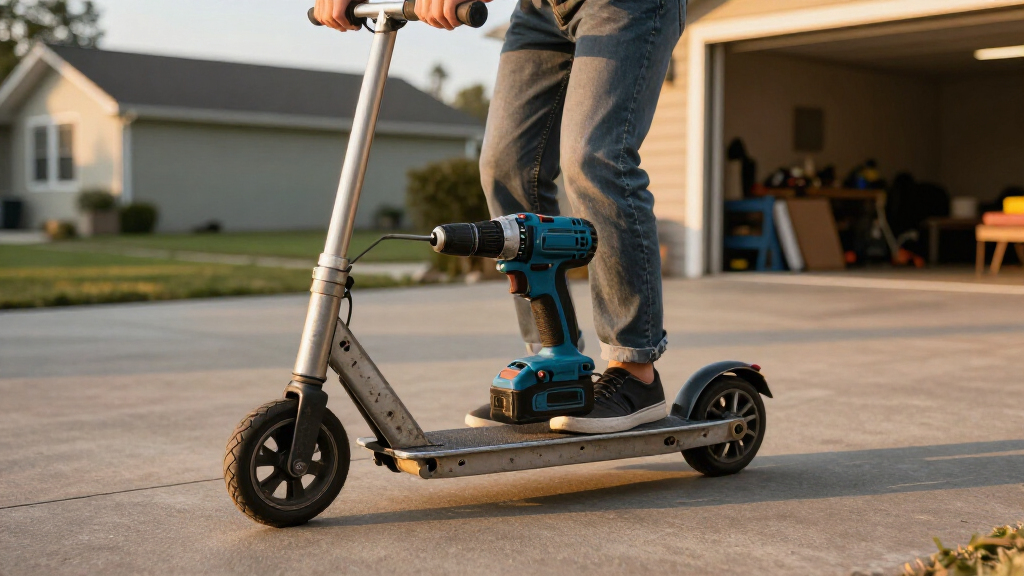
A personal project report describes converting a Razor A5 Lux push scooter into a front-wheel-drive electric scooter powered by a Hercules 20-volt cordless drill. The builder says it reaches about 10 mph and gets roughly two miles from a 5Ah battery, but the conversion was experimental and was not a money-saving alternative to buying an electric scooter.
A maker has converted a Razor A5 Lux push scooter into a front-wheel-drive electric ride using a Hercules 20-volt cordless drill, reporting a top speed of about 10 mph and roughly two miles of travel from a 5Ah battery. The project, described in a personal report, shows one way to repurpose workshop tools, but the builder says it did not save money compared with buying an electric scooter.
The builder said the scooter was mainly used to get around at autocross events while working on the course. Rather than buy a separate electric scooter, the maker chose to adapt the existing Razor, which was not designed for an electric conversion. The finished setup sends drill power to the front wheel through a keyed shaft and one-way bearings, allowing the wheel to spin freely when the drill is off.
The drill’s original trigger was moved to the handlebars to control acceleration. The builder said the trigger was very sensitive and difficult to feather, causing the scooter to spin its front wheel briefly when accelerating from a stop. The rider’s usual approach was to kick-push once or twice before applying drill power. The drill was also described as loud and powerful enough that it had to be used in its lower-speed setting.
The front wheel was made in three printed pieces: wheel halves in ASA plastic and a tire in TPU. Ten M6 bolts and nuts join the wheel halves, with keys fitted at the spokes; the tire was designed to fit tightly and has teeth on its inside mounting surface. The report also lists bearings, shaft collars, a keyed shaft and other hardware. The builder said the wiring work was more involved than expected because the drill trigger had many wires that had to be cut and extended. The report does not describe formal safety testing.
A Workshop Tool as Scooter Drive
The project is an example of an improvised mobility conversion rather than a tested product or a commercial release. Its reported 10 mph top speed and two-mile battery range give readers a sense of what this specific build achieved, but they are the builder’s estimates, not independently verified results. Performance may depend on rider weight, terrain, battery condition and how the drill is operated.
The conversion also highlights a practical trade-off: reusing an existing scooter avoided adding another unused vehicle, but the builder said the parts and work did not cost less than purchasing an electric scooter. The reported sensitive throttle, wheel spin at takeoff and loud drill are relevant limitations for anyone considering a similar project. The source does not establish that the design is safe for public roads or suitable for general use.
Popular right now

Dreame L50 Ultra Robot Vacuum and Mop

Bose QuietComfort Wireless Bluetooth Headphones with Active Noise Cancellation, Mic, USB‑C Charging, Deep Bass, 24‑Hour Battery – White Smok

Bose QuietComfort Wireless Noise-Cancelling Over-Ear Headphones, Black
As an affiliate, we earn on qualifying purchases.
Why the Razor Was Rebuilt
The builder said the idea arose in July after seeing other people use electric scooters at autocross events. The existing Razor A5 Lux worked for getting around the course, but it was a push scooter and had no powered drive. The maker preferred to modify it rather than own a second scooter that might sit unused.
The project was assembled from a Hercules cordless drill and parts sourced from retailers including Harbor Freight, Amazon and McMaster, alongside custom-fabricated and 3D-printed components. The builder described the process as improvised and said there were few build notes or photos because it was unclear at the outset whether the conversion would work. The account presents it as a personal workshop project, not a product announcement or a recommendation for a standard conversion method.
“It can top out at about 10mph with me onboard.”
— The builder, in the project report
Testing and Safety Details Missing
The report does not provide independent measurements of speed, range, braking distance, acceleration or battery performance. It also does not say how the scooter handles repeated use, wet conditions or extended uphill travel. The builder notes that the drill slows on hills and that the trigger can cause wheel spin, but does not provide test data or a detailed account of the scooter’s braking behavior after modification.
It is also unclear whether the wiring, battery mounting and printed wheel components were inspected or tested to any formal standard. The maker said protective wire loom still needed attention. No information is given about local rules for modified scooters or where the converted vehicle was ridden beyond the autocross-event use described.
No Further Testing Reported
The source does not announce a planned follow-up, a revised design or additional testing. The builder said they might add wire loom to protect the extended trigger wiring, but did not provide a schedule. Readers should treat the performance figures as observations from one build, not as a promise of results for other scooters or drills.
Anyone considering a powered conversion would need to evaluate mechanical attachment, steering, braking, wiring and battery handling before riding. The report itself does not establish that this setup meets vehicle or product safety requirements, and it offers no formal instructions for replication.
Key Questions
How fast did the drill-powered scooter go?
The builder reported a top speed of about 10 mph with the rider onboard. The report does not describe an independent speed test.
How far could it travel on one battery?
The maker estimated about two miles from a 5Ah battery. The source does not specify a standardized test route or conditions.
How does the drill drive the scooter?
The report describes a keyed shaft and one-way bearings connecting the drill to the front wheel. The bearings let the wheel free-spin when the drill is off.
Did the conversion cost less than buying an electric scooter?
No. The builder said the project did not save money compared with buying an electric scooter, though they enjoyed making it.
Is the conversion proven safe for regular riding?
The report does not provide formal safety testing or independent inspection. It also describes a sensitive trigger and brief wheel spin during acceleration, so it does not establish that the build is suitable for general or public-road use.
Source: hn