TL;DR

Get business pricing on tools and workshop supplies
- Business-only prices and quantity discounts
- Tax-exempt purchasing
- Multiple users, one account, clear invoices
The best portable generators for construction sites usually provide 5,000 to 8,000 running watts, enough surge capacity for the largest motor, GFCI-protected outlets, 120/240-volt output, CO shutdown, and dependable parts support. Choose from measured tool loads rather than headline wattage, keep a 15–25% reserve, and rent a towable unit when sustained heavy output exceeds portable-generator territory.
A circular saw can expose a bad generator choice in one pull of the trigger. The blade bites, the motor growls, the work lights dim, and the breaker snaps. That little burst of startup demand matters more than the shiny maximum-watt number printed across the carton.
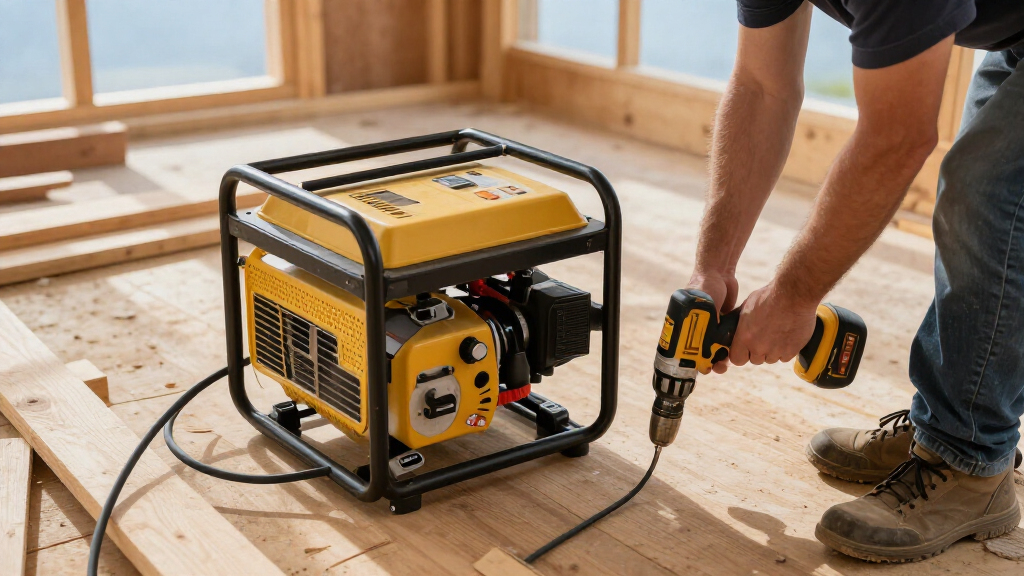
You need a generator that can start demanding tools, hold steady voltage, shrug off dust, and run through a working shift without turning refueling into a second job. You also need the right outlets, cords, protection, and fuel plan. A generator is not just an engine with sockets; it becomes the temporary heart of your power system.
This guide explains how to size that system, compare useful generator categories, and decide between conventional, inverter, dual-fuel, battery, and towable equipment. You will also learn where GFCI protection, voltage drop, carbon monoxide, grounding, and local rules enter the decision. The goal is simple: buy enough machine for the work, or recognize when renting makes better sense.
Add simultaneous running loads, include the largest motor-starting surge, and retain a 15–25% reserve.
A rugged 5,000–8,000-watt generator is a practical starting range for many remodeling and small construction crews, but tool nameplates set the final size.
Verify GFCI protection, 120/240-volt output, receptacle types, grounding instructions, CO shutdown, and cord capacity before arriving on site.
Choose an inverter model for sensitive electronics, changing loads, or noise-conscious locations; choose conventional or towable equipment for sustained heavy…
Rent when high output, three-phase power, unusual voltage, or whole-site distribution appears only on occasional projects.
Best Portable Generators for Construction Sites
A dependable jobsite generator must start demanding motors, hold steady voltage, tolerate rough conditions, and keep the crew working without constant refueling. Size from measured tool loads—not the maximum-watt number printed on the carton.
Useful running capacity for many remodeling and small construction crews.
Headroom for load changes, motor starts, voltage stability, and long cords.
A motor may briefly demand several times its normal running load.
The startup surge decides whether work continues
Add only the loads that may operate together, then include the largest likely motor-starting surge and retain a sensible reserve. A realistic work sequence is more useful than adding every tool on the trailer—or considering running watts alone.
A 3,000-watt workload can require 4,500 watts
Table saw: 1,600 W + dust extractor: 1,200 W + two LED lights: 200 W = 3,000 running watts. If the saw adds a 1,500-watt startup demand, the system must briefly carry about 4,500 watts.
With adequate surge output—not merely a 5,000-watt short-duration maximum.
| Equipment | Typical Running Watts | Startup Behavior | Planning Note |
|---|---|---|---|
| LED work lights | 20–200 each | Minimal | Count every fixture operating together. |
| Circular saw | 1,200–1,800 | Moderate | Dense material can increase loading during a cut. |
| Air compressor | 1,000–2,500 | Often 2–3× | Automatic cycling can overlap another tool start. |
| Table saw | 1,500–2,000 | High | Allow the blade to reach speed before adding load. |
| Demolition hammer | 1,200–2,000 | Moderate | Check duty cycle and extension-cord capacity. |
| Welder | Varies widely | Model-specific | Use the nameplate and manufacturer guidance. |
Choose the class, then verify the machine
Output bands describe practical roles, not rigid purchasing rules. Tool nameplates, measured current, startup behavior, duty cycle, and required voltage should settle the final decision.
3,000–4,500 watts
Suitable for LED lighting, battery chargers, a shop vacuum, and one or two smaller tools with deliberate sequencing.
Tradeoff: easier transport, limited surge headroom.5,000–7,500 watts
A useful balance for saws, dust extraction, chargers, and a modest compressor on many renovation sites.
Tradeoff: more weight and fuel, stronger motor capacity.8,000–12,000 watts
Better for larger compressors, pumps, multiple workers, and selected 240-volt loads.
Tradeoff: harder handling and more complex distribution.Portable output spectrum
Capacity rises with weight, fuel demand, and distribution needsThe best category depends on load quality and duty
Wattage is only one dimension. Noise, electronics, fuel logistics, indoor use, service support, and sustained output can make a lower-capacity category the better operational choice.
Conventional
Economical power for robust corded tools, lighting, and resistive loads.
Best when: output per dollar matters most.Commercial Inverter
Cleaner power, lower partial-load noise, and improved efficiency for changing loads.
Best when: electronics or occupied sites are involved.Dual-Fuel
Switches fuel sources when gasoline or propane availability and storage conditions vary.
Best when: resilience matters more than maximum output.Battery Station
Indoor-safe power for selected electronics, chargers, lights, and intermittent small loads.
Best when: zero exhaust is essential.Towable Rental
Higher sustained output, larger fuel capacity, centralized distribution, and service support.
Best when: several trades share site power.Serviceable Build
Accessible filters, oil drains, hour meters, parts supply, and local dealer support reduce downtime.
Best when: the generator earns money every day.Power is useful only when distribution is safe
A “jobsite” label does not guarantee suitability for every workplace. Generator wiring, connected equipment, grounding configuration, local codes, and applicable safety rules all affect the setup.
Electrical protection
- ✓GFCI-protected receptacles
- ✓Circuit breakers and overload protection
- ✓Covered, clearly labeled outlets
- ✓Low-oil automatic shutdown
Output and distribution
- ✓Required 120/240-volt output
- ✓Correct receptacles and amperage
- ✓Cords sized for load and distance
- ~Verified neutral and grounding plan
Site operation
- ✓CO detection and shutdown
- ✓Steel frame, wheels, and lifting points
- ✓Runtime stated at a known load
- ~Local parts and service support
Measure
Record volts, amps, watts, and startup demand.
Combine
Add only loads likely to run at the same time.
Protect
Add the largest surge and 15–25% reserve.
Verify
Match voltage, outlets, cords, and safeguards.
Operate
Place outdoors, sequence starts, and monitor fuel.
Prevent carbon monoxide exposure
Operate the generator outdoors and well away from doors, windows, vents, crawlspaces, and air intakes. Point exhaust away from people and occupied structures.
Control voltage drop
Long or undersized cords reduce voltage at the tool. Use properly rated jobsite cords, minimize unnecessary distance, and avoid operating continuously at maximum capacity.
Rent when the project leaves portable territory
- Sustained high output is required for long shifts.
- Three-phase power or unusual voltage is needed.
- Several trades require whole-site distribution.
- The demand appears only on occasional projects.
- Fuel capacity and centralized service are priorities.
- A portable unit would run continuously near its limit.
Calculate the Wattage That Keeps Your Tools Moving
The best portable generators for construction sites are sized by adding simultaneous running loads, adding the largest likely motor-starting surge, and keeping a 15–25% capacity reserve. The order matters: adding every tool on the trailer exaggerates demand, while counting only average running watts ignores the brief event most likely to trip the breaker. A realistic work sequence gives you a generator large enough for the crew’s busiest moment without paying to carry capacity that never gets used.
That reserve is not merely spare wattage. It gives the engine and alternator room to respond when a compressor cycles unexpectedly, a blade meets dense material, or a long cord increases the load seen by a motor. A generator operated continuously near its limit has less ability to correct a sudden speed drop, so voltage and frequency may sag just when a tool needs extra torque. The result can be nuisance trips, hot motors, slower cuts, higher fuel consumption, and shortened equipment life.
Start with each tool’s nameplate or manual, not a generic online chart. Record volts, amps, running watts, and starting demand, then note which loads run continuously, which cycle automatically, and which can be deliberately sequenced. If watts are not listed, multiply volts by amps for a working estimate, though motor behavior and power factor can make the real demand different. That estimate is therefore a screening tool, not a substitute for the manufacturer’s generator guidance or an actual current measurement.
Suppose your remodeling crew runs a 1,600-watt table saw, two 100-watt LED lights, and a 1,200-watt dust extractor. The running total reaches 3,000 watts. If the saw needs another 1,500 watts for a split second when its blade spins up, the generator must momentarily support about 4,500 watts. A 3,500-watt unit may look close enough when judged by the running total, but it leaves no useful surge margin; a machine with roughly 5,000 running watts and adequate surge output can absorb the start while continuing to power dust collection and lighting.
| Equipment | Typical running watts | Startup behavior |
|---|---|---|
| LED work light | 20–200 each | Minimal surge |
| Circular saw | 1,200–1,800 | Moderate surge |
| Air compressor | 1,000–2,500 | Often 2–3 times the running load |
| Table saw | 1,500–2,000 | High surge |
| Demolition hammer | 1,200–2,000 | Moderate surge |
| Welder | Varies widely | Check its nameplate and manual |
The ranges in the table are useful for early planning, but the spread within each category is large enough to change the generator class. A small pancake compressor and a high-output wheelbarrow compressor are not interchangeable loads, even if both use a standard 120-volt plug. Nameplate data, startup specifications, and the actual duty cycle should settle the decision.
Staggering motor starts can keep a sensible generator from tripping. Let the compressor fill its tank before starting the table saw, for example. This works because starting surges are brief and do not overlap when the crew controls the sequence. It becomes unreliable when equipment cycles automatically or several workers share the supply, so sequencing should reduce peaks rather than excuse an undersized machine that sags every time somebody cuts while the compressor restarts.
Popular right now

DeLonghi Rivelia Automatic Espresso Machine Bundle with Grinder and Frother, Beige

Shark Navigator Lift-Away Upright Vacuum (NV360)

Dreame L40 Ultra Gen 2 Robot Vacuum and Mop
As an affiliate, we earn on qualifying purchases.
Match the Generator Class to the Work You Actually Do
The best portable generators for construction sites fall into useful output bands: 3,000–4,500 watts for light support work, 5,000–7,500 watts for general remodeling, and 8,000–12,000 watts for several tools or limited 240-volt loads. These bands describe practical roles, not rigid purchasing rules. A crew with one severe motor start may need to move up a class even when its average consumption is low, while a disciplined crew with mostly resistive or electronic loads may work comfortably near the lower end.
Sustained high output, three-phase equipment, or whole-site distribution usually calls for a towable rental. The distinction is not only wattage. Towable equipment is designed around longer duty cycles, larger fuel capacity, centralized distribution, and service support. Once power must be delivered across a site to several trades, the distribution plan and operating duty matter as much as the generator’s headline output.
- 3,000–4,500 watts: Good for LED lighting, battery chargers, a shop vacuum, and one smaller corded tool at a time. It remains easy to transport, but limited surge headroom makes load sequencing important.
- 5,000–7,500 watts: A practical range for saws, dust extraction, chargers, and a modest compressor on many renovation sites. It balances useful motor capacity against weight and fuel use, which is why it suits many small crews.
- 8,000–12,000 watts: Better for larger compressors, pumps, several crews, or selected 240-volt equipment. The gain in capacity comes with harder handling, more fuel storage, and a greater need for deliberate branch-circuit distribution.
- Commercial inverter: Suits occupied buildings, electronic controls, diagnostic gear, and variable loads. Cleaner output and lower partial-load noise improve working conditions, though the purchase price per watt is usually higher.
- Battery power station: Provides quiet, exhaust-free point-of-use power but stores a limited amount of energy. It excels at intermittent or low-power indoor work and becomes less practical when continuous heat, pumping, or cutting drains the battery rapidly.
- Towable generator: Handles long-duration heavy loads and engineered site distribution better than a wheel-mounted portable unit. Delivery, placement, security, and rental scheduling add logistics, but those costs can buy reliability that a portable machine cannot provide.
On a kitchen renovation, a 5,000–7,500-watt unit might run task lighting, a dust extractor, chargers, and a saw when the crew sequences the loads. That arrangement works because most loads are modest and the saw’s peak is brief. On a concrete job with a large compressor, pump, and multiple demolition tools, the same machine can become a noisy bottleneck before lunch because the high loads overlap, cycle unpredictably, and remain near maximum output for long periods.
More capacity brings more weight, fuel use, purchase cost, and noise. It can also tempt crews to connect more equipment without improving cords or distribution. A 200-pound generator may have wheels yet still fight you on stairs, mud, or a pickup ramp. Portability is not a label; it is whether your actual crew can unload, place, secure, refuel, and retrieve the machine without crushed fingers, strained backs, or unsafe improvisation.
Rent instead of buy when one project creates an unusual peak load, when you need three-phase power, or when the generator must feed a designed distribution system for weeks. Rental also transfers some maintenance and failure risk to a supplier that can deliver a replacement. Buying makes more sense when the same load profile recurs often enough to justify storage, scheduled service, transport, and capital tied up in the machine.
Choose Outlets and Protection That Belong on a Real Jobsite
The best portable generators for construction sites need more than sufficient watts. Look for GFCI-protected receptacles, circuit breakers, covered outlets, low-oil shutdown, CO shutdown, clear neutral and grounding information, and the correct 120/240-volt connections. These features address different failure modes: GFCI protection responds to leakage current, breakers limit overcurrent, outlet covers help exclude debris and moisture, and shutdown systems protect people or the engine under specific conditions. No single feature substitutes for the others.
A jobsite label on the frame does not prove compatibility with every workplace or distribution setup. The generator’s neutral may be bonded to its frame or configured differently for particular applications, and that detail can affect how protective devices and downstream distribution behave. The implication is practical: verify the manual and site requirements before arrival, because grounding questions are difficult to solve safely while a crew waits for power.
Most handheld tools use 120 volts, while some compressors, pumps, welders, and specialty machines need 240 volts. Check voltage, amperage, plug shape, and the available output at that voltage. A generator may advertise a large total rating while providing less usable capacity through the receptacle your equipment requires. Split-phase machines can also have limits on how much load belongs on either 120-volt leg, so a balanced distribution may deliver better performance than clustering several heavy tools on one side.
Imagine arriving with a 240-volt masonry saw only to find that the generator has the wrong locking receptacle. A homemade adapter is not a clever rescue; it can bypass protective features, misroute conductors, or allow a plug and cord to carry more current than they were designed for. Use listed distribution equipment and correctly rated connections, and have a qualified electrician address any unfamiliar configuration. The cost of the proper adapter or distribution box is small compared with damaged equipment, shock exposure, or a stopped crew.
OSHA construction rules require either GFCI protection or an assured equipment-grounding conductor program for covered temporary wiring arrangements [1]. GFCI protection is especially important where damaged insulation, damp surfaces, metal structures, and grounded workers can create a path for current. An assured equipment-grounding conductor program is not simply a cord check when somebody remembers; it requires a controlled inspection and testing process. Local electrical rules, site policies, generator bonding, and connected equipment can add other requirements.
Follow the manufacturer’s grounding directions, and involve a licensed electrician when connecting to building wiring or when the neutral-ground arrangement is unclear. Adding a ground rod by habit does not automatically correct a bonding or transfer-equipment problem and may create false confidence. The correct setup depends on how the generator, conductors, protective devices, and supplied equipment form the temporary power system.
Never backfeed a building through a receptacle. Building connection requires approved transfer equipment installed by a qualified electrician, with utility isolation and code compliance handled properly. Without isolation, generator power can energize wiring that workers expect to be dead, while utility restoration can conflict catastrophically with the generator. Shut down major loads before connecting or disconnecting them, inspect cords before each shift, and wear suitable PPE when site conditions expose you to electrical or mechanical hazards.
Pick the Fuel and Power Quality That Fit Your Workday
The right engine and fuel system depend on load pattern, runtime, electronics, fuel storage, and noise limits. Conventional generators deliver economical high output for rugged tools, while inverter models provide cleaner power, quieter partial-load operation, and better fuel economy when demand rises and falls. The advantage of an inverter is greatest when a crew spends much of the day below full load; under a steady heavy load, the noise and fuel-use gap may narrow.
Power quality matters because modern chargers, electronic controls, and diagnostic equipment can be less tolerant of unstable voltage or frequency than a simple work light. Cleaner output does not make an inverter generator more powerful, however. A motor can still exceed its surge capacity, so power quality and load capacity must be evaluated separately.
Dual-fuel units trade some peak output for greater fuel flexibility. That flexibility can keep work moving during a gasoline shortage or let an owner store propane without worrying about carburetor deposits. The tradeoff is that propane often produces less rated output, so a dual-fuel generator sized narrowly on its gasoline specification may become undersized when switched to the backup fuel.
| Option | Where it works well | Main tradeoff |
|---|---|---|
| Conventional gasoline | Heavy tools and steady high loads | Louder, with more maintenance and stale-fuel risk |
| Inverter generator | Chargers, electronic controls, occupied sites | Higher purchase price per watt |
| Dual-fuel | Sites needing gasoline and propane flexibility | Output often drops on propane |
| Battery power station | Indoor point-of-use lighting, charging, electronics | Finite stored energy and recharge time |
| Towable diesel unit | Long shifts and engineered distribution | Rental logistics, size, and site access |
A trim crew working inside an occupied office may value a high-output inverter generator outside and a battery station beside the work area. Chargers and laser equipment receive stable power, conversations remain possible, and no extension cord must snake through every doorway. The battery station produces no exhaust where it is used, though it still needs a workable recharge plan. Its capacity should be considered in watt-hours, not only watts: watts describe how large a load it can supply, while watt-hours indicate roughly how long it can supply that load.
Propane stores longer than gasoline and avoids the sour varnish smell of stale fuel in a carburetor. It can simplify readiness for occasional use, but cylinders occupy space and vaporization can become a constraint in cold weather or under high demand. Gasoline commonly provides higher maximum output and remains easy to find near most sites, yet it requires disciplined rotation, safe transport, and more attention to storage life. Cold weather, cylinder size, fuel availability, and published runtime on each fuel can therefore shift the choice.
Compare runtime at a stated load, such as 50% output, rather than comparing tank capacity alone. Runtime claims measured at light load can look impressive but say little about a crew that operates near rated output. A huge engine loafing under a small load can burn more fuel than a correctly sized unit, while a small engine held at its limit may require frequent refueling and wear faster. The useful comparison is fuel consumed per working shift at your expected load, including the labor and interruption involved in refueling.
EPA-compliant engines, and CARB-certified models where required, also help you meet applicable emissions rules [2]. Compliance does not remove local restrictions on noise, operating hours, fuel storage, or exhaust placement. On occupied or urban sites, those constraints may make a quieter inverter, battery-assisted setup, or rental unit more valuable than its purchase price alone suggests.
Set Up Temporary Power Without Inviting Shock or CO
- Place the generator outdoors, well away from doors, windows, vents, crawlspaces, and air intakes, with the exhaust pointed away from people and occupied buildings. Distance reduces the chance that changing wind or building pressure will pull exhaust inside.
- Keep it dry without enclosing it. Use a manufacturer-approved canopy that preserves cooling airflow and leaves the exhaust path open. A tight shelter can solve the rain problem while creating overheating and carbon-monoxide hazards.
- Inspect the machine and cords. Check oil, fuel lines, outlet covers, grounding instructions, plugs, insulation, and GFCI operation before loading the generator. Early inspection finds faults before vibration, moisture, and load turn them into failures.
- Connect loads in stages. Start the generator unloaded, let it stabilize, then add large tools one at a time. Staging prevents several inrush currents from arriving together and makes an overload easier to identify.
- Shut down and cool before refueling. Keep ignition sources away, clean spills, and store fuel in approved containers. Fuel contacting a hot muffler can ignite before anyone has time to react.
Safe generator setup starts outdoors, dry, level, and far from occupied openings. Carbon monoxide has no color or warning smell, and open doors do not make a garage safe. Air can circulate enough to make the space feel ventilated while still carrying exhaust into rooms or allowing dangerous concentrations to build around the engine. CO shutdown technology is a backup device, not permission to run a fuel-burning engine in a shed, basement, crawlspace, or partly enclosed loading bay.
One common failure starts with good intentions: rain arrives, so somebody rolls the machine beneath a porch beside an open basement window. Exhaust pools under the roof and drifts inside like invisible smoke. The danger comes from the interaction of shelter, wind, and nearby openings, not simply from whether the generator appears to be outdoors. Move it to a compliant outdoor position and use weather protection designed for operating generators, never a tight box or improvised plastic tent.
Use outdoor-rated grounded extension cords sized for both amperage and total length. Long, thin cords create resistance, heat, and voltage drop; a saw at the far end may sound weak and labored while the cord warms under sawdust. Low voltage can make a motor draw more current while producing less useful torque, increasing heat in both the tool and the cord. Heavier-gauge cable costs more and weighs more, but it protects performance and can prevent an apparent generator problem that is actually a distribution problem.
Do not judge a cord only by whether its plug fits. Its conductor size, length, insulation rating, connector condition, and total connected load determine whether it is appropriate. Coiled cable can also retain heat, so deploy it as directed rather than leaving excess length tightly wrapped under load. Protect runs from vehicle traffic, sharp edges, doors, and standing water; a cord that survives electrically can still become a trip or crushing hazard.
Keep plugs and connections out of puddles, and do not treat a portable generator as weatherproof unless its rating says so. Turn off major equipment before connection so an unexpected startup does not load the generator or move a tool in someone’s hands. Use eye and hearing protection around the running engine, secure the machine against theft without blocking ventilation, and follow site rules. Electrical, building-feed, or uncertain grounding work belongs with a licensed electrician because one incorrect connection can defeat protections throughout the temporary system.
Buy for Years of Dust, Vibration, and Daily Starts
The generator that earns its place on a construction site has a protective steel frame, solid wheels, vibration isolation, accessible service points, an hour meter, and dependable local parts support. These features reduce different kinds of downtime: the frame absorbs impacts, wheels make correct placement more likely, vibration isolation protects components, and an hour meter turns maintenance from guesswork into a schedule. For daily commercial work, service access often matters more than a small price difference or a flashy feature buried in an app.
Construction dust behaves like grinding compound. Fine drywall powder coats cooling fins, clogs an air filter, and turns fresh oil dark faster than clean-yard use would. Restricted airflow makes the engine run hotter, while contaminated intake air accelerates internal wear. On a renovation floor, daily oil and filter checks can prevent the afternoon shutdown that strands three workers and leaves wet mortar waiting. Shorter inspection intervals are therefore not needless caution; they reflect a harsher operating environment than many consumer maintenance schedules assume.
Look for an oil drain you can reach without dismantling the frame, a replaceable air filter, a readable fuel gauge, and an engine with a published hour-based maintenance schedule. Convenient service points make maintenance more likely to happen on time and reduce labor over the life of the machine. Electric start saves shoulders during repeated cold starts, while recoil backup keeps a flat starting battery from ending the shift. The tradeoff is another battery to inspect and maintain.
Lifting points also matter if the machine regularly moves by hoist or forklift. Wheels and handles are not automatically approved lifting structures, and improvised slings can bend the frame or drop the unit. A machine that is easy to move correctly is less likely to be dragged by its receptacle panel, fuel valve, or other vulnerable components.
DIY-grade equipment can serve occasional deck building or storm cleanup, but daily jobsite use asks more from bearings, alternators, switches, fasteners, and dealer support. The difference may not appear in a showroom because both machines can carry the same printed wattage. It emerges after hundreds of dusty starts, transport vibration, hot shutdowns, and minor impacts. The cheapest machine becomes expensive when a broken recoil assembly has a six-week parts delay, especially if its absence also idles workers and rented tools.
A nearby service counter with common filters and plugs on the shelf has real value. Evaluate warranty terms for commercial use, parts diagrams, normal lead times, and whether routine components are shared with engines already in your fleet. Standardization can reduce the number of filters, plugs, oils, and procedures the crew must manage, while an uncommon model may turn every service event into a parts search.
Remote monitoring, electronic fuel injection, load displays, and maintenance alerts can help a fleet manager track several machines. Load displays can also reveal whether a generator is routinely underused or overloaded, improving future sizing decisions. These systems add electronic complexity and may require proprietary sensors or apps. What matters most is whether the generator starts, carries the planned load, and can be repaired quickly; a phone notification has little value if the nearest replacement sensor sits two states away.
Use This Final Check Before You Buy or Rent
The best portable generators for construction sites pass a load, outlet, runtime, safety, and logistics check before money changes hands. These checks are connected: additional output is useless if the required receptacle cannot deliver it, and a long runtime claim is irrelevant if the machine cannot be refueled or secured where it must operate. Your goal is not the largest machine on the trailer. It should reliably supply the planned tools, survive the site, and leave enough reserve for real startup surges.
- List simultaneous loads. Build a realistic work sequence, including lights, dust collection, chargers, pumps, and tools that cycle automatically. Separating simultaneous loads from tools that merely happen to be on site prevents both oversizing and surprise overloads.
- Identify the largest startup surge. Compressors, saws, and pumps can demand far more power for a moment than they use while running. Confirm whether two automatic loads could restart together, because overlapping surges may control the final size.
- Verify voltage and receptacles. Match every 120- or 240-volt load to rated outlets, amperage, plugs, and distribution gear. This catches situations in which the generator has enough total power but cannot deliver it through the connection the tool needs.
- Add a 15–25% reserve. Leave room for changing loads without operating against the maximum rating all day. Use more caution when surge information is uncertain or the crew cannot control load sequencing.
- Check site restrictions. Confirm GFCI, grounding, noise, emissions, working-hour, fuel-storage, and temporary-power rules. A compliant machine can still be unusable if the site limits where or when it may run.
- Price ownership against rental. Include fuel, service, theft protection, transport, downtime, and the frequency of future use. Purchase price alone understates the cost of keeping a seldom-used engine ready and overstates the value of ownership if a rental supplier can replace a failed unit quickly.
For example, a small framing crew may calculate 4,200 watts of plausible peak demand and choose a rugged 5,500- or 6,000-watt class machine with the right surge rating. The extra capacity is useful because cutting load varies and another tool may start unexpectedly. Moving all the way to a 10,000-watt machine, however, could add weight and fuel consumption without improving the crew’s normal work.
A mechanical contractor facing a 240-volt compressor plus pumps may discover that a towable rental with planned distribution costs less than forcing a portable unit beyond its intended duty. The rental can also provide the correct voltage, longer runtime, and coordinated distribution equipment. That changes the comparison from purchase price versus rental fee to productive uptime versus the combined cost of transport, fuel, labor, and failure risk.
Read ratings carefully. Some large printed numbers describe brief peak output rather than continuous output, and dual-fuel models may publish separate values for gasoline and propane. A surge rating also has limited duration, so it cannot support a tool whose heavy demand continues through a long cut or compressor recovery cycle. Compare running watts, surge watts, voltage-specific output, runtime at a stated load, and sound measurements taken at similar distances.
Sound figures deserve context because decibels measured at different loads or distances are not directly comparable. Runtime deserves the same scrutiny: a long figure at 25% load may not predict a full workday at 60%. When specifications use different test conditions, translate them back to the job you expect rather than treating every published number as equivalent.
A little unused capacity is healthy. A giant unused engine is expensive ballast. Choose enough reserve to absorb the work, then spend the remaining budget on safe distribution, heavy-gauge cords, maintenance, and service support. Those supporting parts often determine whether the rated power reaches the tool safely and whether the generator remains available after its first demanding season.
Frequently Asked Questions
How many watts does a construction-site generator need?
Small sites may need 3,000–5,000 watts, while general construction often lands around 5,000–8,000 watts. Multiple large tools can push demand beyond 10,000 watts. Add simultaneous running loads, include the largest startup surge, and keep a 15–25% reserve.
Can one generator run several power tools at once?
Yes, when the combined running load and startup demand stay inside the generator’s ratings. Letting a compressor finish its startup before powering a saw can prevent nuisance trips. Automatic cycling still matters, so leave enough reserve for a compressor that restarts while another tool is cutting.
Are inverter generators powerful enough for construction work?
Many high-output inverter models can run saws, compressors, chargers, and electronic equipment. Check surge output and receptacle configuration instead of assuming clean power means unlimited motor capacity. They cost more per watt, but lower noise and better partial-load fuel use can pay off around occupied buildings.
Can you use a portable generator in rain?
Do not expose the generator directly to rain or place it in standing water. Use a manufacturer-approved operating canopy that keeps electrical parts dry while preserving airflow and an open exhaust path. Never move it into a garage, shed, or enclosed trailer to escape the weather.
Does a portable generator need to be grounded?
The answer depends on the generator’s bonding arrangement, connected equipment, and distribution method. Follow the manual and applicable workplace and electrical rules. Ask a licensed electrician when feeding transfer equipment, using remote distribution, or working with an unfamiliar neutral-ground configuration.
Can a generator safely power a welder?
Only when its continuous output, surge rating, voltage, amperage, and receptacles meet the welder manufacturer’s requirements. Some welders publish a minimum generator size that exceeds their apparent running demand. A large welder used for hours may justify an engine-driven welder or towable generator instead.
Is gasoline or propane better on a construction site?
Gasoline commonly delivers higher maximum output and is easy to buy, while propane stores longer and avoids stale-carburetor problems. Propane output may be lower, especially when cylinder pressure falls in cold weather. Compare each fuel’s separate wattage and runtime ratings before choosing a dual-fuel unit.
Conclusion
Choose from the load backward. Write down the tools, identify what runs together, account for the hardest motor start, and add a modest reserve. Then verify outlets, cords, runtime, CO protection, service access, and site rules. That process tells you whether you need a compact inverter, a rugged 5,000–8,000-watt workhorse, or a towable rental.
A good jobsite generator should fade into the background: a steady engine note, bright lights, crisp saw starts, and no hot-cord smell. Get the sizing and distribution right, keep the exhaust outside, and let reliable power support the work instead of becoming the day’s loudest problem.