
TL;DR

Get business pricing on tools and workshop supplies
- Business-only prices and quantity discounts
- Tax-exempt purchasing
- Multiple users, one account, clear invoices
A Hunker how-to report explains that a bench grinder can remove rust from tools when its standard abrasive wheel is replaced with a suitable wire wheel. It advises matching the brush material to the tool metal, working gently, and wearing hand and eye protection; the report does not provide a tested performance comparison or a detailed model-specific procedure.
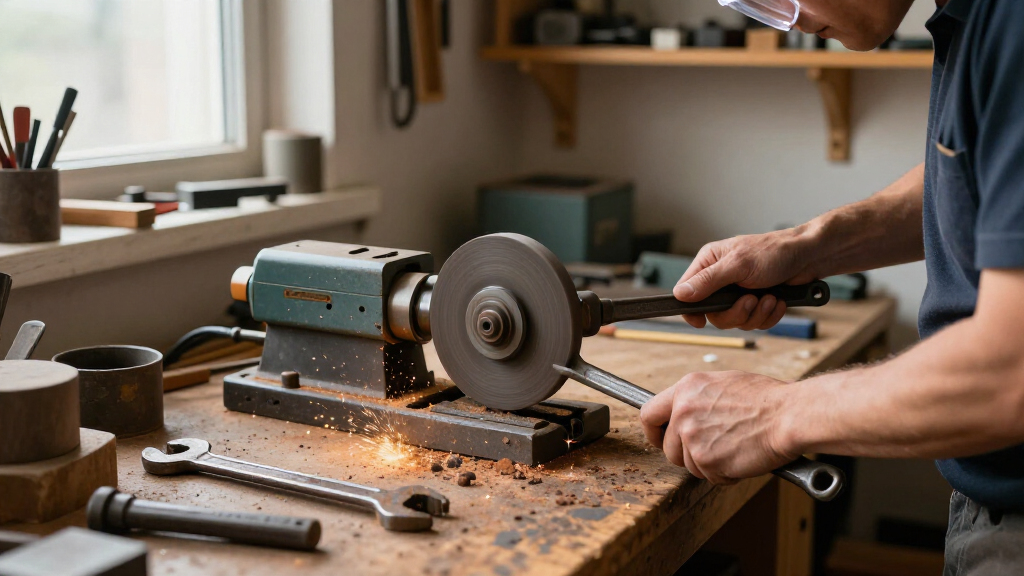
Hunker has published a guide to removing rust from hand tools with a bench grinder, recommending that users first replace the machine’s standard grinding wheel with a wire wheel attachment. The method matters because ordinary grinding wheels are designed to cut or sharpen, while the guide says wire bristles can scrub rust from metal; it also warns that debris can fly from the wheel and calls for eye and hand protection.
The guide describes a bench grinder as a motor that spins two wheels, commonly used to sharpen tools such as shovels, chisels, hoes and lawn mower blades. For rust removal, Hunker says to remove the standard abrasive wheel and install a wire wheel instead. Its account says conventional wheels, made from abrasive grains in a compressed material, are suited to sharpening and cutting rather than taking off rust in fine layers.
Hunker identifies steel, nylon and brass wire brushes as common options. It recommends steel for harder metals such as iron and brass for softer metals such as copper or aluminum. Nylon is described as useful for materials including wood, furniture and shoes, rather than as the choice for rust on metal tools. The report does not specify a particular wheel diameter, wire thickness or grinder model, so users must check that an attachment is compatible with their machine.
For the process, the guide says to remove the wheel cover, loosen the nuts and washers securing the existing wheel to the spindle, and fit the wire wheel. It then describes turning on the grinder and moving the rusty tool gently from side to side against the wheel while holding it level. Hunker advises wearing eye and hand protection, noting that small pieces of wire can come off the rotating brush. It says the time required depends on the amount of rust, without giving a fixed duration.
Choosing the Right Wheel for Rust
The central practical point is that rust removal is not the same task as sharpening. A standard grinding wheel removes material by abrasion; the guide instead recommends a wire wheel to brush corrosion off the surface. Using an unsuitable wheel or applying excessive pressure can affect the tool’s metal, so the choice of attachment and gentle handling matter.
Rust forms when iron reacts with oxygen and water, producing iron oxide. The Hunker report says corrosion left untreated can damage a tool over time. Removing surface rust may help preserve a usable tool, but the article does not establish that every rusted tool can be restored. Deep pitting, weakened edges or damage to a tool’s structure may require a different response, including repair or replacement.
The method also involves a powered machine and a rotating wire brush. The source’s warning about flying wire fragments makes protective equipment a practical requirement, not an optional finishing touch. Readers should follow the grinder and attachment manufacturers’ instructions and avoid using equipment that is damaged or incompatible.
Popular right now

DeLonghi Rivelia Automatic Espresso Machine Bundle with Grinder and Frother, Beige

Dreame L50 Ultra Robot Vacuum and Mop

Bose QuietComfort Wireless Bluetooth Headphones with Active Noise Cancellation, Mic, USB‑C Charging, Deep Bass, 24‑Hour Battery – White Smok
As an affiliate, we earn on qualifying purchases.
From Sharpening to Rust Removal
Bench grinders are commonly associated with sharpening blades and other tools. Hunker’s report applies the same machine to a different maintenance task, but says that doing so requires changing the wheel. The guide contrasts this with an angle grinder, which it describes as more mobile, while characterizing a bench grinder as powerful and suited to workshop use.
The report mentions vinegar as another familiar rust-removal option, but does not compare it with grinding in cost, effectiveness, or risk. Its focus is the mechanical approach: fit a wire wheel, select a brush suited to the metal, and work the tool across it carefully. The article is a practical how-to, not a product test or a manufacturer-approved procedure for every grinder.
““You’ll want to use a wire wheel instead to remove rust from your tools.””
— Hunker
Limits of the Grinder Method
The supplied report does not give a publication date, identify a specific grinder or attachment, or provide measurements for matching a wire wheel to a machine. It also does not set out detailed instructions for checking wheel speed ratings, securing the workpiece, or assessing whether a tool is too badly corroded to use. Those details can vary by equipment and tool, so the article’s general directions should not replace the manufacturer’s operating and safety instructions.
Hunker does not report controlled testing or compare this approach with chemical rust removers. Its statements about how quickly rust can be removed and how the tool may look afterward are guidance and expectation, not measured results. The extent of corrosion, the metal and the brush used will affect the outcome.
Check Equipment Before Grinding
Before starting, readers should consult the bench grinder and wire wheel instructions, verify that the attachment fits the machine and is rated for its operating speed, and inspect the equipment for damage. Wear appropriate eye and hand protection, keep loose clothing and objects clear of rotating parts, and stop if the tool or wheel behaves unexpectedly. The source does not identify a follow-up announcement or further reporting; the next step for users is to confirm their setup is suitable before attempting the procedure.
Key Questions
Can a standard bench grinder wheel remove rust?
Hunker recommends changing it first. The report says standard abrasive wheels are intended for cutting and sharpening, and advises fitting a compatible wire wheel for rust removal.
Which wire wheel should I use on an iron tool?
The guide recommends a steel wire brush for hard metals such as iron. Check the attachment maker’s instructions and confirm that the wheel is compatible with the grinder.
What safety gear does the report recommend?
Hunker advises wearing eye and hand protection because fragments of wire can fly off the rotating wheel. Follow the grinder and attachment manufacturers’ safety guidance as well.
How long does rust removal take?
The report gives no fixed time. It says the job depends on how much rust is present, and does not provide a tested estimate.
Source: rss