
TL;DR

Get business pricing on tools and workshop supplies
- Business-only prices and quantity discounts
- Tax-exempt purchasing
- Multiple users, one account, clear invoices
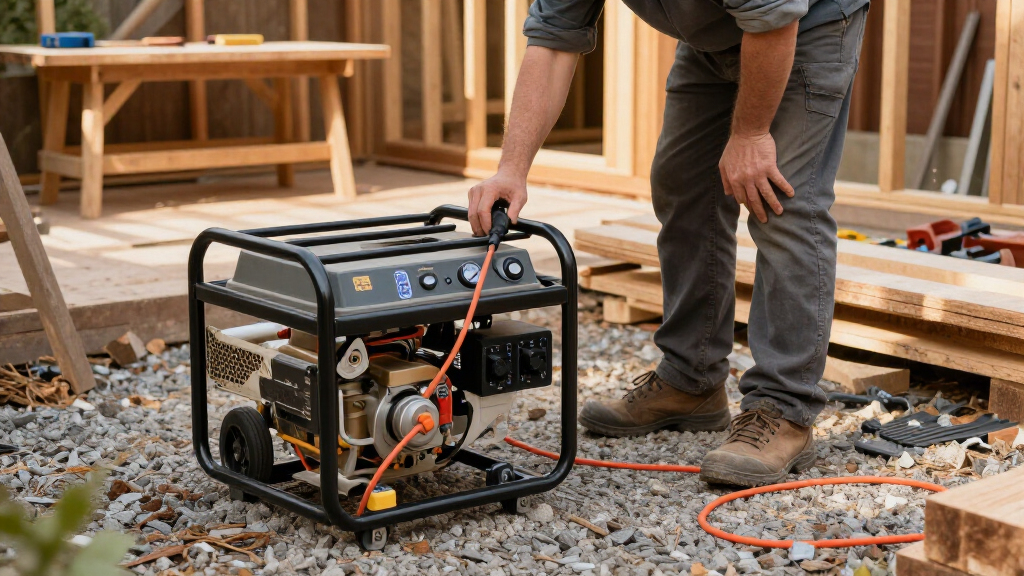
Selecting a portable jobsite generator requires understanding power needs, portability, fuel type, noise levels, and safety features. Recent tech advancements like inverter systems and smart controls make modern models more efficient and user-friendly. This guide helps you pick the right unit for your specific job site demands.
Imagine arriving at a remote job site, your tools ready but no power outlet in sight. Suddenly, your work grinds to a halt. That’s where a reliable portable generator becomes your best friend. But not all generators are created equal. Picking the wrong one can mean wasted fuel, excessive noise, or even safety hazards.
In this guide, you’ll learn what features truly matter—things like power output, size, fuel efficiency, and noise level. Whether you’re running heavy equipment or just need backup power for sensitive electronics, understanding these elements helps you avoid costly mistakes and get the job done smoothly. Think of it as choosing a partner for your workday—strength, reliability, and safety come first.
By the end, you’ll know how to spot the models that match your needs, how recent innovations can benefit you, and what questions to ask before making a purchase. Ready to power up smarter? Let’s dive in.
Calculate total wattage needs carefully, including surge watts, to avoid underpowering or overspending.
Prioritize portability features—handles, wheels, and durable frames—matching your site conditions.
Choose fuel types based on runtime, fuel availability, and environmental factors—dual-fuel offers flexibility.
Opt for quiet inverter models when working near noise-sensitive areas to improve safety and comfort.
Ensure your generator has multiple outlets, safety features, and weatherproofing to maximize reliability and safety.
How Much Power Do You Really Need? The Wattage Breakdown
The first step in choosing a portable generator is understanding your power needs. Think about all the tools and equipment you’ll run—saws, drills, lights, even small appliances. Each device lists its wattage, and you need to add these up. Remember, starting or surge watts are higher than running watts, so don’t overlook that spike.
For example, a typical circular saw might draw 15 amps at 120 volts—about 1800 watts. A compressor could need 3000 watts to start up. If you’re running multiple tools simultaneously, you need a generator that can handle the combined surge. For heavy-duty jobs, models with 5000W or more are common, but for light work, 2000-3000W might suffice.
Failing to match your generator’s capacity with your load can cause overloads, shutdowns, or damage. So, make a list of all your tools, note their wattage, and add a buffer of 20-25% to cover startup surges and future needs. This way, you avoid buying a unit that’s underpowered or wasting money on unnecessary extra capacity.
Understanding why this matters: undersizing your generator can lead to frequent overloads, damaging your equipment and halting work, which increases costs and delays. Overestimating, on the other hand, results in unnecessary expense and larger, less portable units. Striking the right balance ensures efficiency, safety, and cost-effectiveness, making your investment worthwhile and your work more predictable.
Popular right now

Breville Barista Pro Espresso Machine with Grinder, Brushed Stainless Steel

Vitamix Propel Series 750 Professional-Grade Blender, 4 Programs, Black

De’Longhi Classic Matte Black Espresso Machine with Milk Frother
As an affiliate, we earn on qualifying purchases.
Portability Matters: How to Pick a Lightweight, Durable Model
Portability isn’t just about weight; it’s about how easily you can move your generator across uneven, dusty, or muddy job sites. A lightweight model with sturdy handles or wheels can save you hours of strain and reduce fatigue. For example, a 50-pound inverter generator with built-in wheels can be rolled into position rather than carried. Conversely, a 150-pound diesel unit might need a small trailer or forklift.
But don’t sacrifice durability for lightness. Look for models with reinforced frames, corrosion-resistant coatings, and weatherproof panels. Imagine a generator exposed to rain, mud, and rough handling—poor build quality leads to breakdowns and costly repairs.
Balance size and power. If you’re often moving from site to site, prioritize compact, lightweight models. For fixed locations, bigger units with higher wattage and better fuel capacity may be acceptable. Think of your generator as a tool—its portability should match your work environment.
Why this matters: choosing a generator that’s too heavy or fragile can cause delays, injuries, or equipment damage. Conversely, an overly lightweight model might not withstand tough conditions, leading to breakdowns. The goal is to find a model that combines ease of transport with durability, ensuring reliability and safety without sacrificing performance. This balance directly impacts your efficiency and safety on the job site.
Fuel Type and Efficiency: Gas, Diesel, Propane, or Dual-Fuel?
Choosing the right fuel type impacts your runtime, cost, and convenience. Gasoline models are common—easy to find, quick to refill, but less fuel-efficient and with shorter run times. Diesel units are more durable, burn fuel more efficiently, and last longer, making them ideal for heavy, continuous use. Propane offers a cleaner burn with less maintenance but can be tricky to store and transport.
For example, a small gasoline generator might run for 8 hours on a 3-gallon tank, while a diesel model with the same size tank could go 12 hours or more. Dual-fuel generators give you flexibility—you can switch between fuel types depending on availability or project specifics. Imagine a job site with limited fuel options—having a dual-fuel unit avoids delays caused by running out of gas.
Why this matters: the choice of fuel affects not only your operational costs but also your logistical planning. Diesel engines tend to be more efficient and last longer, which can reduce maintenance costs over time. Propane, while cleaner, may require additional storage considerations. Dual-fuel models offer the best of both worlds but often come at a higher initial cost. Your decision should weigh these factors against your work schedule, fuel availability, and environmental conditions to ensure continuous, cost-effective operation.
Run Time and Fuel Capacity: How Long Can You Work Without Interruptions?
Longer run times mean fewer fuel stops and more productivity. For example, a generator with a 5-gallon tank and a 2500W load might run for about 10 hours, while a smaller model with a 2-gallon tank might only last 4 hours. If your workday extends beyond that, you need a unit with a larger tank or the ability to connect additional fuel sources.
Consider your typical work cycle. If you’re running a concrete saw for 2 hours at a stretch, a generator with at least 8 hours of continuous runtime is ideal. For overnight or weekend projects, look for models with fuel gauges and automatic shutoff features to prevent running dry or damaging the engine.
Why this matters: understanding runtime and fuel capacity helps you plan your work more effectively. Longer runtimes reduce interruptions, which means less downtime and more consistent progress. Additionally, larger tanks or the ability to connect auxiliary fuel sources can be critical in remote or extended projects where refueling options are limited. Balancing fuel capacity with portability is key—larger tanks mean more weight, so consider your site’s accessibility and your crew’s capacity to handle heavier units.
Quiet Power: Why Noise Level Can Make or Break Your Job Site
Noise level isn’t just a nuisance; it’s a safety and compliance issue. A generator that runs at 60 decibels (dB) sounds like a normal conversation—ideal for residential areas or noise-sensitive environments. In contrast, traditional open-frame units can reach 80-100 dB, comparable to a lawnmower or chainsaw.
Imagine working in a neighborhood where loud generators draw complaints from residents or require special permits. A quieter inverter generator, producing around 50-60 dB, lets you work late into the day without disturbing neighbors. Plus, less noise reduces fatigue and stress for your crew.
Advanced muffler designs and soundproof enclosures have made quiet operation more affordable. If your job site is near homes, schools, or hospitals, prioritize low-noise models. Remember, quieter doesn’t mean less powerful—modern inverter generators pack a punch while staying gentle on your ears.
Why this matters: high noise levels can lead to regulatory issues, community complaints, and increased stress for workers. Quieter models enable longer working hours, better compliance, and a safer, more comfortable environment. The tradeoff might be slightly higher initial costs, but the long-term benefits in safety, compliance, and worker well-being often outweigh this. Choosing a low-noise generator is a strategic decision that can enhance overall project management and safety.
Versatility in Outlets and Safety: Connecting Tools Safely and Easily
The right outlets are essential for compatibility and safety. Most portable generators feature standard AC outlets, but look for models with multiple types—such as 120V, 240V, USB, and DC ports. For example, running a cordless tool charger and a small fridge simultaneously demands different outlets.
Safety features matter too. Circuit breakers prevent overloads, while low-oil shutdown protects the engine from damage. Imagine a scenario where a crew overloads a single outlet—without proper protection, it risks electrical fires or equipment damage.
Why this matters: having multiple outlet options and built-in safety features ensures your setup is flexible, reliable, and compliant with safety standards. Proper outlets prevent the need for makeshift solutions, reducing the risk of electrical faults. Safety features like circuit breakers and low-oil shutdown are critical—they act as fail-safes that protect your equipment, your crew, and your project from costly accidents or breakdowns. Investing in a generator with these features minimizes downtime and enhances overall safety, which is essential for maintaining OSHA and NEC compliance.
Built Tough: Durability and Weather Resistance for Harsh Sites
Job sites are rough environments—dust, rain, mud, and vibrations. Your generator needs to withstand this abuse. Look for models with heavy-duty frames, corrosion-resistant coatings, and weatherproof panels. For example, a generator with sealed outlets and a reinforced steel frame can survive a storm or accidental impact.
Imagine a rainy day when your generator sits outside, protected by a weatherproof canopy. Without proper build quality, moisture can cause rust or electrical shorts, leading to downtime and repairs.
Why this matters: durability and weather resistance are not just about extending the lifespan of your generator—they are about ensuring safety and reliability in unpredictable conditions. A generator that’s built to withstand harsh environments reduces the risk of electrical faults, breakdowns, and safety hazards. Investing in rugged, weatherproof design means fewer surprises, less maintenance, and uninterrupted power, which is crucial when your work depends on dependable equipment in challenging conditions.
Starting Ease and Safety Features: Electric Start and Protective Systems
Starting a generator shouldn’t be a workout—especially on cold mornings or after long storage. Electric start models with push-button ignition make setup quick and effortless. For example, a large 6000W unit with electric start can be fired up in seconds, saving time on busy mornings.
Recoil pull-starts work fine, but they require more effort and can be tricky in cold weather or for users with limited strength. Electric start units often include remote start options, adding convenience.
Safety features like overload protection, low-oil shutdown, and circuit breakers are vital. Imagine a scenario where a sudden power surge causes damage—proper protection prevents this, keeping your equipment safe and your project on schedule.
Why this matters: ease of starting reduces setup time and effort, especially important in cold or demanding conditions. Safety features protect your investment and personnel, minimizing risks of damage or injury. A generator with these features ensures smoother operation, less downtime, and longer lifespan, making it a smarter, safer choice for any professional setting.
Frequently Asked Questions
How do I determine the right wattage for my tools?
Add up the starting (surge) and running watts of all your tools. For example, a saw might need 1800W to start and 1500W to run. Always include a 20-25% buffer to handle surges and future growth. This ensures your generator can handle peak loads without tripping.Is an inverter generator worth the extra cost?
Absolutely. Inverter generators produce cleaner, stable power, making them perfect for sensitive electronics like laptops or medical devices. They’re also quieter and more portable, which can improve safety and comfort on your site.What’s the typical runtime I should look for?
Aim for at least 8 hours of runtime on a full tank for most jobs. Larger tanks and fuel-efficient engines can push that to 12 hours or more, reducing refueling stops and keeping your work continuous.How important are safety features?
They’re critical. Overload protection, low-oil shutdown, and circuit breakers prevent damage and accidents. Always choose models with these features, especially when running multiple tools or sensitive equipment.Can I connect multiple generators for more power?
Many models support parallel connections, allowing you to link two or more units. Just verify compatibility and follow manufacturer instructions. This setup gives you flexibility to scale power as your project demands.Conclusion
Picking the right portable jobsite generator boils down to understanding your specific power, portability, and safety needs. Focus on matching wattage with your tools, choosing a durable, lightweight model, and considering fuel efficiency and noise levels. The right features can make your work smoother, safer, and more efficient.
Think of your generator as the silent partner that keeps your project moving—choose wisely, and it’ll serve you reliably for years to come. When in doubt, prioritize safety, durability, and flexibility. Your future self will thank you when the job runs seamlessly, even in the toughest conditions.