
TL;DR

Get business pricing on tools and workshop supplies
- Business-only prices and quantity discounts
- Tax-exempt purchasing
- Multiple users, one account, clear invoices
The best material handling tools for efficient renovation match the job: hand trucks for boxed supplies, appliance dollies for suitable bulky appliances, panel carts for sheets and lifts for positioning. Check the load, route, surface and permitted operating conditions before choosing equipment, and rent specialist tools when occasional use makes ownership difficult to justify.
Your renovation can grind to a halt over one awkward doorway, even when every power tool stands ready and charged. A refrigerator blocks the hall, a stack of plasterboard leans where you need to work, and the gritty wheels of a borrowed trolley threaten a newly finished floor. Choosing material handling equipment early helps you avoid those bottlenecks, protect the property and spend more of the day fitting materials instead of wrestling them around corners or repeatedly clearing a path.
You need tools for efficient renovation that suit the actual journey: from the delivery point, through the building and into the final installation position. This guide explains where carts, dollies, panel carriers and lifts earn their keep, what their capacity ratings tell you, and when renting specialist equipment makes more sense than buying something that will gather dust. You will also learn why a better grip does not necessarily mean less weight on your body, and why the route often decides which tool you can use.
Measure the loaded equipment and its turning space through the full route before buying or renting.
Use panel carts for sheet transport and compatible lifts for positioning; one task does not replace the other.
Check capacity for the actual configuration, orientation and operating conditions, not just the largest advertised number.
Treat handheld suction tools as grip aids unless a mechanical system supports the weight.
Compare complete rental and ownership costs, and prepare staging and waste routes before equipment arrives.
Best Material Handling Tools for Efficient Renovation
Match the equipment to the load, the route and the final position. The right combination keeps supplies moving, protects finished spaces and reduces repeated handling.
Each with a specific role
Load, route, destination
Transport and positioning
Plan before delivery
Measure first.
Choose equipment second.
The tightest doorway, least stable surface or most awkward landing can decide which equipment works. Include loading and unloading in the assessment.
Know what you are moving
- Actual weight and dimensions
- Balance and fragility
- Suitable support and grip points
- Permitted transport orientation
Check every restriction
- Doors, corners and turning space
- Steps, slopes and thresholds
- Floor condition and overhead clearance
- Room for the operator to control the load
Plan the final handoff
- Space to unload and release restraints
- Stable staging and support
- Access for positioning equipment
- Clear exits and waste routes
Measure the loaded footprint. Include projecting sheets, handles and restraints. Match wheels and floor protection to the expected traffic; loose coverings can bunch beneath casters.
The right tool earns its place.
Choose by the task, then confirm the manufacturer’s permitted configuration and operating conditions. One trolley rarely solves every stage.
| Tool | Useful renovation task | Check before use |
|---|---|---|
| Boxed suppliesConvertible hand truck | Move boxed fixtures, flooring cartons and suitable bagged supplies. | Capacity in the selected configuration, wheel size, restraint and clear visibility. |
| Bulky appliancesAppliance dolly | Move compatible refrigerators, washing machines and similar appliances. | Straps, padding, contact points, transport position and permitted route. Stair use must be explicitly suitable. |
| Level-floor transportPlatform cart or furniture dolly | Support cabinets, furniture and suitable stacked materials. | Load-bearing support points, stability, caster condition, floor compatibility and brakes where appropriate. |
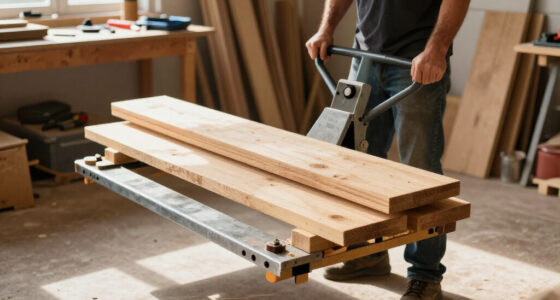
| Sheet transportPanel cart | Move compatible drywall, plywood, doors and other large sheets. | Sheet support, loaded width, restraint, balance and room to turn. |
| Sheet positioningDrywall lift | Raise and hold compatible sheets for ceiling or wall installation. | Working height, sheet dimensions, capacity, assembly and permitted orientation. |
| Grip assistanceVacuum lifter or suction handle | Grip compatible tile, glass, stone or panels. | Surface compatibility, seal condition, orientation and permitted applications. Identify who or what supports the weight. |
| Working-height supportMaterial lift or lift table | Raise suitable equipment or bring materials to a workable height. | Capacity at the required load position, stability, access and storage footprint. |
| Between floorsStair-climbing hand truck | Move suitable loads on compatible stairs. | Stair dimensions, landing space, restraint, braking and required operator training. |
| Outdoor materialsWheelbarrow or site cart | Move rubble, soil and landscaping or mortar supplies. | Terrain, loaded weight, access width and controlled tipping. Dense rubble gets heavy quickly. |
| Fine adjustmentCompact installation jack | Make small positioning adjustments to compatible doors or cabinets. | Lift range, capacity, protected contact points, stability and manufacturer instructions. |
On narrow screens, scroll the comparison horizontally. Tool categories describe typical uses; suitability depends on the actual equipment and job.
Capacity is conditional.
The largest advertised number is only part of the decision. A usable setup must also fit the load, route, surface and permitted operating conditions.
Better grip does not mean less weight on your body.
A handheld vacuum tool can improve the connection to a material while the operator still supports its weight.
Its equipment capacity is not a safe manual-lifting allowance. Treat it as a grip aid unless a compatible mechanical system supports the load.
A convertible truck may have different ratings in different modes. Verify the mode you will actually use.
Check the specified lifting direction and load position. Vacuum-tool ratings can differ by orientation.
Confirm compatible surfaces, sound seals, suitable supports and the manufacturer’s operating limits.
Restraints help attach a load; they do not eliminate tipping. Keep the route visible and push rather than pull where practical.
Transport it.
Stage it. Position it.
A cart moves material through the building. A compatible lift helps place it. Plan any transfer between tools before the delivery arrives.
Receive
Confirm sheet size, weight, condition and a suitable unloading method.
Transport
Use a compatible panel cart along the measured, prepared route.
Transfer
Provide stable support and room to load the positioning equipment.
Position
Use a suitable sheet lift within its height, size and capacity limits.
Consider renting.
A sheet lift, material lift or stair-climbing truck may make more sense as a rental when use is infrequent.
Compare: rental charge, delivery and collection, accessories, rental duration and any applicable fees.
Evaluate ownership.
Regular use can justify a suitable everyday cart or truck when storage and upkeep are practical.
Compare: purchase price, accessories, maintenance, storage and transport against expected use.
The efficiency test: Can you load, move, unload and position the material under control? Smaller loads and a planned transfer can work better than filling equipment to its rated capacity.
Avoid the Wrong Purchase by Measuring the Whole Route
Choosing the Best Material Handling Tools for Efficient Renovation starts with two checks: what you are moving and where it must travel. Record the load’s weight, dimensions, balance and fragility, then measure doors, corners, thresholds and landings before selecting equipment. A generous capacity rating cannot solve a clearance problem.
Take a flat-packed cabinet upstairs. Its carton may fit through the bedroom door upright, but the loaded truck may need more turning room than the landing provides. Measure the loaded footprint, including handles and projecting material, and check the space needed to steer, rather than measuring the equipment alone. Allow for the operator’s working position too: a load that just clears the walls may still leave no room to control it or reach the restraints.
Your floor also gets a vote. Small hard casters can chatter over tile joints, while a threshold can stop a loaded cart abruptly. Match wheel size and tread to the route, and choose floor protection rated for the expected traffic; a loose blanket can bunch under wheels and create a new obstacle. Larger wheels may negotiate minor surface changes more easily, but the complete tool may need more clearance. A compact trolley can fit a narrow passage yet still be unsuitable for its uneven floor.
Think of the route as a delivery address with several checkpoints. The easiest stretch does not decide whether the journey works; the tightest or least stable point often does. OSHA’s materials-handling guidance supports choosing mechanical aids around the material and handling conditions, rather than weight alone. [1]
Use those checkpoints to decide whether you need one tool for the whole journey or a planned transfer. A site cart that works from the delivery vehicle to the entrance may be awkward indoors. Switching equipment can solve that mismatch, but it introduces another unloading and loading operation. Plan a suitable transfer space and support method before delivery; otherwise, the effort saved on the first stretch can return as an awkward lift at the doorway.
- Load: Verify weight, dimensions, balance and usable gripping points.
- Route: Check width, turning room, steps, slopes and overhead clearance.
- Destination: Leave room to unload without trapping yourself or blocking an exit.
Popular right now

Bose QuietComfort Wireless Bluetooth Headphones with Active Noise Cancellation, Mic, USB‑C Charging, Deep Bass, 24‑Hour Battery – White Smok

Bose QuietComfort Wireless Noise-Cancelling Over-Ear Headphones, Black

Apple AirPods Pro 3 Wireless Earbuds with Active Noise Cancellation
As an affiliate, we earn on qualifying purchases.
Choose the Right Tool for Boxes, Appliances and Bulky Loads
The Best Material Handling Tools for Efficient Renovation serve different jobs: a hand truck carries suitable stacked supplies, an appliance dolly restrains compatible bulky appliances, and a platform cart supports loads across level floors. Your practical rule is to match each tool to a specific job instead of expecting one trolley to handle everything.
| Tool | Useful renovation task | Check before use |
|---|---|---|
| Convertible hand truck | Moving boxed fixtures and flooring cartons | Capacity in the selected configuration, wheel size and load restraint |
| Appliance dolly | Moving suitable refrigerators or washing machines | Straps, padding, load dimensions and permitted route |
| Platform cart or furniture dolly | Moving cabinets and furniture across level floors | Support points, caster condition and floor compatibility |
| Wheelbarrow or site cart | Moving rubble, soil and supplies outdoors | Terrain, loaded weight, access width and tipping control |
The main tradeoff is compactness versus the way the load is supported. A two-wheel hand truck can manoeuvre through a relatively narrow route, but you must bring the load into its travelling position and control its balance. A platform cart supports the load across its deck, but its larger footprint may be harder to turn inside a small room. Neither advantage settles the choice until you include loading, travel and unloading.
For example, several flooring cartons may sit neatly on a hand truck, but their combined weight can climb quickly. Add up the actual carton weights, secure the load as instructed, and keep your view of the route clear. OSHA recommends clear visibility and pushing rather than pulling where practical. [2] Filling the truck to its rated capacity is not an efficiency target: if the stack obstructs your view or makes controlled movement difficult, smaller loads can reduce interruptions and awkward corrections.
An appliance dolly’s restraints help keep a compatible appliance attached to the frame, but restraint does not remove the need to control balance. A strapped appliance can still tip with the dolly. Check the appliance’s transport instructions as well as the dolly’s instructions, because the permitted handling position and suitable contact points affect how you can move it.
A low furniture dolly can work well beneath a suitable cabinet on a flat route. It gives you little control over steps or slopes, though, and a tall cabinet may become unstable when a caster catches. Check where the cabinet can safely bear its weight; a decorative plinth is not automatically a transport support point. The dolly may comfortably meet the weight rating while concentrating that weight onto a part of the cabinet that cannot carry it.
For outdoor demolition waste, a site cart may save repeated trips, but dense rubble can make a small load surprisingly heavy. Choose manageable loads and controlled unloading over a towering pile that sheds sharp fragments. Consider the return journey and unloading space too: saving one trip has little value if you cannot empty the cart under control. Wear protective footwear, gloves and eye protection appropriate to the debris.
Move Sheets Easily, Then Hold Them Steady for Installation
For handling sheet materials, use a panel cart to transport compatible drywall, plywood or doors, then use a suitable drywall lift to raise and hold sheets for installation. Transport and positioning are separate jobs: getting a board into the room does not give you controlled support at the ceiling.
A full-size sheet behaves like a sail when you carry it through an open doorway. Its broad face catches air, its corners find doorframes, and its size can hide obstacles underfoot. A compatible panel cart supports the sheet, but you still need turning clearance and load stability, especially with tall sheets on a narrow base. Carrying several boards together may cut trips, yet it also makes the loaded cart harder to position and each unloading step more consequential. Follow the cart’s loading and restraint instructions rather than treating spare deck space as permission to add another sheet.
For a spare-bedroom ceiling, check the lift’s maximum working height, permitted sheet dimensions and rated capacity before renting it. Also check how its base fits around the room’s obstacles. A lift that reaches the ceiling but cannot sit in the required position will not finish the job for you. Plan where you will load its cradle and how you will reach the fixing points once the sheet is supported; the lift and your access equipment must fit into the same working space.
The easily missed step is transferring the sheet from cart to lift. A lift reduces the need to hold a board overhead, but it does not automatically remove the effort of loading it. Arrange the staging area so the permitted loading method is practical, with suitable assistance where needed. If the boards arrive behind the lift or block its base, you may end up moving them twice before the first fixing goes in.
A compact installation jack serves a different purpose: small, controlled adjustments while fitting a suitable door or cabinet. Protect the contact surfaces, follow the permitted support arrangement, and remember that temporary positioning support does not replace the fixings or permanent supports the installation requires. Fine adjustment is useful because it lets you check alignment without repeatedly lifting and lowering the whole component; it does not mean the jack controls every direction in which that component can move.
A cart gets material to the work. A lift helps put it in place. Plan for both movements before delivery day.
Suppose you are fitting a heavy door beside freshly painted trim. A compatible jack can help with fine height adjustments, while a helper controls balance where needed. The jack handles the vertical adjustment; the handling method must also prevent the door from leaning or rotating unexpectedly. Keep your hands clear of pinch points as the gap beneath the door closes.
Keep Stairs and Work Platforms from Becoming Bottlenecks
On stairs, choose equipment designed for the staircase and load, with suitable restraint, braking and operator instructions. At height, plan material delivery separately from worker access. A standard dolly is not automatically stair-capable, and a ladder or scaffold does not become a goods lift because you need materials upstairs.
Imagine moving a washing machine around a half-turn landing. Even a stair-climbing truck needs space to turn, compatible stair dimensions and an operator who understands its controls. Check the entire staircase, including tread condition and landing clearance; the first straight flight tells you only part of the story. The transition onto a landing matters because the load’s position and direction change there. Equipment that can climb a straight flight may still leave you unable to complete the turn in its permitted operating position.
Do not improvise an equipment trial with a loaded appliance halfway up the stairs. If the route or load exceeds your experience, use professional movers or lifting specialists who can plan the move and provide suitable equipment. Additional people help only when you have a coordinated handling method and enough safe working space. On a tight staircase, another helper can occupy the very space needed to steer or operate the equipment. Agree roles and the instructed stopping procedure before movement begins.
For elevated work, check the permitted platform load, including people, tools and stored materials, against the access equipment’s instructions. Keep platforms and access routes clear. Several cartons staged within reach may feel convenient while creating overloading or trip hazards. The tradeoff is between fewer supply trips and usable working space: delivering smaller quantities as needed can keep the platform clear, provided the delivery method itself is planned and suitable.
Check any instructions about load placement as well as total weight. A stack concentrated in one area is not necessarily equivalent to the same material distributed as permitted. Plan the handover too, so receiving a sheet or carton does not require a worker to overreach or leave a protected working position.
Before moving connected equipment, have licensed professionals handle electrical or gas disconnections, with power off and supplies isolated as appropriate. Use qualified, licensed professionals where required for structural or roof work, and check local code and permit requirements. Schedule those dependencies before the handling equipment arrives; a booked dolly or lift cannot make a connected appliance ready to move. Material handling equipment helps with movement; it does not make those trades a casual DIY task.
Use Suction Handles Without Mistaking Grip for Lifting Support
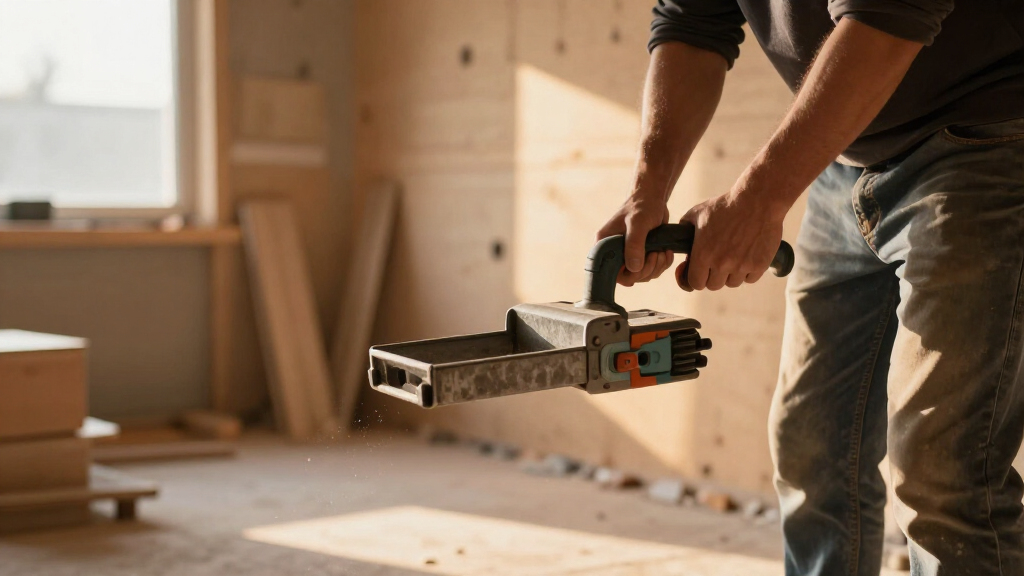
A handheld suction lifter provides a grip on approved surfaces; it does not necessarily provide mechanical support for the weight. Choose the exact tool for the material, lifting orientation and permitted load, then follow its inspection and operating instructions. Your body may still carry the full load. [3]
That distinction matters when you move a large tile onto a workbench. A suction handle can give you a more useful hold than slippery edges, but the tile has not become lighter. Think of it as adding a handle to a suitcase: the grip improves while the weight stays the same. A better handle may make the movement feel more controllable without making the load suitable for you to carry. Its size, your reach and the distance to the bench still matter.
Surface compatibility also varies. A tool suitable for smooth glass may not suit textured tile, porous stone or timber. Check the manufacturer’s permitted materials, seal condition and preparation instructions rather than assuming that a brief initial grip proves the tool is safe for the whole movement. The seal must remain effective throughout the permitted handling operation, including any changes in orientation. An initial hold answers only whether the tool has attached at that moment.
Some powered vacuum tools offer pressure monitoring and automatic vacuum maintenance. These features help you monitor and maintain suction, but they do not cancel surface restrictions or replace the operating instructions. Treat the display as one part of the handling method, not permission to ignore an unsuitable load. Before lifting, understand what the tool’s warnings mean and the manufacturer’s required response; discovering that while holding a fragile panel leaves little room for a controlled decision.
Read ratings for the actual lifting orientation; a published maximum may apply only under specified conditions. For example, carrying a panel upright and lifting it flat can place different demands on the suction attachment. If the movement includes both positions, check that the tool is permitted for the complete movement rather than relying on the most generous figure.
For large glazing or stone, a mechanically supported vacuum lifting system may be needed, together with specialist handling expertise. The useful distinction is where the weight goes: with a handheld tool, it passes through the handle to the person; with a suitable lifting system, it passes into the supporting equipment. Keep people clear of the potential fall or crush area, and never treat equipment capacity as your personal lifting allowance. [1][3]
Save Trips and Rental Costs Before Work Starts
The Best Material Handling Tools for Efficient Renovation pay their way when they fit your whole workflow, including delivery, staging, installation and waste removal. Compare rental and ownership costs against actual use, then prepare a clear route and unloading space. A specialist tool sitting behind clutter contributes nothing.
For one ceiling project, renting a compatible drywall lift may make more sense than storing and maintaining one for years. For recurring work, a durable hand truck may earn regular use. Compare rental charges, delivery, accessories, maintenance and storage instead of looking only at the purchase price. Ownership gives you availability when the schedule changes, while rental lets you select equipment for the particular job. That flexibility matters when successive rooms or properties have different access constraints.
As a hypothetical example, a £60 rental plus £30 delivery totals £90 before any other charges. Three such rentals cost £270; a fourth takes the total to £360, above a £300 purchase price. That comparison is useful only if each rental covers an equivalent period of work and the purchased tool suits all those jobs. Your local prices, storage costs, maintenance and possible resale value can change the decision. A cheaper purchase that needs replacing or supplementing for the next project may offer little saving.
Prepare the room before the rental period starts, and check the supplier’s collection, extension and return terms. A lift delivered before the materials or preceding work are ready can accumulate hire charges without helping you finish. Leave realistic time for setup and familiarisation too; a schedule that assumes immediate full-speed use can turn a short rental into a rushed job.
- Book the right equipment: Give the supplier the load details and route measurements.
- Prepare the route: Remove obstacles and secure suitable floor protection.
- Inspect before loading: Check wheels, frames, straps, brakes, seals and controls as applicable.
- Stage near the task: Leave working space, exits and access routes clear.
- Plan waste removal: Separate sharp debris and avoid uncontrolled dust release.
Judge efficiency by how many times you handle each item, as well as how many trips you make. Delivering every carton into the room at once can look efficient until the stack blocks the installation area and must be shifted again. Stage materials in the order you expect to use them, while respecting floor or platform limits, and preserve the route needed to remove packaging and waste.
For powered handling equipment, check runtime under the intended duty, charging arrangements and recovery procedures. A battery interruption matters more when it strands equipment on a constrained route than when it pauses work beside a clear staging area. Follow the manufacturer’s recovery method and plan around the available runtime. Motor torque alone cannot tell you whether a stair-climbing truck suits your staircase. Likewise, DIY-grade versus pro-grade matters less than permitted use, stability, serviceability and whether the tool fits your actual job.
You can verify the handling principles in these references: [1] OSHA, Materials Handling and Storage, https://www.osha.gov/Publications/OSHA2236.pdf; [2] OSHA, Pushing, Pulling, and Carrying, https://www.osha.gov/etools/electrical-contractors/materials-handling/pushing; and [3] NIOSH, Simple Solutions: Ergonomics for Construction Workers, https://www.cdc.gov/niosh/docs/2007-122/pdfs/2007-122.pdf.
Frequently Asked Questions
What material handling tools do you need for a small renovation?
Start with the loads you expect to move, rather than buying a complete equipment collection. A suitable hand truck may cover boxed supplies, while a platform cart can help with compatible cabinets on level floors. Rent a specialist lift or panel cart when the material or installation demands it.
Should you rent or buy a drywall lift?
Renting often suits occasional ceiling work, especially when storage space is limited. Buying can make sense for repeated use, but include maintenance, transport and storage in your calculation. Check height, sheet size, capacity and setup space before committing to either option.
How do you choose the correct load capacity?
Verify the total supported load, then check the rating for the equipment’s exact configuration and operating conditions. Load position, attachments and lifting orientation can affect the permitted capacity. A larger rating does not correct poor balance, inadequate restraint or an unsuitable route.
Can suction lifters grip textured tile, stone or wood?
Compatibility depends on the exact model and surface; do not assume all suction tools suit porous or textured materials. Check the permitted applications, seal condition and manufacturer’s preparation instructions. Even a secure grip does not mean the tool mechanically supports the weight.
How can you move appliances without damaging finished floors?
Use suitable equipment with clean wheels, protective padding and the specified restraints. Protect the route with material suitable for the floor finish and loaded traffic, and secure it against movement. A grit-covered caster or dragging corner can defeat your floor protection, so inspect both before starting.
Conclusion
Choose the tool around the journey, from the delivery vehicle to the final fixing point. Before your next renovation delivery, write down the load details, measure the tightest part of the route and decide how you will support the material during installation. Those checks give you a practical basis for choosing equipment that actually fits the work.
When the route demands specialist handling, rent the right equipment or bring in experienced help before the load reaches the obstacle. Your goal is controlled movement with fewer awkward holds, protected finishes and room to work safely. Leave the wrestling match out of the hallway, and keep your energy for the renovation itself.