
TL;DR

Get business pricing on tools and workshop supplies
- Business-only prices and quantity discounts
- Tax-exempt purchasing
- Multiple users, one account, clear invoices
Efficient scaffolding replacement starts with a condition survey, a task-specific plan, and an inventory of compatible parts. Have trained, competent scaffold personnel carry out changes under an approved sequence, control access while the structure is altered, and arrange the required inspection before workers return. The right upgrade can save time over the whole job; rushing a swap can cost far more in downtime and risk.
A scaffold can look like a stack of familiar tubes and platforms, but one missing tie or mismatched connection can change how the whole structure carries weight. That is why scaffolding replacement is a planned structural change, not a quick parts swap.
This guide shows you how to survey what is already there, choose upgrades that solve a real access problem, and schedule the work around crews and deliveries. You will also see why compatible components, controlled access, and a competent-person inspection matter before anyone steps back onto the scaffold.
Rules vary by location and scaffold type, so use the manufacturer’s instructions and applicable local requirements as your working baseline. For a small renovation, a better stair tower may save daily trips up a ladder; on a larger construction site, a changed tie pattern may need qualified design input. The goal is safe access with less disruption, measured across the complete job.
Survey condition, configuration, access, ties, foundations, and planned loads before ordering parts.
Quarantine damaged, distorted, heavily corroded, or unidentified components for competent-person review.
Use mixed-system components only after the manufacturer or qualified designer confirms compatibility for the specific setup.
Control access during alterations, coordinate trade routes, and follow the approved sequence.
Arrange the required competent-person inspection and communicate new capacities or restrictions before returning the scaffold to use.
Tips for Efficient Scaffolding Replacement and Upgrades
A scaffold change is a structural change. Start with a condition survey, plan for the work, stage compatible parts, and control access until a competent person completes the required inspection. Plan the whole job to protect access and reduce disruption.
Check condition, layout, loads, ties, access and foundations.
Restrict access and follow the approved sequence.
Use compatible parts for the specific system and setup.
Communicate updated capacities and restrictions.
Five checks that prevent avoidable delays
Efficiency comes from getting the right information and materials in place before structural work begins.
Record condition, configuration, access, ties, foundations and planned loads before ordering.
Set aside damaged, distorted, heavily corroded or unidentified components for review.
Confirm mixed-system parts with the manufacturer or qualified designer for this setup.
Control entry, coordinate trade routes and keep to the approved change sequence.
Arrange inspection and share new capacity limits or restrictions before return to use.
Survey before you order a single part
A clean inventory turns guesswork into a parts list—and gives the team a clear starting point for cost, logistics and safety planning.
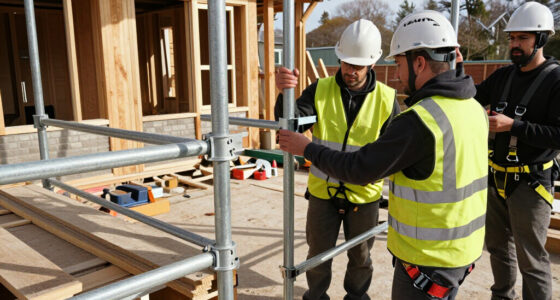
Walk the scaffold with a competent person. Check standards, ledgers, transoms, decks, ties, braces, access points, base conditions and connections. Record defects, locations, component counts, photos and the proposed action: reuse, replace or specialist review.
Look for bent members, heavy corrosion, cracked welds, missing locking parts and damaged deck hooks. Unclear identity or uncertain condition calls for review against the manufacturer’s acceptance criteria; appearance alone may not tell the whole story.
Record intended use and loads, including workers, tools, stored materials, sheeting, hoists, weather exposure and loading bays. A change in one bay can affect neighboring areas and the scaffold’s load path.
Choose upgrades for the task
A useful feature improves a defined part of the job without creating an unplanned load or stability issue.
Stairs & access
Consider a designed stair tower when crews make repeated trips carrying tools. Keep safe access and egress available through each work phase.
Loading bays
Plan delivery points and platform loads together. A bay can improve material handling when it fits the design and load plan.
Guardrails & debris control
Choose edge and debris protection for actual site conditions, while accounting for the effects of sheeting and other added loads.
Use the right people, parts and sequence
Trained, competent scaffold personnel should carry out changes under an approved plan and applicable local requirements.
Define
List affected bays, lifts, ties, access routes, loads and the planned use after the change.
Confirm
Check the design, manufacturer guidance and competent-person review for the specific setup.
Stage & control
Verify parts and tools, mark the area out of service, and communicate an alternative route.
Alter & inspect
Follow the sequence, stop if conditions differ, then arrange inspection before return to use.
Similar-looking parts do not prove compatibility. A connection that fits may still transfer loads differently. Do not improvise a connection or remove a structural component before the approved sequence allows it. If the site differs from the design, stop and obtain competent review.
Match the action to the finding
Use the manufacturer’s instructions, the scaffold design and applicable local rules to guide the decision for the specific component and configuration.
| Finding or need | Efficient next action | Before return to use |
|---|---|---|
| Sound, identified component | ✓ Record and reuse if it meets the applicable criteria. | Confirm the completed configuration matches the approved plan. |
| Damaged, distorted or heavily corroded | ✕ Quarantine; replace or obtain competent-person review. | Document the disposition and inspect the altered scaffold. |
| Part from a different system | ~ Get manufacturer or qualified designer confirmation for this setup. | Verify the approved combination and its use restrictions. |
| Changed access or material handling need | ✓ Compare stairs, loading bays or protection against the task and loads. | Update capacity information and communicate routes or limits. |
| Unplanned site condition or uncertain load path | ✕ Stop the change and seek competent design review. | Resume only under a confirmed method and required inspection. |
Make the new setup clear to everyone
Close out records and communicate what changed before workers return to the scaffold.
Requirements vary by location and scaffold type. Follow applicable local safety rules and manufacturer documentation. Update drawings or scaffold tags where used, retain inspection and maintenance records, and clearly communicate new capacity or restrictions.
Survey the scaffold before you order a single part
Tips for efficient scaffolding replacement start with a condition and configuration survey, because you need to know what is damaged, what can be reused, and what the structure is meant to support. Walk the scaffold with a competent person and check the standards, ledgers, transoms, decks, ties, braces, access points, base conditions, and connections. A clean inventory turns guesswork into a parts list.
Look for bent or distorted members, heavy corrosion, cracked welds, missing locking parts, damaged deck hooks, and components whose identity or system is unclear. A rusty scratch and a deeply pitted tube are not the same thing; neither is safe to judge by appearance alone if the manufacturer sets acceptance criteria. Quarantine questionable parts until a competent person assesses them.
Record the scaffold’s intended use and loads as well as its condition. Workers, tools, stored materials, sheeting, hoists, weather exposure, and loading bays all affect the plan. For example, if a plastering crew has stacked bags of material on a platform, changing one bay can affect more than the crew using that bay.
Use a simple survey record with component counts, defects, locations, photos, and the proposed action for each item: reuse, replace, or specialist review. That small bit of paperwork can prevent a crew from waiting while someone drives back for four missing transoms. It also gives the project a clear starting point for budget, logistics, and safety planning.
Popular right now

KitchenAid Artisan Series 5-Quart Tilt-Head Stand Mixer, Dried Rose (KSM150PS)

Vitamix Propel Series 510 Professional-Grade Blender, 3 Programs, Black

Dreame L50 Ultra Robot Vacuum and Mop
As an affiliate, we earn on qualifying purchases.
Choose upgrades that fix the job’s actual access problem
A useful scaffold upgrade solves a defined work problem, such as safer access, more room to load materials, better edge protection, or less interference between trades. Start with the task: what are workers carrying, where do they need to reach, and how often will they move? A new feature earns its place when it improves the work without creating an unplanned load or stability issue.
For instance, a crew repairing a long brick wall may lose time climbing a ladder with tools in hand. A designed stair tower can give workers a more practical route, while a loading bay may help deliver materials to a planned level. Both changes still need to fit the scaffold design and load plan; an upgrade is not permission to add weight wherever a gap appears.
Consider guardrails, stair access, loading bays, debris protection, and a different scaffold system in light of the site’s actual conditions. Modular systems can make repeat layouts easier to plan, but the specific parts must still be assembled as their manufacturer directs. Some projects use drawings or 3D models to coordinate a scaffold layout with the building and other temporary works; the value depends on the project and available tools.
When comparing replacing or upgrading options, include the whole job cost: design support, compatible parts, transport, erection and dismantling labor, inspections, protections, and downtime. If a task is short or a specialized system is needed briefly, renting may beat buying and storing equipment. The principle is to choose the simplest configuration that safely supports the work, not the one with the longest feature list.
Use the right people, parts, and sequence for each change
Scaffold replacement and upgrades should be carried out by trained, competent scaffold personnel under an approved plan and applicable local rules. Similar-looking parts from different systems do not prove compatibility. Ask the manufacturer or a qualified scaffold designer to confirm a proposed combination for the specific components and configuration before it reaches the workface. A connection that assembles easily may still transfer loads differently from the tested system, so a fit check alone cannot establish that the scaffold retains its intended capacity.
Plan the sequence before the first structural part comes off. Identify what is being changed, who is responsible, how the structure will remain stable through each stage, and what access workers can use while the work proceeds. A tie, brace, bay, lift, or foundation change can affect how loads travel through the scaffold. The order matters because removing a component can shift forces onto members that were not intended to carry them alone. Never let a crew improvise a connection to keep the schedule moving.
A practical sequence begins with a marked work area and a check that the necessary compatible parts, tools, lifting arrangements, and approved instructions are on site. The scaffold team then follows the plan, keeps structural components in place until the sequence permits removal, and stops if site conditions differ from the design. Checking parts and instructions before the crew starts may take time, but it helps avoid a mid-job stoppage that leaves the scaffold partly altered and the work area closed.
- Define the change: list affected bays, lifts, ties, access routes, loads, and the planned use after the work. This makes it possible to judge whether the proposed change affects adjacent areas as well as the immediate workface.
- Confirm the method: get the applicable design, manufacturer guidance, and competent-person review for the specific setup. Resolving uncertainty before dismantling is generally simpler than trying to restore stability after an unexpected condition appears.
- Stage parts and control access: verify component identity and condition, mark the affected area out of service, and communicate an alternative route. Staging prevents delays, while clear boundaries reduce the chance that someone enters an area whose stability or access has changed.
- Make the change and inspect: follow the approved sequence, then arrange the required inspection before return to use. The inspection checks the completed arrangement against the plan; it cannot make an unapproved alteration acceptable after the fact.
This method makes tips for efficient scaffolding replacement practical: the crew spends less time hunting for parts or resolving surprises, while the job stays under controlled access conditions. The tradeoff is a little more preparation before work begins in exchange for fewer interruptions and a clearer basis for deciding when the scaffold can reopen.
Keep workers safe and trades moving during scaffold work
When scaffold work is under way, isolate the affected area, maintain suitable fall protection, and provide safe access and egress under the approved plan. Workers should not remove structural parts unless the planned sequence allows it. A section that looks untouched from the ground may still rely on a tie or brace in the work zone, so do not assume nearby platforms remain safe to use.
Coordinate the change with the trades that depend on the scaffold. A short meeting can clarify which bay is closed, how materials will move, and where workers should go instead. For example, if a painter needs the north elevation on Tuesday, schedule the replacement on that face before the crew arrives or agree on an approved alternative work platform. Clear signage and a named contact help prevent someone from moving a barrier to save a few steps.
Where practical, schedule scaffold changes between shifts or work phases, and coordinate deliveries, lifting equipment, and trade access. Keep the delivery route clear and check that the receiving area can handle the parts without blocking emergency routes. If a hoist, sheeting, or weather changes the load conditions, bring that information into the plan instead of treating it as a minor site detail.
Efficiency is not simply keeping every platform open every minute. A controlled closure may be the fastest safe option when it avoids confusion, repeated setup, and a rushed repair. Make the status visible with site communication and tags where used, and tell crews exactly which routes and levels remain available.
Inspect the changed scaffold and close out the records
After erection or alteration, a competent person should inspect the scaffold before it returns to use, as required by local rules and the project’s procedures. The inspection checks whether the completed structure matches its approved arrangement and whether it is safe for the intended work. A fresh tag alone is not an inspection; the person must assess the actual scaffold.
Review the parts changed, connections, ties, bracing, foundations, decks, guardrails, access, and any load restrictions that apply. If the upgrade adds a loading bay, confirm that the permitted use is clear to the crews and that material storage follows the plan. A scaffold can be physically complete yet still need restrictions communicated before people use it.
Keep records appropriate to local requirements and site procedures. These may include design information, component checks, alteration details, inspection findings, repairs, and use restrictions. Digital inspection records and asset tracking can help a larger site follow equipment across work areas, but a spreadsheet or paper log can work if the information stays current and easy to find.
Imagine a crew returns after lunch and sees the scaffold back in place, but nobody knows that one platform has a lower load limit. A clear handover prevents that avoidable mismatch. Update drawings or tags where used, record defects that remain out of service, and tell the affected trades what changed before reopening the route.
Measure efficiency by the whole job, not the fastest swap
Scaffolding can improve access and productivity when its layout matches the work, but the measure of efficiency is the complete job: safe access, reliable components, reduced disruption, and less rework. A quick component swap that leaves an incompatible connection or unclear access route is false economy. A planned half-day closure may save several days of confusion and repair.
Before approving the budget, include more than the replacement parts. Allow for a survey, design or engineering support when needed, compatible components, transport, erection and dismantling labor, lifting arrangements, inspections, protection measures, and the cost of downtime. On a small house project, renting a stair tower for a short phase may cost less than buying equipment that sits unused. On a recurring project, a standardized modular system may make logistics easier.
Use a short look-ahead plan to align deliveries, trades, and work phases. One example: a roofing crew needs access to a facade scaffold while a window team wants the same elevation clear. Agree the sequence before parts arrive, or both crews may lose time waiting on the same narrow route. A dry-run of the delivery and access plan can reveal a blocked gate or storage area before the truck arrives.
Industry practices such as modular systems, prefabrication, digital records, and layout modeling can help repeatability and coordination, but availability and rules vary by country and project. Choose tools that match the scale of the job. The most useful tips for efficient scaffolding replacement are often simple: survey early, stage the right parts, coordinate the sequence, and keep the inspection and restrictions visible.
Frequently Asked Questions
When should you replace a scaffold component?
Replace components that are damaged, distorted, heavily corroded, incomplete, or outside the manufacturer’s acceptance criteria. Have questionable parts assessed by a competent person; appearance alone does not confirm that a component is fit for use.
Can you mix scaffold components from different brands?
Only when compatibility is confirmed for the specific parts and configuration by the manufacturer or a qualified scaffold designer. Similar dimensions or a connection that seems to fit do not prove the parts carry loads safely together.
Who should carry out scaffold alterations?
Trained, competent scaffold personnel should make alterations under an approved plan and in line with applicable local requirements. Rules vary by location and scaffold type, so confirm who is qualified for your project before work starts.
Does a scaffold need another inspection after an upgrade?
A competent person should inspect the scaffold after an alteration and before it returns to use, as required by applicable rules. Changes to ties, bracing, bays, lifts, or foundations can affect stability and capacity even when the rest of the structure appears unchanged.
Can workers keep using part of a scaffold while another part is replaced?
That depends on the design and approved work sequence. Do not assume an unaffected-looking platform is safe; the site plan must set the access limits, fall protection, and safe routes while the work takes place.
What should you include in a scaffold upgrade budget?
Include compatible components, transport, design or engineering support when needed, erection and dismantling labor, lifting arrangements, access changes, inspections, protection measures, and downtime. Renting can suit a short or specialized task, while recurring work may justify a standard system that is easier to plan and track.
Conclusion
Treat scaffold replacement as a planned change to a temporary structure: survey it, confirm compatible parts, control access, follow an approved sequence, and inspect before use. That discipline protects workers and keeps avoidable delays from multiplying across the job.
When the crew returns, every platform should tell the same story: this is the route, this is the load limit, and this is safe to use. Make that clear before the first boot hits the deck.