TL;DR

Get business pricing on tools and workshop supplies
- Business-only prices and quantity discounts
- Tax-exempt purchasing
- Multiple users, one account, clear invoices
Multi-position ladders combine stepladder, extension, staircase, and 90-degree wall configurations in one adjustable system, making them the most versatile ladder for home renovations. Buy based on duty rating (300 lb minimum for renovation work), approved configurations, and material — aluminum for most tasks, fiberglass near electrical hazards. The biggest mistakes are choosing by advertised reach alone and skipping the lock inspection before every climb.
I’ve carried the same Little Giant-style multi-position ladder through roughly two decades of renovation work, and it has done jobs a stepladder, an extension ladder, and a stair scaffold would each have handled separately. That’s the honest pitch: one adjustable system, four or five ladders’ worth of reach. Multi-position ladders combine several configurations in one adjustable frame — stepladder, extension, staircase, and 90-degree wall mode — and their versatility makes them the default choice for versatile home renovations.
But here’s the part most buyers miss. These ladders have more hinges, more locks, and more ways to set them up wrong than any single-purpose ladder. In my years on job sites, the multi-position ladder is also the ladder people misuse most often — half-latched, overloaded, or propped on ground it was never rated for.
In this guide, you’ll learn what to look for when buying — configurations, duty ratings, materials, and weight tradeoffs — plus a task-by-task setup cheat sheet and the safety checks I run before every single climb. No product reviews, no fluff. Just the specs and habits that keep you working.
Buy at least a Type IA (300 lb) duty rating for renovation work — and remember the rating covers you plus clothing, tools, and materials combined, never two pe…
Choose by extension length and highest permitted standing rung, not by advertised ‘reach height,’ which assumes an average-height user with an arm extended.
Aluminum covers most renovation tasks; switch to fiberglass whenever work happens near electrical systems — and always kill the breaker regardless of rail mate…
Inspect every hinge and lock visually and physically before every climb; adjust configurations only from the ground, never while on the ladder.
For hours of work at a fixed height, a platform ladder or scaffold beats a multi-position ladder — versatility wins when the work moves, not when it stands sti…
Top Multi-Position Ladders for Versatile Home Renovations
One adjustable frame, four or five ladders’ worth of reach. Multi-position ladders combine stepladder, extension, staircase, and 90-degree wall configurations — making them the default choice for renovation work where terrain and ceiling heights change room by room. The honest pitch from two decades on job sites: buy on duty rating, approved configurations, and material — never on advertised reach alone.
Four Configurations, One Frame
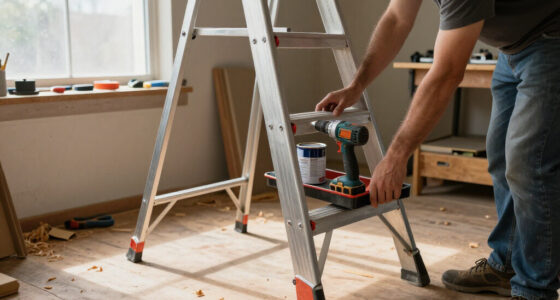
A multi-position ladder is an articulated aluminum or fiberglass ladder with locking hinges at its center joints. Not every articulated ladder approves every configuration — verify the label before you buy, and only use a scaffold position if the manufacturer explicitly approves it and supplies the correct platform.
A-Frame Stepladder
Free-standing mode for interior painting, drywall, and fixture work at ceiling height.
Extension Ladder
Straightens for exterior repairs, gutter access, and tall walls. Overlap between sections eats working length.
Staircase Ladder
Legs at different lengths for stairwells — both feet fully supported on separate treads.
90° Wall Ladder
Locks flush against a wall for close-in work like trimming, detailing, and tight corridors.
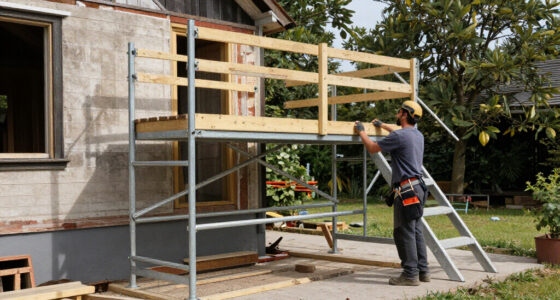
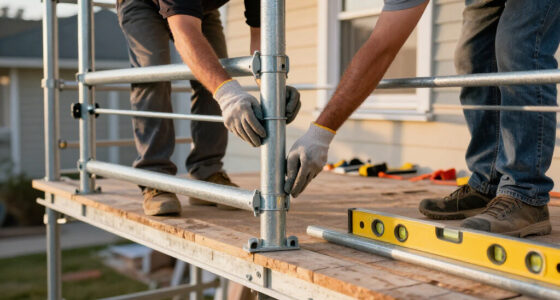
Know the limits: no multi-position ladder becomes scaffolding just because you laid a 2×10 across the rungs — that’s how people get hurt. Some models approve twin-stepladder or trestle-and-plank setups; many do not. And expect the tradeoff: you get four ladders’ capability and pay for it in carry weight every single time.
Duty Ratings: Do the Math Before You Climb
The rating must cover the combined weight of the user, clothing, PPE, tools, and materials on the ladder. A 300-pound rating does not mean two people can climb it — two-person use requires an explicitly rated twin configuration.
| Rating Type | Capacity | Duty Class | Renovation Use |
|---|---|---|---|
| Type III | 200 lb | Household | ✗ Too light — think changing a hallway light bulb, nothing more |
| Type II | 225 lb | Light duty | ✗ Gutter cleaning on a single-story ranch, no tool belt |
| Type I | 250 lb | Professional, medium duty | ~ Adequate for light users with minimal loads |
| Type IA | 300 lb | Professional, heavy duty | ✓ The sweet spot for renovation work — the minimum to buy |
| Type IAA | 375 lb | Extra heavy duty | ✓ Roofers hauling shingle bundles up the rails |
Don’t Get Fooled by “Reach Height”
The single biggest buying mistake is choosing by advertised reach alone. Reach height, ladder length, and safe standing height are three different numbers — and manufacturers’ reach estimates assume an average-height user with an arm extended. Buy the shortest ladder that safely reaches the work; longer models just add weight and wall-banging bulk indoors.
A Real Tally from a Painting Job
Last fall’s job: a 210-pound homeowner, work boots and clothing (8 lb), a loaded tool belt (12 lb), and a gallon of paint (11 lb). That’s 241 pounds before he grabbed a second can. A Type II ladder would have been overloaded at the first step.
Aluminum vs. Fiberglass: Right Rails, Right Job
That’s the whole decision: aluminum for most tasks, fiberglass near electrical systems. Same property, same week — I’ve hauled aluminum for soffit work all morning, then swapped to fiberglass for a porch light six feet from the service drop.
Aluminum
- Light — matters by noon when hauling it around the house a dozen times a day
- Corrosion-resistant and durable
- Conducts electricity — never near electrical systems
- Dents under rough handling
Fiberglass
- Clean, dry rails don’t conduct electricity — backup protection near wiring
- Costs more than equivalent aluminum
- Often 20–30% heavier — an extra 10–15 lb on a 22-ft model up a flight of stairs
- Rails can chip or degrade if stored badly
The strict caveat: fiberglass does not make energized electrical work safe. Kill the breaker, verify with a tester, and treat wiring near the service entrance as licensed-electrician territory. The fiberglass rail is a seatbelt — you wear it, but you still don’t drive into walls.
The Safety Checklist Before Every Single Climb
The multi-position ladder is also the ladder people misuse most often — half-latched, overloaded, or propped on ground it was never rated for. These are the checks I run before every climb, no exceptions.
Inspect every hinge and lock
Visually and physically — look for full engagement, then confirm by hand before weight goes on.
Adjust only from the ground
Change configurations with both feet on the floor. Never adjust the ladder while standing on it.
Verify the rating covers total load
You plus clothing, PPE, tools, and materials. Add it up — a gallon of paint alone is about 11 lb.
Check the footing
Both feet fully supported. Leveling legs compensate for limited variation — they don’t make loose or unstable ground safe.
Match the tool to the task
For hours of work at a fixed height, a platform ladder or scaffold wins. Versatility matters when the work moves.
Respect the standing-rung limit
Never stand above the rung the manufacturer marks as the maximum — it’s printed there for a reason.
What a Multi-Position Ladder Actually Does (And What It Doesn’t)
A multi-position ladder is an articulated aluminum or fiberglass ladder with locking hinges at its center joints, letting it fold into an A-frame stepladder, straighten into an extension ladder, split into a staircase ladder with legs at different lengths, or lock into a 90-degree wall ladder. Position ladders combine four or five tools in one adjustable frame, and their versatility makes them ideal for renovation work where the terrain and ceiling heights change room by room.
Last spring I repainted a two-story stairwell — tall wall on one side, sloped ceiling on the other. One ladder, staircase mode, both feet fully supported, done. With a conventional stepladder, that job requires a scaffold or a gymnastics routine I don’t recommend.
But know the limits. Not every articulated ladder supports every configuration. Some models approve twin-stepladder use or trestle-and-plank scaffolding; many do not. And no multi-position ladder becomes scaffolding just because you laid a 2×10 across the rungs — that’s how people get hurt. Only use a scaffold position if the manufacturer explicitly approves it and supplies or specifies the correct platform.
The other honest limitation: a multi-position ladder is heavier than a single-purpose equivalent. A 22-foot aluminum model runs roughly 40–50 pounds. You get four ladders’ capability, and you pay for it in carry weight every single time.
Popular right now

Vitamix Propel Series 510 Professional-Grade Blender, 3 Programs, Black

Dreame L50 Ultra Robot Vacuum and Mop

Bose QuietComfort Wireless Bluetooth Headphones with Active Noise Cancellation, Mic, USB‑C Charging, Deep Bass, 24‑Hour Battery – White Smok
As an affiliate, we earn on qualifying purchases.
How to Read the Specs Without Getting Fooled by ‘Reach Height’
The single biggest buying mistake is choosing by advertised reach alone. Reach height, ladder length, and safe standing height are three different numbers, and manufacturers’ reach estimates assume an average-height user with an arm extended. Your real planning number is the maximum extension length combined with the highest permitted standing rung — never stand above the rung the manufacturer marks as the limit.
Here’s the math I run with clients. If your highest task is a 17-foot entry light, you need to stand no higher than about 14 feet, which means roughly a 20–22 foot multi-position ladder in extension mode. Then check the required overlap between sections, because overlap eats into your working length. Buy the shortest ladder that safely reaches the work — longer models just add weight and wall-banging bulk indoors.
Duty rating matters just as much as length. U.S. ratings break down like this:
- Type III — 200 lb (household; too light for renovation work — think changing a light bulb in the hallway, nothing more)
- Type II — 225 lb (light duty — cleaning gutters on a single-story ranch, no tool belt)
- Type I — 250 lb (professional, medium duty)
- Type IA — 300 lb (professional, heavy duty — the sweet spot for renovation work)
- Type IAA — 375 lb (extra heavy duty — roofers hauling shingle bundles up the rails)
Add yourself, boots, tool belt, a gallon of paint (about 11 lb), and a nail gun before you pick. Here’s a real tally from a painting job last fall: a 210-pound homeowner, work boots and clothing (8 lb), a loaded tool belt (12 lb), and a gallon of paint (11 lb) — that’s 241 pounds before he grabbed a second can. A Type II (225 lb) ladder would have been overloaded at the first step; the Type IA (300 lb) had headroom to spare. That’s why, for renovation use, I won’t go below Type IA (300 lb). And no — a 300-pound rating does not mean two people can climb it. Two-person use requires an explicitly rated twin configuration, like a trestle-and-plank setup where both rails are engineered for simultaneous loads.
Aluminum vs. Fiberglass: Picking the Right Rails for the Job
Aluminum is the right material for most renovation work: it’s light, corrosion-resistant, and durable. Fiberglass is the right material when you might work near electrical systems, because a clean, dry fiberglass rail doesn’t conduct electricity the way aluminum does. That’s the whole decision in two sentences.
I keep both, and here’s how it plays out in practice. Last summer I replaced soffit and fascia on a 1960s ranch — pure aluminum-ladder work, hauled around the house a dozen times a day, and the lighter rails mattered by noon. But when the same client wanted a porch light swapped on a fixture six feet from the service drop, the aluminum stayed on the truck and the fiberglass came out. Same property, same week, two different ladders — that’s how material choice actually works.
One caveat I’m strict about: fiberglass does not make energized electrical work safe. Kill the breaker, verify with a tester, and treat any wiring job near the service entrance as licensed-electrician territory. The fiberglass rail is backup protection, not a permission slip. Think of it like a seatbelt: you wear it, but you still don’t drive into walls.
Tradeoffs: fiberglass costs more, weighs more — often 20–30% heavier in equivalent sizes, which on a 22-foot model can mean an extra 10–15 pounds up a flight of stairs — and the rails can chip or degrade if stored badly. Aluminum dents and conducts. Neither forgives being dropped off a truck repeatedly.
| Factor | Aluminum | Fiberglass |
|---|---|---|
| Weight | Lighter — easier to carry indoors | Heavier, noticeably so on big models |
| Cost | Lower | Higher |
| Electrical hazard | Conducts — keep 10 ft from power lines | Resistant when clean and dry |
| Best for | Painting, gutters, siding, general reno | Fixtures, panels, any credible electrical exposure |
| Durability concern | Dents, bending rails | Chipping, weathering of rails |
For a homeowner buying one ladder: aluminum unless you do regular electrical work — say, rewiring a basement or upgrading a panel yourself. Then fiberglass, no debate.
The Features Worth Paying For (And the Ones That Aren’t)
Spending more on a multi-position ladder buys you three things: better locks, a wider stance, and smarter leveling. Everything else is convenience. Positive-locking hinges with clearly visible lock indicators are the number-one feature worth paying for, because a hinge that’s half-latched is a hinge that folds under load — I’ve watched it happen, and the guy on it was lucky.
Newer generations have moved toward one-handed palm buttons, color-coded controls, ratcheting levelers, and audible or tactile clicks when locks seat. I like these. They reduce setup errors, and setup errors are where multi-position ladders bite. But none of them replace the eyeball-and-tug check before every climb.
What actually earns its price:
- Flared or wide bases — more tip resistance on uneven garage floors
- Slip-resistant foot pads — replace them when they wear smooth
- Integrated leg levelers — genuinely useful on uneven terrain, but only within their rated adjustment range
- Wide, D-shaped rungs — your feet will thank you on hour three
- Transport wheels — helpful on flat ground; they don’t reduce lifting weight
- Accessory compatibility — stands offs and tool trays, if the manufacturer approves them
What I’d skip: proprietary gadgets with single-use value and anything the manufacturer doesn’t list for your model. Improvised blocks, boards, and homemade standoffs have no place on a ladder — period.
On brands: Little Giant’s Velocity and Revolution lines are the known benchmark for hinge quality; Werner’s MT series and Gorilla Ladders’ MPX series are solid homeowner-grade options with broad retail availability and friendlier pricing. Verify specs on the manufacturer’s own label, not the retailer listing — specs change between model years.
Which Setup to Use for Every Common Renovation Task
Match the configuration to the task and the ladder stops being a compromise. Here’s the field guide I’d hand a first-time renovator, drawn straight from job-site use.
| Renovation task | Best configuration or feature |
|---|---|
| Interior painting | Adjustable A-frame, wide rungs, tool tray |
| Stairwell painting | Staircase mode with independently adjustable sides |
| Ceiling fixtures | Stable stepladder mode; fiberglass near electrical |
| Exterior siding | Extension mode with manufacturer-approved stabilizer |
| Gutter work | Extension mode, rails extended safely above the roof edge |
| Working flat against a wall | Approved 90-degree wall configuration |
| Uneven ground | Integrated levelers within rated range |
| Hours of work at one height | Platform ladder or scaffold instead |
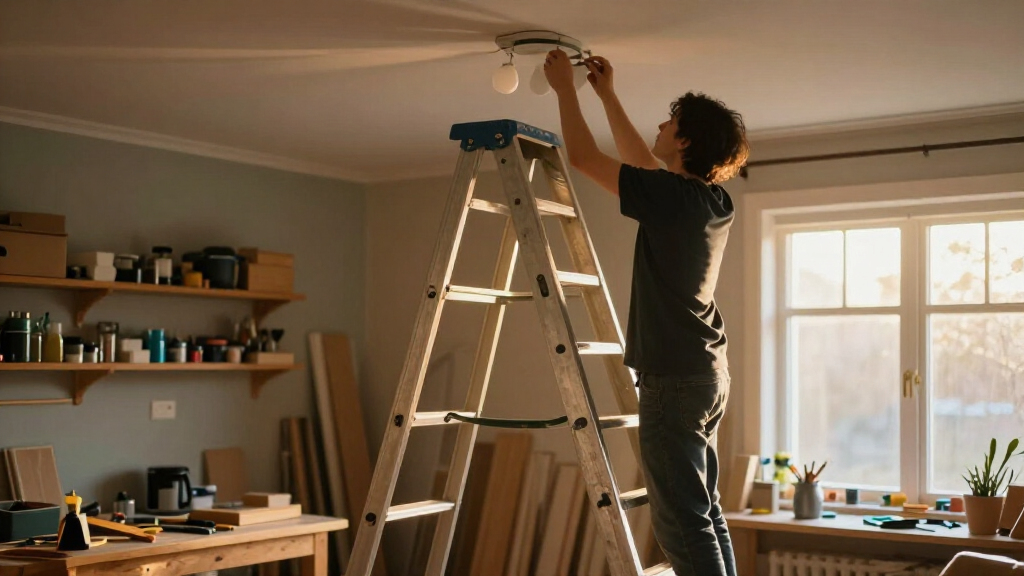
That last row is the one people ignore. I spent a day sanding a hallway ceiling from a multi-position ladder once — rung edges in the arches of my feet for six hours. For prolonged fixed-height work, a platform ladder or podium ladder gives you a surface to stand on and lean against. The multi-position wins when the work moves; it loses when the work stands still.
For extension mode, set the base at the 4-to-1 angle — one foot out for every four feet of height. So a ladder touching the wall at 16 feet wants its base four feet out. Too steep and you tip backward; too shallow and the feet slide. It’s a two-second check that prevents the most common extension-ladder accident.
The Safety Checklist I Run Before Every Single Climb
A multi-position ladder is as safe as a regular ladder when it’s correctly configured, fully locked, undamaged, and within its rating — but its extra hinges create more opportunities for setup mistakes. So you run a checklist, every time, no exceptions. Here’s mine.
- Inspect before use. Hinges, locks, feet, rails, and rungs. Cracked rails, bent rungs, or wobbly locks mean the ladder comes out of service. I once found a hairline crack in a rail only because I ran this check in daylight — the ladder looked fine in the dim garage the night before.
- Adjust from the ground. Never reconfigure any lock or telescoping section while you’re on the ladder. A homeowner I worked alongside tried to flip his ladder into extension mode mid-climb to squeeze out another two feet of reach; the hinge released and the whole thing buckled under him. He fell eight feet onto a drop cloth over concrete. Broken wrist, six weeks in a cast.
- Confirm every lock visually and physically. Look at it, then push-pull it. Both checks, every hinge. On a trestle-and-plank job years back, one lock looked seated but slid a quarter-inch under a firm tug — that quarter-inch was the difference between a workday and an ambulance ride.
- Check the surface. Firm, level, nonslip. Levelers handle small correction, not mud, loose gravel, or slopes. A freshly mulched flower bed feels firm underfoot but settles like a marshmallow under a loaded ladder — set the feet on the soil ring instead.
- Set the angle. 4-to-1 rule in extension mode — a ladder touching the wall at 12 feet wants its base three feet out — with the manufacturer’s required section overlap.
- Load-test it. Press down hard on the bottom rung before committing your full weight.
- Climb with three points of contact and keep your belt buckle between the rails. Need to reach farther? Climb down and move the ladder. Painting a dining room last year, I moved that ladder eleven times in one afternoon — slower than leaning, but I finished the afternoon on my feet.
- Secure the area. Lock doors that swing toward the ladder, keep kids and pets clear, block vehicle traffic. A door swinging into a ladder’s rails is a wrecking ball with a door handle.
The rules that save lives fastest: never stand above the marked highest permitted rung, never move or ‘walk’ a ladder while someone’s on it, and keep aluminum — ladder or tools — well away from power lines and energized equipment. Roof access requires the rails to extend above the landing by the amount your local rules and the manufacturer specify, typically about three feet.
Damaged ladder? Replace it. Structural repairs only happen through manufacturer-approved procedures — epoxy and hose clamps are not a repair method.
Buy, Rent, or Skip It? Honest Advice for Your Situation
For most renovation-focused homeowners, the strongest all-around buy is an adjustable aluminum model with a 300-pound-plus duty rating, flared feet, intuitive locks, and enough extension length for your highest planned task. Add fiberglass if credible electrical exposure exists, integrated levelers if your property is uneven, and a lighter model if you’ll carry it through doorways daily.
Now the honesty part. If your entire project list is one weekend of gutter cleaning and a hallway paint job, renting a multi-position ladder or a section scaffold costs a fraction of a $300–$500 purchase. If you own a two-story house and renovate something every season, buy — the ladder pays for itself by the third project.
Also weigh storage before you swipe the card. Measure the folded length and depth against your actual garage wall or utility closet, including protruding feet and hinges. I’ve seen more than one 26-foot ladder live permanently in a living room corner because it didn’t fit anywhere else. That’s a loud piece of furniture.
Finally: check the label for the ANSI/ASC A14 marking in the U.S. or EN 131 in Europe, along with the duty rating and approved configurations printed on the ladder itself. If a retailer’s description and the manufacturer’s label disagree, the label wins. Every time.
Frequently Asked Questions
What size multi-position ladder do I need?
Start with your highest task and calculate the height you need to stand at — not just touch. Then check the ladder’s actual maximum extension length, its highest permitted standing rung, and required section overlap. For most two-story homes, a 22-foot multi-position ladder covers interior and exterior work; a 17-foot model handles single-story and most interior projects. Ignore advertised reach height as your primary number.
Are multi-position ladders good for stairs?
Yes — but only if the model explicitly supports staircase use with independently adjustable sides. In staircase mode, one leg sits on the upper step and one on the lower, with each foot fully supported on a stable surface. Never use integrated leg levelers as a substitute for an approved staircase configuration; levelers correct small surface variation only.
Can I use a multi-position ladder as a scaffold?
Only when the manufacturer identifies an approved trestle or scaffold configuration and specifies the correct plank or platform. A random board laid across two ladder sections is not scaffolding — it’s an accident waiting for a witness. If you need real scaffold capability for long jobs, rent a proper section scaffold instead.
Is a 300-pound rating enough for renovation work?
Usually, yes — if the combined weight of you, your clothing and PPE, your tools, and your materials (a gallon of paint is about 11 lb) stays under 300 pounds. The rating does not permit two people on the ladder; two-person use requires an explicitly rated twin configuration. If you’re a bigger-framed user carrying heavy gear, step up to Type IAA at 375 pounds.
How long do multi-position ladders last?
There’s no fixed service life. Longevity depends on material, frequency of use, storage conditions, impacts, chemical exposure, corrosion, and hinge wear. Inspection condition matters more than age: a five-year-old garage-kept ladder in good shape is safer than a two-year-old one with bent rails and worn feet. Replace a damaged ladder rather than attempting structural repairs.
What’s the biggest mistake people make with multi-position ladders?
Two stand out. Buying by advertised reach alone instead of checking extension length, duty rating, folded dimensions, and lock quality. And skipping the pre-climb lock inspection — more hinges mean more ways to leave a joint half-latched. Both mistakes are free to avoid; run the checklist every time.
Conclusion
If you take one thing from this guide: the best multi-position ladder is a Type IA aluminum model with flared feet, intuitive locks, and the shortest extension length that safely reaches your highest task — fiberglass if electrical work is on the list. Everything else is a tradeoff between weight, price, and convenience.
A good multi-position ladder is like a good employee: it does four jobs without complaint, but only if you check its work before you trust it with your weight. Look at every lock. Tug every hinge. Then climb.