
TL;DR

Get business pricing on tools and workshop supplies
- Business-only prices and quantity discounts
- Tax-exempt purchasing
- Multiple users, one account, clear invoices
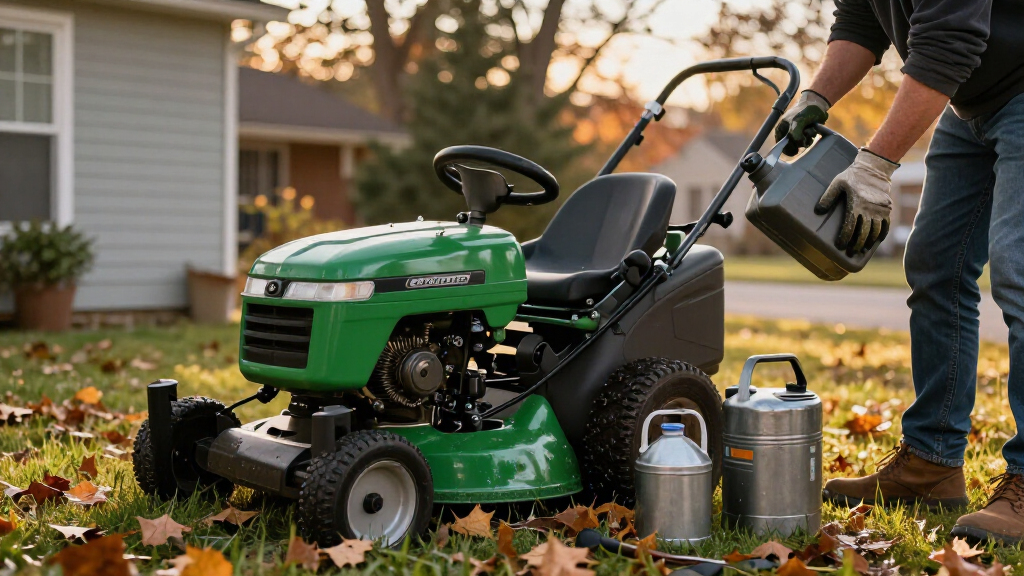
A Hunker report says riding lawn mowers should be prepared for storage after the final mowing of the season, even in areas with mild winters. It highlights fuel stabilization and battery care as priorities, while noting that the correct procedure can depend on the mower and its manual.
Riding lawn mowers should be prepared for storage when mowing ends for the season, according to a Hunker report on winter care. The report identifies fuel management and battery maintenance as priorities because leaving a mower unused for months can contribute to fuel-system problems, corrosion and a discharged battery—even where winters are mild.
Hunker describes winterizing as fall maintenance that prepares a mower to sit unused and be ready for the next mowing season. Storing the machine away from snow and ice can help protect it from weather exposure. The report says prolonged exposure to moisture and cold can contribute to rust or electrical problems, while heavy snow may damage or deform mower parts.
For owners short on time, the report emphasizes the battery and fuel tank. It recommends disconnecting the battery for storage, cleaning corrosion from its terminals and keeping the battery in a cool, dry place. Battery removal and storage procedures can vary by model, so the mower’s owner manual should guide the work.
For fuel, Hunker says gasoline can begin to break down after about a month and that ethanol in modern gasoline can absorb moisture. The report describes adding an appropriate fuel stabilizer according to its label before storing the mower, or removing remaining fuel as an alternative. It cautions that draining fuel may leave deposits that require cleaning from the carburetor. These are general recommendations, not a substitute for the instructions for a particular mower.
Seasonal preparation matters because a mower can develop problems while it is parked, not only while it is cutting grass. Stale fuel and moisture may affect fuel-system components, while an unattended battery can lose charge. Addressing those risks before storage can reduce the chance that the mower will need attention when the next mowing season begins.
Storage conditions also matter. A dry, sheltered location helps limit exposure to snow and moisture, though the report’s warnings do not establish that every mower will suffer damage if left outdoors. Owners should weigh their local conditions, available storage and manufacturer guidance rather than assume one approach fits every machine.
Popular right now

Bose QuietComfort Wireless Bluetooth Headphones with Active Noise Cancellation, Mic, USB‑C Charging, Deep Bass, 24‑Hour Battery – White Smok

Dreame L40 Ultra Gen 2 Robot Vacuum and Mop

KitchenAid Artisan Series 5-Quart Tilt-Head Stand Mixer, Dried Rose (KSM150PS)
As an affiliate, we earn on qualifying purchases.
Why Seasonal Storage Needs Attention
The recommendation applies when regular mowing stops, rather than on a single date shared by all regions. In colder climates, that may coincide with the onset of freezing weather; in warmer areas, a mower may still sit idle for an extended period. Hunker says inactivity itself can cause fuel and corrosion concerns, so mild temperatures do not remove the need to prepare equipment for storage.
The report presents winterizing as a relatively short series of tasks, estimating that the process may take an hour or two. That estimate is general: the time and steps depend on the mower’s condition, design and manual. Hunker also notes that using stabilized fuel during the mowing season is an option, but it singles out storage preparation after the last mowing as the point when owners should address the fuel and battery.
““Winterizing is the process of tuning up your lawn mower in the fall so that it’s ready for the next mowing season.””
— Hunker report
Model-Specific Steps Still Matter
The report offers general advice and does not specify procedures for every mower make, model or engine. It does not establish whether a particular machine should have its fuel tank drained or treated with stabilizer; owners should check the manufacturer’s instructions and the stabilizer label. Battery removal, storage and reinstallation steps can also vary.
The report does not quantify how likely storage damage is, or the repair costs owners might face. Outcomes depend on factors such as storage conditions, how long the mower sits and its maintenance history. It also does not provide a detailed checklist for every part of a riding mower, so its recommendations should not be treated as a complete service schedule.
Prepare the Mower After Its Final Cut
After the final mowing of the season, owners can consult the mower manual, clean and inspect the machine, and follow its directions for fuel and battery storage. Hunker’s report points to stabilizing or removing fuel and caring for the battery as key priorities, along with keeping the mower in a sheltered, dry location where possible.
Before using the mower again, owners should check it for visible damage or corrosion and follow the manufacturer’s startup and maintenance instructions. If fuel-system or battery problems persist, a qualified small-engine service professional can assess the mower.
Key Questions
Do riding lawn mowers need to be winterized?
Seasonal preparation is recommended when the mower will sit unused for months. Hunker says that applies even in areas with mild winters because inactivity can contribute to fuel and corrosion problems.
What are the most important winterizing tasks?
The report prioritizes battery care and fuel management. Follow the mower manual for disconnecting or storing the battery and for stabilizing or draining fuel.
Should I drain the gas or use fuel stabilizer?
Hunker describes both as options but does not give a rule for every mower. Check the owner’s manual and product directions; draining fuel may require additional fuel-system cleaning.
Does a mower need winterizing in a warm climate?
According to Hunker, extended periods without use can still lead to fuel and corrosion issues, so mild weather does not necessarily remove the need for storage preparation.
Source: rss