
TL;DR
A homeowner remodeling a Florida bathroom asked whether to install 3/4-inch foil-faced polyisocyanurate behind GoBoard on shower walls built against an exterior block wall. The question describes competing advice but provides no verified answer; insulation, moisture control, and the wall assembly need to be evaluated together before work proceeds.
A Florida homeowner remodeling a bathroom is weighing whether to place 3/4-inch foil-faced polyisocyanurate behind GoBoard shower walls installed over furring strips on an exterior block wall. The homeowner reports receiving conflicting advice about the insulation and which way its foil facer should face, but the question provides no confirmed answer or complete wall design.

Get business pricing on tools and workshop supplies
- Business-only prices and quantity discounts
- Tax-exempt purchasing
- Multiple users, one account, clear invoices
The homeowner, who signed the question as Dave, described a planned assembly with an exterior masonry wall, 3/4-inch furring strips, insulation board, and GoBoard on the shower walls. The question asks whether the insulation is necessary and whether the foil face should point toward the exterior wall or toward the room. Those are design questions rather than details settled by the information provided.
The proposed materials alone do not establish how the entire wall will manage heat, water vapor, and liquid water. Relevant missing details include the product instructions for the specific GoBoard and polyiso products, the existing wall finish and moisture condition, how the framing cavity is arranged, and how the shower’s waterproofing and transitions will be completed. No manufacturer, building official, or building-science professional is quoted as endorsing a particular arrangement.
For a bathroom shower, the decision should not be reduced to picking a foil direction from general advice. Foil-faced insulation can affect how readily a wall assembly dries, while shower walls face repeated moisture exposure. The homeowner should have the full assembly reviewed against the product manufacturers’ installation instructions and applicable local requirements before closing the wall.
Insulation Behind GoBoard Check the Whole Wall
A Florida homeowner asks whether to add foil-faced polyiso behind GoBoard on an exterior block shower wall. The information provided does not settle whether insulation is needed or which way its foil should face.
The Proposed Wall
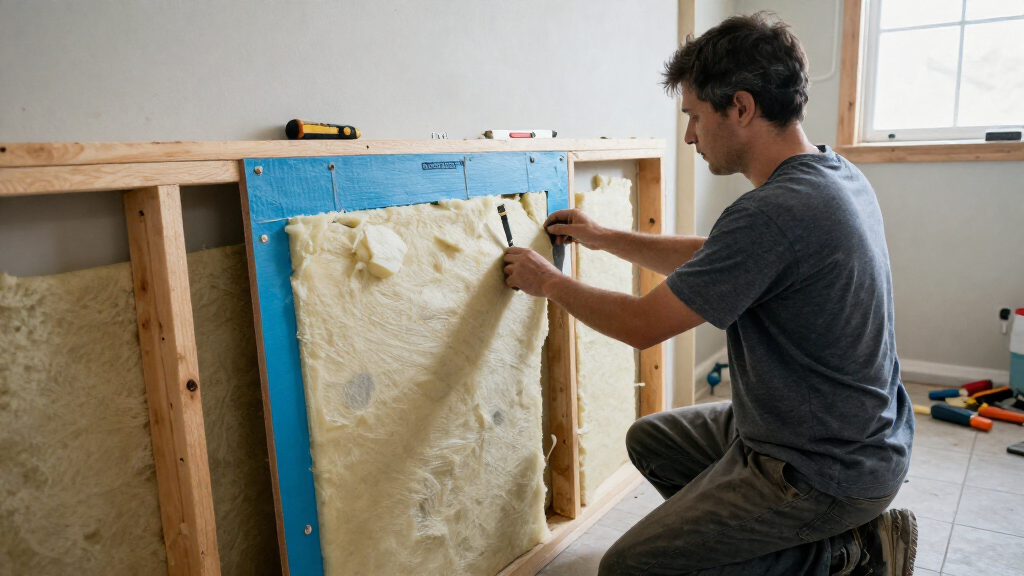
The homeowner describes an exterior block wall with furring strips, insulation board, and GoBoard at the shower.
The existing masonry wall and its moisture condition are not described.
The plan includes 3/4-inch furring strips and foil-faced insulation.
The full waterproofing details and exact product instructions are not provided.
What Remains Unresolved
The account includes conflicting informal advice, but no project-specific design review.
- Is insulation needed?
- Which way should the foil face?
- Does GoBoard affect the insulation decision?
- Exact product instructions
- Complete wall and waterproofing details
- Local code review and site conditions
Before Closing the Wall
Have the complete assembly reviewed before covering it.
- Check the current instructions for the exact GoBoard and polyiso products.
- Ask a qualified building-science professional or local building department to review insulation, facer orientation, moisture control, and shower details.
- Confirm applicable local requirements and inspection needs.
Moisture Control Behind Shower Walls
The practical issue is whether the proposed layers will work as a complete wall assembly, not simply whether insulation can fit behind the backer board. A shower needs a suitable water-management approach, including properly treated seams and penetrations, while the wall behind it must be appropriate for the building’s climate and existing construction. An incompatible or incomplete assembly can create moisture-management problems that are difficult to inspect once the finish is installed.
The question also matters because the wall is described as an exterior block wall in Florida. The answer may depend on local conditions and the details of the masonry, furring space, insulation, and interior layers. A general recommendation about foil facing cannot safely resolve those variables. Confirming the design before installation can help avoid rework and keep the shower’s water-control details aligned with product requirements and local rules.
That does not establish that insulation is required or unnecessary in this case. The information available gives no energy calculation, code review, product-specific assembly approval, or site inspection. Those limits should remain clear rather than turning the homeowner’s question into a universal installation rule.
Popular right now

Dyson Cyclone V10 Origin Cordless Vacuum

Ninja Specialty Coffee Maker with 10-Cup Carafe and Fold-Away Frother, CM401

Samsung 65-Inch M70H Series 4K Mini LED Smart TV (2026)
As an affiliate, we earn on qualifying purchases.
The Proposed Wall Assembly
The homeowner’s plan places insulation on the room side of an exterior concrete block wall, with 3/4-inch furring strips and GoBoard at the shower. The question specifically concerns a foil-faced polyiso board and whether its foil should face outward or inward. It also reports that some people advised against adding insulation because GoBoard is already part of the wall.
The question does not identify the GoBoard thickness, the exact insulation product, whether there is a separate air space, or the shower’s full waterproofing method. It also does not state the wall’s location within Florida, the condition of the block, or whether a local permit or inspection has addressed the design. These omissions prevent a reliable determination of the correct facer orientation or insulation level.
GoBoard is described here as the shower-wall board in the planned assembly; the question does not supply product documentation establishing what role it will serve in this particular installation. Homeowners should follow the specific board and insulation manufacturers’ instructions and check local requirements rather than assume that one layer replaces another. The assembly should be reviewed as a whole, especially at board joints, corners, plumbing openings, and connections to the shower base.
“I’m remolding my bathroom and I’m using Goboard on my walls but I’m getting mixed reviews on the insulation behind it.”
— Dave, the homeowner
Key Details Still Missing
No answer to the homeowner’s questions is included, so it remains unclear whether insulation is needed in this specific bathroom or which way the foil facer should face. The available account does not include manufacturer instructions, a code assessment, a wall-section drawing, or an on-site review. It also does not confirm whether the proposed materials have been purchased or installed.
There is no information about the exact products, existing coatings or finishes on the block, the wall’s moisture history, or the complete waterproofing and drying strategy. Those details can affect whether a proposed assembly is suitable. The conflicting informal advice described by the homeowner is not enough to establish a safe or code-compliant answer.
Review the Full Assembly Before Closing
Before installing or covering the wall, the homeowner should consult the current installation instructions for the exact GoBoard and polyiso products and ask the local building department or a qualified building-science professional to review the complete wall assembly. The review should address insulation placement and facer orientation, moisture control, shower waterproofing details, and any applicable permits or inspection requirements.
If the work is already underway, the homeowner should pause before concealing the assembly until those questions are answered. Any required changes should be made by qualified professionals in line with local rules and manufacturer directions. The available account gives no scheduled inspection, follow-up, or final decision, so the eventual design remains unreported.
Key Questions
Does GoBoard mean insulation is unnecessary?
The information provided does not establish that. Whether to add insulation depends on the whole wall design, product instructions, local requirements, and site conditions; the homeowner’s question includes no project-specific determination.
Which way should foil-faced polyiso face?
No orientation is confirmed for this wall. Check the instructions for the exact insulation product and have a qualified professional review how its foil facer interacts with the block wall, furring space, and shower assembly.
Can the proposed materials be installed as described?
The question alone is not enough to confirm that the assembly is suitable. Product details, wall conditions, waterproofing, and applicable local requirements need review before installation is covered.
What should be checked before finishing the shower?
Confirm the full assembly and its waterproofing details, including seams, corners, plumbing penetrations, and transitions, against manufacturer instructions and local requirements. Resolve insulation and moisture-control questions before closing the wall.
Source: greenbuildingadvisor.com