TL;DR

Get business pricing on tools and workshop supplies
- Business-only prices and quantity discounts
- Tax-exempt purchasing
- Multiple users, one account, clear invoices
Innovative drywall taping tools speed up finishing by applying compound more evenly, embedding paper tape with steady pressure, and reducing ridges that create extra sanding. Automatic tapers, mud boxes, flat boxes, corner finishers, extension systems, and cordless support tools work best when you match them to the project size, compound, joint type, and cleanup routine.
The slowest part of drywall work often is not hanging the board. It is the repeated scrape, reload, reach, and sand that follows. Innovative drywall taping tools attack that cycle directly, turning a messy bucket-and-knife routine into a more controlled production line.
You will learn how automatic tapers, mud boxes, flat boxes, corner tools, and extension systems work, where they save real time, and where a traditional knife still wins. You will also see how compound consistency, dust control, tool maintenance, and total labor cost shape the final result.
Use an automatic taper for long paper-taped seams, not small patches or occasional repairs.
Match flat-box width to the space: wider boxes cover faster, while smaller boxes give better control near corners and openings.
Treat compound consistency and adjustable flow as performance settings; thick mud clogs, while thin mud can sag or bond poorly.
Choose lightweight handles, swivels, and extension poles for ceilings and long production days to reduce shoulder and wrist fatigue.
Include cleaning, wear parts, training, and rental cost when comparing DIY-grade and pro-grade equipment.
Innovative Drywall Taping Tools That Speed Up Your Finishing Process
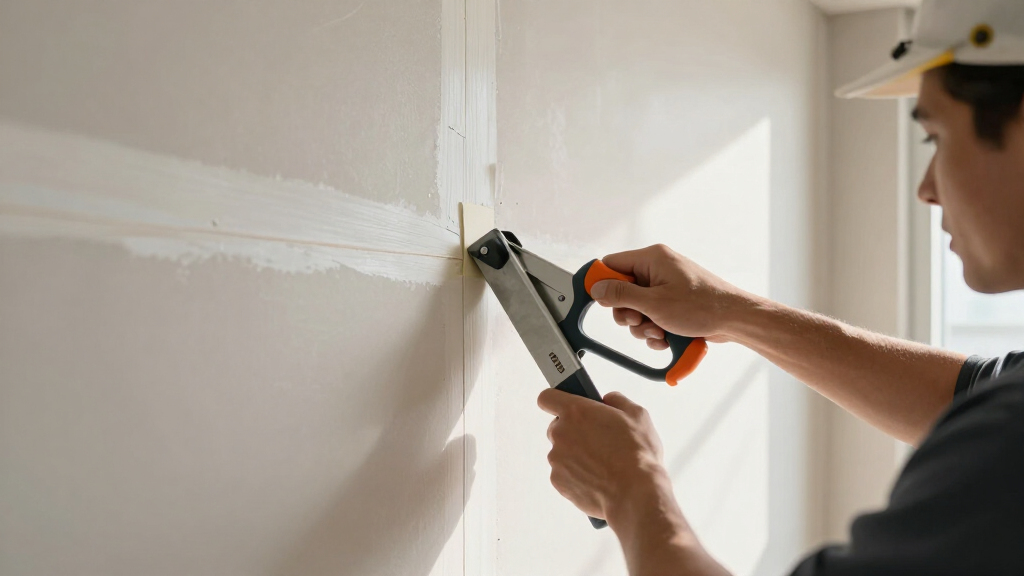
Modern taping systems reduce the repeated scrape, reload, reach, and sand cycle by applying compound more evenly, embedding paper tape with steady pressure, and limiting ridges before they dry.
A flat box can reduce sanding — when its width and compound flow match the joint.
Match the tool to the motion you repeat
The biggest gains come from removing unnecessary hand movements while preserving control. The right combination depends on project size, joint type, compound, access, and cleanup routine.
Automatic tapers
Dispense joint compound and feed paper tape in one controlled motion across long flat seams.
Mud and flat boxes
Apply predictable coats over installed tape, reducing loading stops and visible edge lines.
Corner finishers
Keep both sides of an inside angle loaded and pressed evenly for sharper, more repeatable joints.
Turn a bucket-and-knife routine into a production line
The tool does not make skill irrelevant. It limits variation, keeps coverage consistent, and makes the most repetitive parts of finishing easier to repeat.
Load
Fill the taper or box with clean, properly mixed compound.
Set flow
Adjust the amount for joint width, tape, and coat stage.
Pull steadily
Maintain light pressure and consistent speed along the seam.
Finish early
Press and feather before the compound begins to skin over.
When a box beats a hand knife
Box width changes the feel of the work. Wider tools cover more area, while smaller tools give better control near openings, corners, and uneven framing.
| Tool | Best use | Main advantage | Watch for |
|---|---|---|---|
| Mud box | Covered flat seams | Fast, even delivery | Needs clean, mixed compound |
| Flat box | Second and finish coats | Wide, smooth coverage | Too wide for tight areas |
| Small box | Short seams and corners | Better confined-space control | More passes on large walls |
| Hand knife | Patches and irregular repairs | Fast setup and flexible edges | More variation between passes |
Compound flow is the control panel
Thick material can drag or clog. Overly thin material can sag and leave tape under-bonded. Adjust the material before blaming the tool.
What each innovation improves
Compound consistency spectrum
Setup rule
Test on scrap drywall first. A fast tool can place too much mud quickly, especially while learning its flow setting.
Save your shoulders before you save minutes
Lightweight aluminum bodies, balanced grips, swiveling handles, telescoping poles, and quick-release connections matter most on ceilings, high seams, and long production days.
Extension systems
Reduce ladder moves and overhead reaching on ceilings and high-angle seams.
Swivels and balanced grips
Keep the tool aligned while reducing wrist correction and shoulder strain.
Modular attachments
Use one handle, pole, or body with multiple finishing heads to reduce site equipment.
Replaceable wear parts
Blades, wheels, springs, and seals help professional tools maintain consistent performance.
Choose by project rhythm, not tool novelty
For a full-room finish, setup time is quickly repaid through repeated seams. For a small repair, a traditional knife may remain the faster and simpler choice.
Choose innovative tools when…
You have many long seams, repeated inside corners, ceiling work, or a crew that benefits from consistent application and reduced sanding.
Choose a hand knife when…
You are handling a two-foot patch, an irregular repair, a tight opening, or a job where setup and cleanup would exceed the labor saved.
Five decisions before you load the tool
Use this quick check to align the tool, material, and workflow before starting the first production seam.
- Use an automatic taper for long paper-taped seams, not occasional patches.
- Match flat-box width to the room, joint, corners, and openings.
- Set compound consistency and flow before evaluating application speed.
- Choose lightweight handles and extension poles for overhead work.
- Include cleaning, training, rental, and replacement-part costs.
- Confirm paper-tape compatibility before loading an automatic taper.
Better tools create a connected finishing advantage
Speed is not one feature. It is the result of several linked decisions working together.
Right tool
Choose taper, box, corner head, or knife for the joint.
Right material
Use compatible tape and properly mixed compound.
Right motion
Maintain steady pressure, alignment, and speed.
Right finish
Clean promptly, sand less, and protect the final surface.
Which drywall tools actually speed up finishing?
Innovative drywall taping tools speed up finishing by combining compound application, tape placement, and smoothing into fewer passes. Automatic tapers handle long flat seams, mud boxes spread compound over installed tape, and flat boxes leave a controlled coat that dries with fewer ridges. The gain comes from consistent coverage, not from moving your hands faster.
Think of the system like a well-set torque wrench. You still need skill, but the tool limits the wild swings. On a new basement with twenty 12-foot seams, that repeatability can save hours. On a two-foot patch behind a laundry cabinet, setting up the same equipment may take longer than grabbing a six-inch knife.
- Automatic tapers apply joint compound and paper tape in one motion.
- Mud boxes cover taped seams with a measured layer of compound.
- Flat boxes smooth broad coats and reduce visible edge lines.
- Corner finishers shape inside corners with steadier pressure than a hand knife.
- Extension handles reduce ladder moves and shoulder strain on ceilings.
Research and trade guidance on modern drywall taping focuses on faster compound application, better tape control, and less sanding [1]. Those benefits appear only when the tool fits the work. A professional crew may value runtime, replacement parts, and cleanup speed; a homeowner may value quick setup and simple storage.
Popular right now

DeLonghi Rivelia Automatic Espresso Machine Bundle with Grinder and Frother, Beige

Dreame L40 Ultra Gen 2 Robot Vacuum and Mop

KitchenAid Artisan Series 5-Quart Tilt-Head Stand Mixer, Dried Rose (KSM150PS)
As an affiliate, we earn on qualifying purchases.
How automatic tapers cut the most repetitive labor
Innovative drywall taping tools such as automatic tapers cut repetitive labor by dispensing compound while feeding paper tape into the joint. You pull the taper along the seam, then use a finishing tool to press the tape flat. On long walls, this combines two hand movements into one controlled pass and keeps the compound layer more uniform.
- Load clean paper tape and the recommended joint compound into the taper.
- Set the compound flow for the joint width and tape type.
- Start slowly on scrap drywall until the tape sits centered without bubbles.
- Pull at a steady speed while keeping light, even pressure.
- Wipe the joint with a knife or finishing head before the compound skins over.
A taper is most useful during a full-room finish, where every seam repeats the same motion. For example, a remodeler taping a 1,200-square-foot addition may finish flat seams far faster with an automatic taper than with a knife and pan. The first room can feel awkward, though. Practice matters because a fast tool can also place too much mud very quickly.
Most automatic tapers are built for paper tape, not mesh tape. Mesh commonly pairs with setting-type compound and follows a different application method. Check the tool instructions and compound label before loading anything; a mismatch can create weak adhesion, clogging, or sagging seams.
When a mud box or flat box beats a hand knife
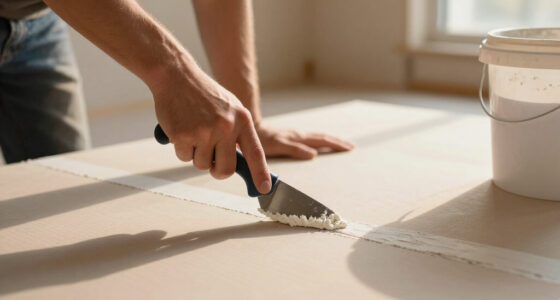
Innovative drywall taping tools make the biggest difference after tape is installed, when a mud box or flat box can spread compound across a seam in one smooth pass. A mud box works over taped joints, while a flat box applies a predictable coat and feathers the edges. Both reduce the stop-start rhythm of loading a knife every few feet.
| Tool | Best use | Main advantage | Watch for |
|---|---|---|---|
| Mud box | Covered flat seams | Fast, even compound delivery | Needs clean, properly mixed mud |
| Flat box | Second and finish coats | Wide, smooth coverage | Too wide for tight areas |
| Small box | Short seams and corners | Better control in confined spaces | More passes on large walls |
| Hand knife | Patches and irregular repairs | Fast setup and flexible edges | More variation between passes |
Box width changes the feel of the work. A 12-inch box can cover a broad seam quickly, while a 7-inch box may behave better near a door jamb or ceiling corner. In a crooked 1950s room, forcing a wide box across an uneven joint can leave bright ridges that show under side lighting.
Compound flow matters just as much as box size. Thick mud can drag and clog the mechanism; thin mud can sag and leave the tape under-bonded. Adjust the flow before blaming the tool. The best tools are designed to give you control, not to rescue poorly mixed material.
How corner tools improve sharp, repeatable joints
Innovative drywall taping tools improve inside corners by keeping both sides of the angle loaded and pressed evenly. Inside-corner finishers and angle heads shape the compound in a single guided movement, while flexible corner knives remain useful for repairs and irregular framing. The result is a cleaner line with fewer hollow spots and heavy edges.
Imagine finishing the inside corner where a bathroom wall meets the ceiling. A hand knife may leave one side slightly proud, especially when your wrist tires. An angle head follows the corner like a small train on rails, applying similar pressure from one end to the other.
Specialized tools also help around windows, doors, butt joints, and high seams. A corner tool made for a 90-degree inside angle will not solve every framing problem. If the drywall framing is out of plane, correct the board or framing issue first rather than burying it under thick compound.
Safety note: Wear eye protection and a dust-rated respirator when sanding. Keep the work area ventilated, control dust at the sander, and use a stable platform instead of stretching from a ladder. If electrical boxes, wiring, structural framing, or a ceiling change enters the job, shut off power where needed and use a licensed professional for work that falls outside your skill or local code requirements.
On a commercial corridor with dozens of corners, a corner finisher can produce a more uniform result than rotating through several knife angles. On one damaged corner in a hallway, a flexible knife may be faster and easier to clean.
Why ergonomics and extension systems save your shoulders
Innovative drywall taping tools reduce physical strain through lighter aluminum bodies, swiveling handles, balanced grips, and telescoping poles. These features matter because finishing repeatedly loads the same wrists, shoulders, and lower back. A tool that saves ten seconds per seam but leaves you sore after an afternoon may cost more in lost pace than it saves on paper.
Overhead work shows the difference quickly. A lightweight flat box on an extension handle lets you finish a ceiling from the floor, while a heavy box held above your head turns each pass into a slow battle. Better balance also helps you keep steady pressure, which improves the coat rather than merely making the work feel easier.
- Swivel handles help the tool follow your wrist instead of fighting it.
- Telescoping poles reduce ladder movement on ceilings and high walls.
- Quick-release connections make attachment changes faster.
- Modular systems let one handle work with several heads or boxes.
- Lightweight construction lowers fatigue during long production runs.
A small crew finishing three houses in a month may benefit from a modular setup more than from a single expensive specialty tool. Measure the whole day: loading, carrying, reaching, washing, and changing attachments. Tools are designed to reduce repetitive work, but poor posture and awkward reach can still erase those gains.
How to match the tool to your project and compound
Innovative drywall taping tools pay off when the project, joint type, compound, and user experience line up. Full-house finishing favors automatic systems; a small repair usually favors a knife and a small box. The right choice also depends on whether you can mix and maintain the compound accurately throughout the job.
- Measure the workload. Count seams, corners, ceilings, and butt joints rather than judging by room count alone.
- Identify the joint types. Flat seams, inside corners, outside corners, and repairs each reward different tools.
- Check compound compatibility. Premixed all-purpose or lightweight compound often works, but follow the tool maker’s guidance.
- Test the flow. Apply a short strip to scrap drywall and check tape contact, edge buildup, and sagging.
- Price the full system. Include blades, wheels, seals, springs, cleaning time, training, and storage.
- Decide whether to rent. Rent professional equipment when the job is large but your future use is limited.
A homeowner repairing one bedroom may spend more time washing an automatic taper than finishing the room with a six-inch knife and an eight-inch box. A drywall contractor working every week faces the opposite math. If a tool cuts a full day of labor across several projects, its higher purchase price may make sense.
Do not treat cordless support equipment as a magic replacement for manual skill. A cordless mixer can prepare compound faster, and a powered sander can reduce effort, but you still need correct water content, clean dust extraction, and a surface that meets the finish level required by the project and local code expectations.
What maintenance keeps your taping tools moving?
Innovative drywall taping tools stay fast only when you clean them after every use. Dried compound behaves like plastered gravel inside valves, seals, springs, and wheels; it narrows the flow and forces you to pull harder. Immediate rinsing protects performance and usually takes less time than repairing a seized mechanism the next morning.
Start by scraping excess compound back into the bucket, then flush removable parts with clean water. Open loading chambers and inspect the tape path for grit or folded paper. Dry metal parts before storage, especially if the tool uses steel springs or pins.
- Clean after every session, even when the tool appears clear.
- Remove dried flakes before they reach valves or dispensing channels.
- Inspect wear parts such as blades, wheels, seals, and springs.
- Store tools protected from freezing temperatures and job-site impact.
- Keep compound clean by covering buckets and avoiding debris from sanding areas.
Many professional systems use replaceable components, which can lower long-term cost. If a flat box starts leaving a heavy edge, check the blade before changing your technique. A worn part can mimic bad compound or poor pressure.
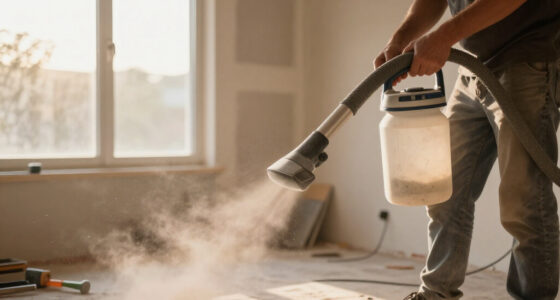
Dust control also protects the rest of the job. Sanding dust settles on floors, tools, and wet compound, creating tiny dark specks that show through paint. Use extraction where possible, wear suitable PPE, and clean the room before applying the next coat.
What finishing gains can you expect on a real job?
Innovative drywall taping tools can shorten a finishing schedule by reducing passes, rework, and sanding, but the exact gain depends on practice and repetition. The clearest payoff appears on long seams and repeated layouts, where consistent compound control compounds across the day. Short repairs rarely produce the same return.
Consider a two-person crew finishing a new garage conversion. One worker runs an automatic taper across the flat seams while the other follows with a knife and loads the next section. Later, a flat box applies the second coat, and an extension pole handles the ceiling without constant ladder moves. The crew still checks corners by hand, but the repetitive middle work moves faster.
Bauecho’s guidance places the strongest value on total finishing time, not purchase price alone [2]. That calculation includes labor, material waste, cleanup, sanding, and the cost of correcting visible ridges under a bright coat of paint.
Do a small trial before committing to a full system. Run the tool on scrap board, let the compound dry, and inspect the seam under a work light held low across the surface. If the finish needs heavy sanding, slow down and correct flow, pressure, or compound consistency before increasing speed.
Frequently Asked Questions
What is the fastest tool for applying drywall tape?
An automatic taper is usually fastest for applying paper tape and compound to long seams. It works best on larger projects where setup time spreads across many joints. Practice on scrap drywall first so the tape stays centered and the mud layer does not become excessive.
Are automatic drywall tapers worth the cost?
They can pay off for contractors, remodelers, and anyone finishing several rooms. For one small patch, a quality knife or small mud box is usually simpler. Compare labor, cleanup, replacement parts, and rental prices instead of looking only at the purchase price.
Do automatic tapers work with mesh tape?
Most automatic tapers are designed mainly for paper tape. Mesh tape often uses setting-type compound and a different application method. Check the tool and compound instructions before loading mesh into an automatic system.
Why does my drywall taping tool clog?
Common causes include compound that is too thick, dried material inside the tool, debris in the bucket, or an incorrect flow setting. Stop, clean the passage, remix or replace contaminated compound, and test the tool again. Cleaning after every use prevents most clogs.
What tool reduces drywall sanding the most?
A properly adjusted flat box or corner finisher can reduce ridges and excess compound, which lowers sanding time. Technique still matters. Use the correct box width, maintain even pressure, and inspect the dried seam with a low-angle work light before adding another coat.
Conclusion
Choose drywall taping tools by the work they must repeat, not by the number of features on the box. For large rooms and production crews, automatic tapers, flat boxes, corner finishers, and extension systems can cut labor and sanding; for a small repair, a clean knife may still be the fastest tool in the room.
Set the flow, test on scrap, control the dust, and wash the tool before the compound hardens. Good finishing is a quiet rhythm: steady pressure, clean edges, and a wall that looks smooth when the work light hits it.