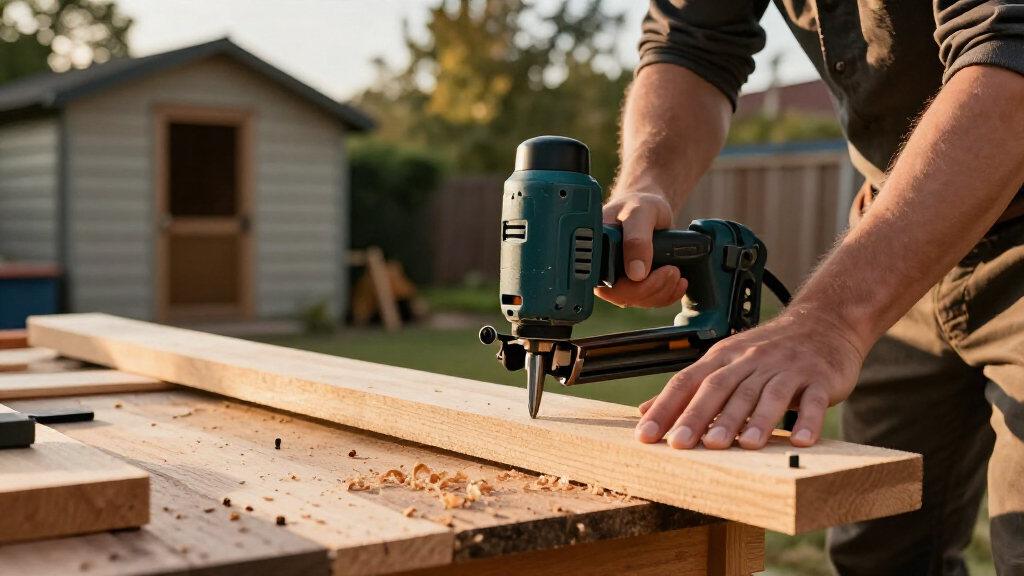
The best cordless framing nailers pair dependable driving with a balance of weight, battery life, and maneuverability. I’d start with the DEWALT DCN930P1 as the best overall choice for buyers who want a 30° nailer in a complete kit, while the FLEX 24V 21° kit stands out for shoppers seeking a battery and charger in the box. For users already invested in a brand’s battery platform, the RIDGID 18V 21° and Metabo HPT 30° kit offer different ways to prioritize platform compatibility or kit convenience. The main tradeoffs are 21° versus 30° nails, bare tool versus kit, and tool weight versus how often you need to move around a jobsite. Read on for the full comparison, buying advice, and picks by buyer type.

Get business pricing on tools and workshop supplies
- Business-only prices and quantity discounts
- Tax-exempt purchasing
- Multiple users, one account, clear invoices
Complete the kit


Key Takeaways
- Complete kits reduce setup friction: Several picks include a battery and charger, while bare tools such as the DEWALT DCN930B and Makita XNB07Z make more sense when you already own compatible batteries.
- Nail angle affects supply choices: The lineup spans 21° and 30° models, so the nail format you can readily source may matter more than a small difference between tools.
- Platform loyalty changes value: Ryobi, DEWALT, FLEX, CRAFTSMAN, RIDGID, Makita, and Metabo HPT options become more compelling when their batteries already serve other tools you own.
- Brand families offer distinct formats: Metabo HPT appears in 21° and 30° kits, while DEWALT and CRAFTSMAN also offer multiple nail angles—giving buyers room to match fasteners and existing gear.
- There is no single best fit for every crew: A full kit suits a first cordless framing nailer, but an experienced user may get more practical value from a bare tool that joins an established battery system.


| cordless framing nailer | Voltage | Weight | Motor | Model |
|---|---|---|---|---|
| Ryobi 18V Brushless Cordless A | 18 volts | 11 pounds | Brushless | PBL345B |
| RIDGID 18V Brushless Cordless | 18V | — | Brushless | — |
| FLEX 24V Brushless 21° Framing | 24 volts | 22.1 pounds | — | — |
| DEWALT DCN930B 20V 30° Framing | 20V | 9.9 pounds | — | DCN930B |
| CRAFTSMAN V20 Brushless Cordle | 20 volts | 9.83 pounds | Brushless | — |
| FLEX 24V Brushless 30° Cordles | 24V | — | Brushless | FX4351B-1C |
| DeWalt DCN930P1 20V 30° Framin | 20V | — | — | DCN930P1 |
| CRAFTSMAN V20 21° Cordless Fra | 20V | 10.75 pounds | — | CMCN621PLB |
| RYOBI ONE+ HP 18V Brushless Ai | 18V | 5.19 kg | Brushless | PBL350B |
| Makita XNB07Z 18V LXT Lithium- | — | 11.9 pounds with battery | Brushless | XNB07Z |
| Metabo HPT NR1890DRS 18V Cordl | 18V | 10.1 pounds | Brushless | — |
| Metabo HPT 18V MultiVolt 21° C | 18V | 8.4 pounds without battery | Brushless | — |
| Metabo HPT 18V 30° Paper Tape | 18V | 8.2 pounds without battery | Brushless | — |
| DeWalt DCN920B 20V 21° Framing | 20V | 10.05 pounds | — | DCN920B |
More Details on Our Top Picks
Ryobi 18V Brushless Cordless AirStrike 21° Framing Nailer
The Ryobi 18V Brushless AirStrike makes the most sense for buyers already invested in the ONE+ battery platform: its cordless setup avoids a compressor and hoses, while the brushless motor is designed to support consistent power and longer runtime. Its adjustable 21° angle can help when access is awkward, setting it apart from the 30° DEWALT DCN930B and CRAFTSMAN CMCN630PTB. At 11 pounds, it is lighter than the supplied FLEX kit’s listed 22.1 pounds, though that weight difference should be read with care because the products’ listed configurations differ. The Ryobi’s tradeoff is platform commitment: the description does not specify a nail-length range or included battery, so buyers should verify fit and kit contents before purchasing. I’d choose it for ONE+ compatibility, not for shoppers seeking clearly documented fastener specs.
Pros:- Brushless motor is designed for consistent power and longer runtime.
- Cordless operation removes the need to manage a compressor and air hose.
- Adjustable 21° angle can help reach tighter nailing positions.
- Listed at 11 pounds, lighter than the FLEX kit’s listed tool weight.
Cons:- Requires Ryobi ONE+ batteries, limiting battery-platform flexibility.
- The supplied data does not specify the compatible nail-length range.
- At 11 pounds, it may still feel heavy during extended overhead work.
Best for: Framing crews and DIY builders who already own Ryobi ONE+ batteries and want a cordless 21° nailer.
Not ideal for: Buyers without Ryobi batteries, or anyone who needs a clearly specified nail-length range before choosing a fastener system.
- Voltage:18 volts
- Power source:Battery powered
- Motor:Brushless
- Magazine angle:21° adjustable
- Weight:11 pounds
- Dimensions:14.3 x 4.4 x 13.25 inches
- Model:PBL345B
- Brand:Ryobi
Our verdict“Choose the Ryobi if you own ONE+ batteries and want a portable 21° nailer, but check nail compatibility and included components first.”
RIDGID 18V Brushless Cordless 21° 3-1/2 in. Framing Nailer (Tool Only)
The RIDGID 18V framing nailer stands out for giving buyers a clearly defined fastener range: it accepts 21° plastic-collated nails from 2 to 3-1/2 inches. That makes it easier to check against a framing plan than the Ryobi AirStrike, whose supplied details do not list nail length. Brushless drive and cordless operation suit demanding work without a compressor, and tool-free depth adjustment lets users change how far nails sit without reaching for another tool. The main catch is the bare-tool package: there is no battery or charger, so it is most appealing to existing RIDGID 18V owners. It also stays within one collation angle and nail type, whereas the FLEX kit includes a battery and charger and lists firing modes and additional work features.
Pros:- Accepts a specified 2- to 3-1/2-inch range of framing nails.
- Brushless motor is designed for efficient power and extended runtime.
- Tool-free depth adjustment supports quick changes at the worksite.
- Cordless design avoids compressor and hose setup.
Cons:- Bare-tool package does not include a battery or charger.
- Limited to 21° plastic-collated framing nails.
- Requires investment in or access to the RIDGID 18V battery platform.
Best for: RIDGID 18V users who need a 21° framing nailer with a documented 2- to 3-1/2-inch nail range.
Not ideal for: First-time cordless-tool buyers who need a battery and charger in the box, or crews using other nail angles or collation types.
- Voltage:18V
- Motor:Brushless
- Magazine angle:21°
- Nail length range:2 to 3-1/2 inches
- Nail type:Plastic-collated framing nails
- Depth adjustment:Tool-free
- Package contents:Tool only; battery and charger not included
Our verdict“Pick the RIDGID if you already have its 18V batteries and want a 21° nailer with a clearly stated fastener range.”
FLEX 24V Brushless 21° Framing Nailer Kit with 5.0Ah Battery and Fast Charger
For buyers who want a more complete framing setup in one package, the FLEX 24V kit brings a 5.0Ah battery, fast charger, and carrying bag alongside the nailer. Its listed capacity of up to 1,100 nails per charge and speed of up to three nails per second make it a stronger fit for sustained production work than the bare-tool RIDGID, which leaves battery and charger selection to the buyer. Bump and sequential firing modes, depth adjustment, dual worklights, and dry-fire lockout add useful control across changing tasks. The tradeoff is weight: its listed 22.1 pounds is substantial beside the DEWALT DCN930B’s 9.9-pound listing, though package configurations may differ. I’d favor FLEX for included kit contents and jobsite features, not for buyers prioritizing a lighter tool.
Pros:- Includes a 5.0Ah battery and 160W fast charger.
- Lists up to 1,100 nails per charge and firing speeds up to three nails per second.
- Offers bump and sequential firing modes, depth adjustment, and dry-fire lockout.
- Dual LED worklights and included no-mar tips support varied work conditions.
Cons:- Listed weight of 22.1 pounds is high compared with the DEWALT DCN930B listing.
- The 21° magazine angle may not suit buyers standardized on 30° nails.
- Battery capacity and nail count are stated as maximums, not guaranteed output for every job.
Best for: Framing professionals and serious builders who want a 21° kit with battery, charger, multiple firing modes, and worksite features included.
Not ideal for: Buyers prioritizing a lighter listed weight, or people already equipped with a preferred battery platform who do not need another battery and charger.
- Voltage:24 volts
- Battery capacity:5.0Ah
- Fastener angle:21°
- Fastener length:2 to 3-1/2 inches
- Nailing speed:Up to 3 nails per second
- Nails per charge:Up to 1,100
- Weight:22.1 pounds
- Included components:5.0Ah battery, 160W fast charger, rafter hook, belt clip, three no-mar tips, and FLEX bag
- Warranty:5-year limited warranty with registration within 30 days; 3-year limited warranty without registration
Our verdict“Choose the FLEX kit when you want a well-equipped 21° package and can accept its listed weight.”
DEWALT DCN930B 20V 30° Framing Nailer (Bare Tool)
The DEWALT DCN930B is the standout here for buyers who put a lower listed tool weight ahead of a bundled kit: at 9.9 pounds, it is lighter on paper than the Ryobi at 11 pounds and the CRAFTSMAN at 9.83 pounds by a small margin. Its 30° magazine also separates it from the 21° Ryobi, RIDGID, and FLEX options, so the right choice depends on the nail format already used on the job. The available product details are sparse, however: they do not state nail-length range, firing modes, or depth adjustment. Like the RIDGID, this is a bare tool, so battery and charger are not listed as included. I’d consider it for DEWALT 20V users who specifically need a 30° model, but the limited feature information makes it harder to compare on capability.
Pros:- 20V cordless platform avoids the need for a compressor and air hose.
- 30° magazine suits buyers seeking that nail angle rather than 21°.
- Listed tool weight is 9.9 pounds.
- Simple bare-tool package may suit users already equipped with DEWALT 20V batteries.
Cons:- Battery and charger are not listed as included.
- Supplied details do not specify compatible nail lengths or firing modes.
- Feature information is less detailed than for the FLEX and RIDGID options.
Best for: DEWALT 20V tool owners seeking a 30° cordless framing nailer with a relatively low listed tool weight.
Not ideal for: Buyers who need a battery and charger included or want documented nail capacity, adjustment features, and firing modes before purchase.
- Voltage:20V
- Magazine angle:30°
- Weight:9.9 pounds
- Model:DCN930B
- Tool type:Cordless framing nailer
- Included components:Framing nailer; battery and charger not listed as included
- Warranty:Manufacturer warranty
Our verdict“Choose the DCN930B if you already use DEWALT 20V batteries and need a 30° model, but confirm fastener compatibility before buying.”
CRAFTSMAN V20 Brushless Cordless 30° Framing Nailer (Tool Only, CMCN630PTB)
The CRAFTSMAN V20 CMCN630PTB is a practical 30° alternative for buyers who want a stated capability to drive full round-head nails up to 3-1/4 inches, including into laminated veneer lumber. That information gives it a clearer fastener limit than the DEWALT DCN930B details supplied here, though DEWALT’s listed weight is marginally lower at 9.9 pounds versus CRAFTSMAN’s 9.83-pound figure. A brushless motor, tool-free depth adjustment, rapid sequential firing, and jam indicator make the CRAFTSMAN’s work features more clearly documented. It is still a tool-only purchase, so battery and charger are separate, much like the RIDGID. Buyers also need to accept the 30° format and its stated maximum nail length rather than assume compatibility with other angles or longer fasteners.
Pros:- Drives full round-head nails up to 3-1/4 inches, including into laminated veneer lumber.
- Brushless motor is designed for runtime and performance.
- Tool-free depth adjustment and rapid sequential firing support efficient work.
- Jam indicator and adjustable rafter hook add practical jobsite utility.
Cons:- Battery and charger are sold separately.
- Maximum stated nail length is 3-1/4 inches.
- The 30° nail angle is not interchangeable with 21° fasteners.
Best for: V20 owners framing with full round-head nails up to 3-1/4 inches who want a 30° tool with documented adjustment and jam features.
Not ideal for: Buyers who need a battery and charger in the package, use 21° nails, or regularly require fasteners longer than 3-1/4 inches.
- Voltage:20 volts
- Motor:Brushless
- Nail angle:30°
- Maximum nail length:3-1/4 inches
- Weight:9.83 pounds
- Dimensions:15.25 x 5.4 x 13.25 inches
- Firing mode:Rapid sequential
- Included components:Framing nailer only; battery and charger sold separately
Our verdict“Pick the CRAFTSMAN if you own V20 batteries and need a feature-documented 30° nailer for full round-head nails up to 3-1/4 inches.”
FLEX 24V Brushless 30° Cordless Framing Nailer Kit
I’d put the FLEX 24V kit near the top for crews who want strong stated runtime without assembling a bare-tool setup. Its included 5.0Ah battery is rated for up to 1,100 nails per charge, and zero ramp-up time with firing speeds up to three nails per second suits brisk framing work. That makes it a more complete out-of-box option than the Makita XNB07Z, which is also rated for high nail capacity but comes without a battery or charger. FLEX adds bump and sequential modes, depth adjustment, worklights, and dry-fire lockout. The tradeoff is that the runtime figure depends on the included battery and the five-year warranty requires registration within 30 days; without registration, coverage is three years.
Pros:- Includes a 5.0Ah battery and fast charger, so the kit is ready to use without sourcing core power components
- Rated for up to 1,100 nails per charge with the included battery
- Zero ramp-up time and bump or sequential firing modes support different work rhythms
- Depth adjustment, dual LED worklights, and dry-fire lockout add useful jobsite control
Cons:- Five-year warranty coverage requires registration within 30 days; otherwise the stated term is three years
- The stated runtime depends on the included 5.0Ah battery and may not match every application
- The kit is a less natural choice for buyers already invested in a different battery platform
Best for: Framing crews who want a ready-to-work 30° kit, fast firing, and a high stated nail count per included battery
Not ideal for: Buyers who already own another battery platform and prefer a bare tool, or anyone unlikely to register the warranty promptly
- Model:FX4351B-1C
- Voltage:24V
- Motor:Brushless
- Collation angle:30°
- Fastener length:2–3.5 inches
- Firing speed:Up to 3 nails per second
- Nails per charge:Up to 1,100 with included 5.0Ah battery
- Included charger:160W fast charger
- Firing modes:Bump and sequential
Our verdict“Choose the FLEX kit if you want a high-capacity 30° nailer with battery and charger included, and are willing to register for the longer warranty.”
DeWalt DCN930P1 20V 30° Framing Nailer Kit
The DeWalt DCN930P1 is the straightforward pick here for someone who specifically wants a 20V, 30° DeWalt kit with a lithium-ion battery included. The supplied information is sparse, though: it does not give firing modes, nail capacity per charge, nail-length range, or adjustment features. That makes it harder to judge its jobsite pace or compare its performance directly with the FLEX 24V kit, which lists firing speed, runtime, and several controls. The DeWalt’s listed weight is 9.98 pounds, but the product data also calls its power source “hand powered,” an apparent inconsistency alongside the 20V battery description. I’d treat this as a platform-specific shortlist option, not the strongest choice for buyers who need well-documented performance before deciding.
Pros:- A 20V 30° framing nailer kit with a lithium-ion battery listed as included
- Listed item weight is 9.98 pounds
- Single-item package keeps the offering focused on the nailer kit
Cons:- Product data does not specify nail length, firing modes, or nails per charge
- The listing describes the power source as hand powered despite identifying a 20V battery
- Less performance detail is provided than for the FLEX 24V kit or Makita XNB07Z
Best for: DeWalt 20V buyers who want a 30° framing nailer kit with a lithium-ion battery included and are comfortable confirming missing specifications
Not ideal for: Buyers comparing runtime, firing speed, nail length, or operating modes from published specifications before purchase
- Model:DCN930P1
- Voltage:20V
- Collation angle:30°
- Item weight:9.98 pounds
- Battery:1 lithium-ion battery required; battery listed as included in the kit
- Package dimensions:18.03 × 18.03 × 8 inches
- Finish:Brushed
- Included components:20V 30° framing nailer kit
Our verdict“Choose this DeWalt kit only if the 20V platform and included battery are your priorities and you can verify the performance details you need.”
CRAFTSMAN V20 21° Cordless Framing Nailer (Tool Only, CMCN621PLB)
The CRAFTSMAN V20 CMCN621PLB stands apart from the 30° models here with its 21° nail angle and full round-head fastener support. It drives nails up to 3-1/4 inches, including into laminated veneer lumber, while tool-free depth adjustment helps adapt the drive to the material. Compared with the RYOBI ONE+ HP 30°, it gives up the option to drive nails up to 3-1/2 inches, but its stated maximum length still covers many framing tasks. This is a bare tool, so existing V20 owners have the clearest path to using it; new platform buyers need to add a battery and charger. The 10.75-pound listed weight is also worth weighing for extended overhead work.
Pros:- 21° angle supports a different nail format from the 30° FLEX, DeWalt, RYOBI, and Makita options
- Drives full round-head nails up to 3-1/4 inches, including into laminated veneer lumber
- Tool-free depth adjustment makes drive setting changes simpler
- Cordless operation avoids the need for a compressor, hoses, or gas cartridges
Cons:- Battery and charger are sold separately
- Maximum nail length is shorter than the RYOBI ONE+ HP and Makita models, which reach 3-1/2 inches
- Listed weight is 10.75 pounds
Best for: CRAFTSMAN V20 owners who need a cordless 21° nailer for common framing tasks and value tool-free depth adjustment
Not ideal for: Buyers needing 3-1/2-inch fasteners, a battery-and-charger kit, or a lighter tool for long overhead sessions
- Model:CMCN621PLB
- Voltage:20V
- Nail angle:21°
- Maximum nail length:3-1/4 inches
- Weight:10.75 pounds
- Dimensions:17.8 × 17.75 × 5.95 inches
- Power source:Battery powered
- Warranty:3-year limited warranty
Our verdict“Pick the CRAFTSMAN if you already own V20 batteries and want a 21° nailer for fasteners up to 3-1/4 inches.”
RYOBI ONE+ HP 18V Brushless AirStrike 30° Cordless Framing Nailer
For buyers who need a 30° cordless nailer that accepts fasteners up to 3-1/2 inches, the RYOBI ONE+ HP makes a practical case. Its brushless motor is rated for up to 750 nails per charge with a 4.0Ah battery, and its sequential and contact-actuation modes let the operator choose controlled placement or faster repeat firing. Compared with the CRAFTSMAN V20 21°, it reaches a longer stated nail length, but RYOBI’s battery is sold separately, so the tool-only listing is less complete than the FLEX kit. Tool-free depth adjustment, a rafter hook, and an air fill valve add jobsite utility. The tradeoff is that the supplied data gives no included battery and sets a lower stated nail count than FLEX’s kit figure.
Pros:- Accepts clipped or full-head nails up to 3-1/2 inches
- Brushless motor with a stated capacity of up to 750 nails per charge using a 4.0Ah battery
- Offers single sequential and contact-actuation modes
- Includes tool-free depth adjustment and a rafter hook
Cons:- Battery is sold separately
- The stated runtime requires a compatible 4.0Ah battery that is not included
- Its stated 750 nails per charge is below the FLEX kit’s listed figure of up to 1,100
Best for: RYOBI ONE+ owners who need a 30° nailer for fasteners up to 3-1/2 inches and want both sequential and contact modes
Not ideal for: New cordless-tool buyers seeking a complete kit, or crews prioritizing the highest stated nails-per-charge figure in this group
- Model:PBL350B
- Voltage:18V
- Motor:Brushless
- Nail angle:30°
- Maximum nail length:3-1/2 inches
- Nails per charge:Up to 750 with a 4.0Ah battery
- Drive modes:Single sequential and contact actuation
- Weight:5.19 kg
- Included battery:No; sold separately
Our verdict“Choose the RYOBI if you own ONE+ batteries and need 3-1/2-inch fastener capacity without a compressor or hose.”
Makita XNB07Z 18V LXT Lithium-Ion Brushless Cordless 30° Clipped Head 3-1/2-inch Framing Nailer (Tool Only)
The Makita XNB07Z is the strongest fit for existing LXT users who want a 30° clipped-head nailer with a generous stated runtime. Makita lists up to 1,000 nails per charge, a 58-nail magazine, and sequential or bump firing. Together, those details make it easier to gauge both refill frequency and firing style than with the DeWalt DCN930P1, whose supplied data omits runtime and operating modes. Tool-less depth adjustment and an anti-dry-fire mechanism add useful control, while the included hooks and no-mar tip round out the bare-tool package. The main catch is that no battery or charger comes with it. Its listed 11.9-pound weight is also a meaningful tradeoff for buyers expecting a light framing tool.
Pros:- Rated for up to 1,000 nails per charge
- Sequential and bump fire modes offer a choice between controlled placement and faster work
- Tool-less depth adjustment and anti-dry-fire mechanism support consistent operation
- Includes a 58-nail magazine, no-mar tip, belt hook, and rafter hook
Cons:- Battery and charger are not included
- Uses 30° clipped-head nails, which may not suit buyers seeking a full-head format
- Listed weight is 11.9 pounds with battery
Best for: Makita 18V LXT owners who want a 30° clipped-head nailer with a stated 1,000-nail-per-charge capacity and both firing modes
Not ideal for: Buyers who need a complete kit, prefer full-head nail compatibility, or want to minimize tool weight
- Model:XNB07Z
- Battery voltage:18V LXT
- Motor:Brushless
- Angle and nail type:30° clipped head
- Maximum nail length:3-1/2 inches
- Magazine capacity:58 nails
- Nails per charge:Up to 1,000
- Weight:11.9 pounds with battery
- Operation modes:Sequential or bump fire
Our verdict“Choose the Makita if you already own LXT batteries and want a feature-rich 30° clipped-head nailer with a high stated nail count per charge.”
Metabo HPT NR1890DRS 18V Cordless Framing Nailer Kit
The NR1890DRS is a practical pick for buyers who want a ready-to-work 21-degree nailer without assembling a battery system or bringing a compressor. Its kit includes a 3.0Ah battery, charger, contractor bag, and safety glasses, and the tool drives nails from 2 to 3½ inches in either bump or sequential mode. Up to 400 nails per charge is useful for smaller framing jobs, though the NR1890DRA’s 4.0Ah battery and stated capacity of up to 500 nails give it more room between charges. At 10.1 pounds, this model is also heavier than the newer 8.4-pound NR1890DRA before its battery is added. I’d choose the DRS for a self-contained kit and skip it for long overhead sessions or high-volume days where weight and charging interruptions matter.
Pros:- Includes the battery, charger, contractor bag, and safety glasses needed to start working
- Drives 21-degree plastic strip nails from 2 to 3½ inches
- Offers bump and sequential firing with tool-less depth adjustment
- Rated for up to 400 nails per charge
Cons:- At 10.1 pounds, it is heavier than the NR1890DRA before that model’s battery is added
- The 3.0Ah battery and stated 400-nail capacity may mean charging breaks on extended jobs
Best for: Home renovators and occasional framers who want a complete 21-degree nailer kit with battery, charger, and carry accessories.
Not ideal for: Crews framing for long shifts or frequently working overhead who would benefit from a lighter tool and greater stated nail capacity.
- Voltage:18V
- Motor:Brushless
- Compatible nails:21-degree round-head plastic strip nails, 2–3½ inches
- Battery:3.0Ah lithium-ion
- Nails per charge:Up to 400
- Firing modes:Bump and sequential
- Weight:10.1 pounds
- Included components:Nailer, battery, fast charger, contractor bag, safety glasses
- Warranty:Lifetime tool, 2-year battery, 1-year charger
Our verdict“Choose the NR1890DRS for a well-equipped kit suited to smaller framing projects, not for the lightest or longest-running option.”
Metabo HPT 18V MultiVolt 21° Cordless Framing Nailer Kit, NR1890DRA
The NR1890DRA stands out among these 21-degree nailers for its air spring drive system, which is specified to drive without ramp-up time. That can make repeated fastening feel more immediate than a tool that pauses before driving, while the included 4.0Ah battery is rated for up to 500 nails per charge. It also comes as a kit with charger, bag, wrench, and safety glasses, unlike the bare-tool DeWalt DCN920B, which does not list a battery or charger. The tradeoff is that the Metabo weighs 8.4 pounds before the battery, so its working weight will be higher; its 500-nail figure is a stated maximum, not a guarantee for every job. I’d favor it for steady framing where cordless speed and a complete kit matter more than minimum weight.
Pros:- Air spring drive system is specified to operate without ramp-up time
- Includes a 4.0Ah battery rated for up to 500 nails per charge
- Kit includes charger, bag, wrench, and safety glasses
- Tool-less depth adjustment and bump or sequential firing modes
Cons:- The 8.4-pound listed weight is before adding the battery
- The stated capacity of up to 500 nails per charge may not suit uninterrupted, high-volume work
Best for: Framers who want a complete 21-degree kit and a drive system specified for immediate response during repeated nailing.
Not ideal for: Buyers prioritizing the lightest possible setup or needing capacity beyond the stated maximum of 500 nails per charge.
- Voltage:18V
- Nail angle:21°
- Drive system:Air spring
- Motor:Brushless
- Maximum nail length:3½ inches
- Battery:4.0Ah lithium-ion, included
- Nails per charge:Up to 500
- Weight:8.4 pounds without battery
- Included components:Nailer, battery, charger, wrench, bag, safety glasses
Our verdict“Pick the NR1890DRA for a ready-to-use 21-degree kit with no-ramp-up driving, provided its battery-on weight fits your work.”
Metabo HPT 18V 30° Paper Tape Cordless Framing Nailer Kit, NR1890DCA
If your framing setup calls for 30-degree paper tape nails, the NR1890DCA offers a different fit than the 21-degree NR1890DRA: it accepts 2- to 3½-inch nails and is specified for a drive rate of up to three nails per second. Its brushless motor and air spring system are designed to drive without ramp-up time, and the kit includes a 4.0Ah battery rated for up to 500 nails per charge. The 8.2-pound tool weight is slightly lower than the DRA’s 8.4 pounds, but both figures exclude the battery, so neither is a lightweight all-day choice. Compared with the DeWalt DCN930B, also a 30-degree option in this roundup, this Metabo arrives with battery and charger included. Choose it when its paper-tape format matches your fasteners; otherwise, the 21-degree DRA may suit your nail supply better.
Pros:- Accepts 30-degree paper tape nails from 2 to 3½ inches
- Specified drive rate of up to three nails per second
- Includes a 4.0Ah battery and is rated for up to 500 nails per charge
- Comes with charger, carrying bag, wrench, and safety glasses
Cons:- The 8.2-pound listed weight excludes the battery
- Its 30-degree paper-tape format may not match a buyer’s existing 21-degree nail supply
Best for: Framers already set up for 30-degree paper tape nails who want a complete cordless kit with a stated fast drive rate.
Not ideal for: Buyers whose existing nail stock is 21-degree plastic strip, or workers seeking a low-weight framing nailer.
- Voltage:18V
- Nail angle:30°
- Compatible nail length:2 to 3½ inches
- Drive system:Air spring
- Motor:Brushless
- Battery:4.0Ah lithium-ion, included
- Nails per charge:Up to 500
- Drive rate:Up to 3 nails per second
- Weight:8.2 pounds without battery
Our verdict“Choose the NR1890DCA when 30-degree paper tape nails are your standard and you want a complete kit rather than a bare tool.”
DeWalt DCN920B 20V 21° Framing Nailer (Bare Tool)
The DCN920B is the clearest fit here for a buyer already equipped with compatible DeWalt 20V batteries who wants a 21-degree framing nailer without another battery kit. Its package lists the nailer only; unlike the Metabo HPT NR1890DRA, it does not include a battery, charger, or carrying accessories. That can be convenient for an established tool-platform owner, but it leaves new cordless buyers with more to source before they can work. The product data lists a weight of 10.05 pounds and describes the power source as hand-powered despite also specifying 20V cordless operation, so I would verify the manufacturer’s current details before choosing it. The 21-degree format suits buyers committed to that nail style, but the sparse package information makes this a less complete pick than either Metabo kit.
Pros:- Designed for 21-degree framing nails
- 20V designation may suit buyers already invested in the DeWalt platform
- Bare-tool package avoids duplicating a battery and charger for existing owners
- Manufacturer warranty is listed
Cons:- Battery and charger are not listed as included
- Product data gives a 10.05-pound weight
- The listed hand-powered description conflicts with the 20V cordless designation
Best for: DeWalt 20V platform owners who already have compatible batteries and chargers and specifically need a 21-degree framing nailer.
Not ideal for: First-time cordless nailer buyers who need a battery, charger, clear operating specifications, and a ready-to-use kit.
- Model:DCN920B
- Voltage:20V
- Nail angle:21°
- Listed power source:Hand-powered
- Weight:10.05 pounds
- Dimensions:13.9 × 5.9 × 13.9 inches
- Package quantity:1
- Included components:Framing nailer
Our verdict“Consider the DCN920B only if you already have a compatible DeWalt battery setup and can confirm its operating details before purchase.”

How We Picked
I ranked these nailers around the job factors that matter after the purchase: driving performance, handling, nail format, battery-platform fit, kit contents, and versatility. I gave more weight to options that make a clear case for a broad range of framing work, while treating battery and charger inclusion as a real advantage for new buyers—not as a substitute for tool capability. Since this lineup includes both 21° and 30° models, I also considered how each format fits a buyer’s fastener supply and work habits.
The order reflects useful differences, not brand prestige. A complete kit can rank ahead for shoppers starting from scratch, while a bare tool may be the stronger match for someone with compatible batteries already on hand. I also separated tools by the buyer they suit: platform loyalists, kit seekers, and users choosing between nail angles. Product names and listed configurations are the basis for the comparison; I do not imply hands-on testing or unsupported performance measurements.
| cordless framing nailer | Nails per charge |
|---|---|
| Ryobi 18V Brushless Cordless A | — |
| RIDGID 18V Brushless Cordless | — |
| FLEX 24V Brushless 21° Framing | Up to 1,100 |
| DEWALT DCN930B 20V 30° Framing | — |
| CRAFTSMAN V20 Brushless Cordle | — |
| FLEX 24V Brushless 30° Cordles | Up to 1,100 with included 5.0Ah battery |
| DeWalt DCN930P1 20V 30° Framin | — |
| CRAFTSMAN V20 21° Cordless Fra | — |
| RYOBI ONE+ HP 18V Brushless Ai | Up to 750 with a 4.0Ah battery |
| Makita XNB07Z 18V LXT Lithium- | Up to 1,000 |
| Metabo HPT NR1890DRS 18V Cordl | Up to 400 |
| Metabo HPT 18V MultiVolt 21° C | Up to 500 |
| Metabo HPT 18V 30° Paper Tape | Up to 500 |
| DeWalt DCN920B 20V 21° Framing | — |
Factors to Consider When Choosing Best Cordless Framing Nailers
Before choosing a model, I’d work through the job and ownership questions that can matter more than the tool’s headline description. These broader checks help prevent a common mismatch: buying a capable nailer that does not fit your nail supply, batteries, or typical workday.
Match the nail angle to your fastener supply
Start by checking which collated nails local suppliers and your crew already use. A 21° or 30° designation is not a measure of driving power; it identifies a different nail collation format, so the wrong choice can add hassle and limit convenient resupply. Check the fastener type, length range, and collation requirements in the tool’s specifications before buying nails in bulk. If several people share tools, matching the crew’s existing nail format can simplify stocking and reduce mix-ups. If you are building a new setup, compare availability of both formats in your area rather than assuming either is always easier to find. Nail compatibility should guide the shortlist before brand preference does.
Decide whether a kit is worth the extra equipment
A kit can get a new cordless tool working without a separate battery and charger purchase, and it may be the cleaner choice when this will be your first tool on that platform. A bare tool avoids duplicating equipment if you already own batteries and charging gear that the manufacturer lists as compatible. Do not assume batteries from different voltage families or product generations interchange; verify compatibility for the exact model. Also check whether the kit’s battery capacity fits your workload, since a framing day can demand more runtime than occasional repairs. Buyers with a mixed-brand shop should compare the cost and convenience of adding a new platform against using a tool-only option they can power already. The box contents can change the real value more than the tool label suggests.
Think about work pace and the role of a second tool
For a few framing tasks or punch-list jobs, a single cordless nailer may be enough, and freedom from an air hose can make short jobs simpler to set up. On production framing, runtime, reload frequency, downtime, and the availability of a spare battery become more consequential. A second battery can keep work moving while the first charges, but it adds weight and cost to the system. Compare the maker’s stated firing modes, adjustment features, and operating guidance rather than treating all cordless nailers as equally suited to continuous use. A compact setup may be easier to carry, while a crew doing long stretches of framing may prioritize a battery ecosystem that already supports multiple charged packs. Match the tool choice to a typical workday, not just the occasional best-case task.
Account for weight, balance, and overhead work
Framing nailers are held away from the body, so even modest differences in balance can affect fatigue across repeated shots. A tool that feels manageable at bench height may feel different when fastening overhead, working from a ladder, or reaching into tight corners. If possible, handle the tool with a battery attached, since a bare-tool weight does not reflect the working setup. Check the placement of the handle, magazine, and controls against the positions you use most often. A lighter-feeling option is not automatically better if its controls or magazine are awkward for your routine. Buyers who frame all day should give ergonomics more weight than someone who needs a nailer only for intermittent work.
Check jobsite rules and the tool’s limits
Before replacing a pneumatic nailer, confirm that the cordless model accepts the fasteners required by your plans and local inspection practices. Read the manufacturer’s instructions for permitted materials, nail lengths, adjustment methods, and maintenance rather than assuming one framing model covers every application. A cordless tool can reduce compressor and hose setup, but that convenience does not make it suitable for every repetitive production task. Consider the jobsite environment, access to charging, and whether the manufacturer supports service or replacement parts where you work. For structural work, follow the project specifications and applicable code; do not choose a nailer based only on its general framing label. This check can rule out a mismatch before battery-platform preferences enter the decision.
Frequently Asked Questions
Should I choose a 21° or 30° cordless framing nailer?
I’d choose based on the collated nails your work requires and what you can readily buy, not on the angle alone. The lineup includes multiple models in both formats, so there is no need to treat one angle as the automatic winner. Check the exact nail compatibility listed for the model and compare it with your project specifications before stocking fasteners. If a crew already uses one format, matching it can simplify shared inventory. When you are starting fresh, ask local suppliers which compatible nails they routinely carry.
Is a kit or a bare-tool framing nailer the better buy?
A kit makes the most sense if you lack compatible batteries and a charger, since it gives you the core power gear alongside the nailer. A bare tool can be the more practical route when you already own batteries from the same compatible platform. Check the exact battery system rather than relying only on the brand name, because compatibility can vary by product family. Think about how many charged packs a typical workday needs, not just whether one battery is included. This decision is about your existing setup as much as the nailer itself.
Can a cordless framing nailer replace my pneumatic nailer for every job?
Not automatically. A cordless model removes the compressor and hose from the setup, which can help on smaller jobs or when moving around a site, but work pace and runtime still matter. Review the tool maker’s operating guidance and the project’s fastener requirements before relying on it for continuous production framing. A spare battery and a charging plan can help, though they do not change the tool’s intended limits. Some buyers may find that keeping a pneumatic nailer for sustained work and using a cordless one for mobility is the better arrangement.
What should I check before buying nails for a cordless framing nailer?
Confirm the nail angle, collation style, length range, and any other fastener restrictions in the exact model’s specifications. A nail that looks similar may still be incompatible, and using the wrong fastener can cause feeding problems or create a safety concern. Check that the nails also meet the requirements of your plans and jobsite rules. Buy a small quantity first if you are changing formats, then confirm it feeds as intended before stocking up. Keep the packaging or product details available so you can reorder the same compatible type.
When does it make sense to buy a second battery for framing work?
A second compatible battery is useful when the nailer is part of a long workday and charging time could interrupt the schedule. It can be less necessary for occasional repairs or short framing tasks, particularly if you can charge between jobs. Check the manufacturer’s runtime information and use your expected firing volume to plan rather than assuming one battery will cover every shift. Also account for the added weight of carrying a spare and the charger access available on site. If choosing a kit, look closely at its included battery configuration before deciding what else you need.
Conclusion
For the broadest starting point, I’d choose the DEWALT DCN930P1 as best overall: its 30° format and kit configuration make it a straightforward all-around pick for someone who wants the tool and core power gear together. For best value, I’d look first at a tool-only option that matches batteries already in your shop, such as the CRAFTSMAN V20 or RIDGID 18V, rather than paying for duplicate gear. The FLEX 24V 21° kit is my best premium-style kit pick for buyers who want a complete setup, while the Ryobi ONE+ HP 30° is a sensible beginner choice for someone already using the ONE+ platform. For a specific need, choose among the 21° and 30° versions according to your fastener supply and project requirements; the right format matters more than picking a familiar brand. Before ordering, verify nail compatibility, battery fit, and kit contents for the exact model.