
TL;DR

Get business pricing on tools and workshop supplies
- Business-only prices and quantity discounts
- Tax-exempt purchasing
- Multiple users, one account, clear invoices
Home renovators David and Andrew Harrison-Colley say their air source heat pump has kept their expanded cottage warm through two winters after they replaced an ageing oil boiler. They say their combined electricity bill is below what they estimate the former oil and electricity bills would have totaled, but house size and insulation changes prevent a direct cost comparison.
Renovators David and Andrew Harrison-Colley, known online as The Home Boys, say their air source heat pump has kept their expanded cottage warm through two winters after replacing an ageing oil boiler. They report that their current electricity bill is below what they estimate their former oil and electricity bills would have added up to, but say changes to the house mean the figures are not a fair like-for-like comparison.
The couple described the experience in a report for Ideal Home. When they moved in, an oil tank occupied part of the garden and supplied a boiler nearing the end of its working life. As they built an extension, their builder priced a replacement oil boiler and an air source heat pump. After a £7,500 Boiler Upgrade Scheme grant, the quoted options were only a few hundred pounds apart, they said, making the heat pump the choice they made.
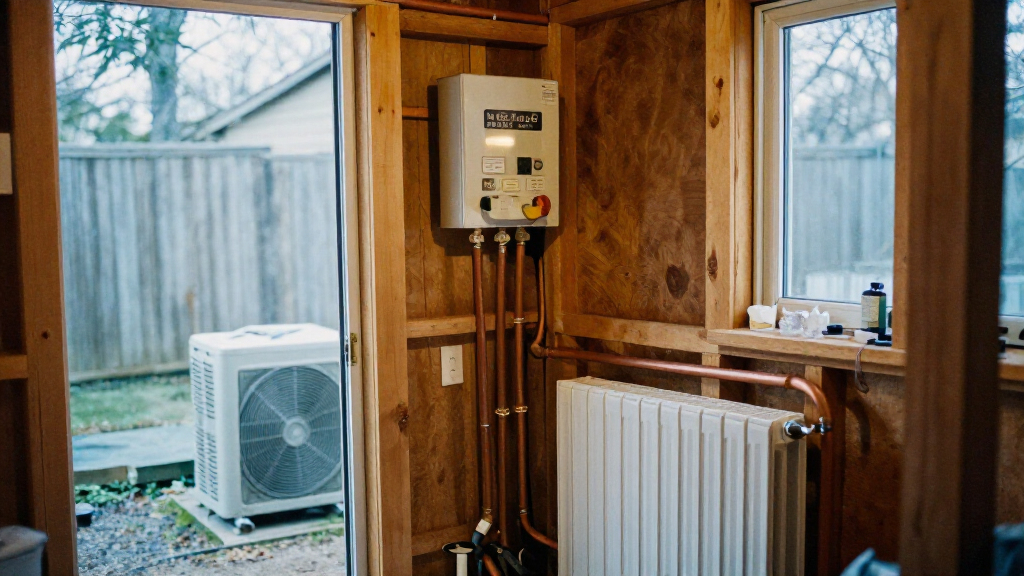
The installation was planned alongside the extension, which has underfloor heating throughout the ground floor. Upstairs, the couple installed 13 larger radiators: six in the new rooms and seven replacing radiators in the original cottage. They said the bigger units were needed because heat pumps operate at lower temperatures than oil boilers, and chose column radiators to fit the older home. The oil tank and an outside toilet were removed, freeing space for a patio.
In daily use, the couple say the main adjustment has been keeping the heating running steadily rather than switching it on and off for rapid warmth. They set the thermostat between 19°C and 23°C. They describe the outdoor unit as quiet, though water moving through exposed pipework in the original cottage can be heard. They also use the Cosy Octopus electricity tariff, with cheaper rates at set times and a peak period from 4pm to 7pm, when they say they use less electricity.
What the Change Means at Home
The account offers a household-level view of the practical changes involved in replacing oil heating, rather than a controlled comparison of energy costs. The couple’s experience points to several decisions other homeowners may need to weigh: installation cost after grants, radiator sizing, pipework in older buildings and whether a home can accommodate underfloor heating during renovation.
For the Harrison-Colleys, the project also changed how they use the garden and how they heat the house. Removing the tank returned space earmarked for a patio, while the steady heating routine differs from their previous oil boiler use. Their report may help readers identify questions to raise with installers, but it does not establish typical savings or performance for other homes.
Popular right now

TCL 65 Inch QM8L Series SQD-Mini LED QLED 4K Smart Google TV

Hisense 65-inch U6 Pro Mini-LED 4K UHD Smart Fire TV

Ninja SP151 Flip Toaster Oven and Air Fryer
As an affiliate, we earn on qualifying purchases.
Why They Replaced the Oil Boiler
The replacement was prompted by a combination of circumstances, according to the couple: the existing boiler was nearing the end of its life, the oil tank occupied planned patio space, and they were expanding the cottage. Installing the system during construction allowed them to include ground-floor underfloor heating and plan the heating layout as part of the work, rather than adapting the completed extension later.
Their report says the standard Boiler Upgrade Scheme grant was £7,500 at the time described. It also states that eligible homes in England and Wales currently heated by oil or LPG can receive £9,000 until 31 March 2027. Grant eligibility and amounts can depend on the scheme’s rules, so readers considering a project should check current official guidance and obtain quotes for their own property.
“It never gets cold and it never gets roasting. It’s just quietly warm.”
— David and Andrew Harrison-Colley, writing for Ideal Home
Why Savings Cannot Be Compared
The couple do not provide a matched before-and-after energy-cost calculation. They say the home is now twice its former size and that this is the first year it has been fully insulated after structural work. Their statement that the single electricity bill is below the combined oil and electricity bills they would otherwise expect is their own estimate, not a measured comparison controlling for those changes.
The report does not give the household’s annual electricity use, the former oil consumption, precise bills, installation cost before and after the grant, or the heat pump’s measured efficiency. It is also unclear how results would differ for homes with other layouts, insulation levels, tariffs or heating habits. The account describes one household and cannot establish typical costs or savings.
What the Couple May Try Next
The couple say solar panels are a possibility, but they want to work out whether the investment would pay for itself before proceeding. They also describe continuing to use their time-of-day tariff by reducing electricity use during its 4pm-to-7pm peak. Their report does not give a date for a solar decision or identify any planned changes to the heating system.
For homeowners considering a similar switch, the immediate next step is to compare properly specified quotes and ask installers about radiator output, pipe routes, insulation and expected running costs for the particular property. The Harrison-Colleys’ account suggests those details mattered as much as the choice between boiler types, but their results should not be treated as a forecast for another household.
Key Questions
How long have the Harrison-Colleys used the heat pump?
They report having lived with the air source heat pump for two winters since replacing their ageing oil boiler.
Did the heat pump reduce their heating bills?
The couple say their current electricity bill is below what they estimate their former oil and electricity bills would have totaled. They cannot provide a fair direct comparison because the house doubled in size and was fully insulated only after the building work.
What changes did the installation require?
They installed 13 larger radiators in the original cottage and upstairs extension, while the extension’s ground floor uses underfloor heating. Some pipework remains exposed in the older part of the home, where the couple say water movement can be heard.
How do they operate the heating?
They leave the system running and set the thermostat between 19°C and 23°C, rather than using short bursts of heating. They also say they use less electricity during the peak period on their time-of-day tariff.
What grant did they receive?
The couple say a £7,500 Boiler Upgrade Scheme grant was deducted when they compared quotes. Their report also states that eligible homes in England and Wales using oil or LPG can receive £9,000 until 31 March 2027; applicants should check current scheme terms and eligibility.
Source: idealhome.co.uk