TL;DR

Get business pricing on tools and workshop supplies
- Business-only prices and quantity discounts
- Tax-exempt purchasing
- Multiple users, one account, clear invoices
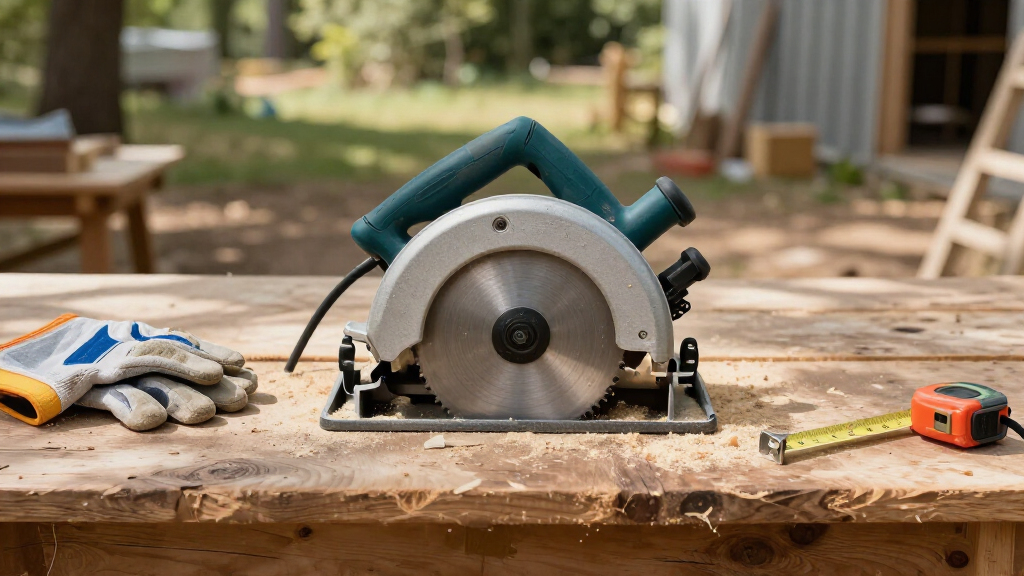
The best circular saws for framing and heavy-duty cuts use a 7-1/4-inch blade, a rigid and accurately aligned shoe, dependable guard action, and enough sustained cutting power for wet lumber or engineered wood. Choose a lightweight sidewinder for mobility, a rear-handle or worm-drive layout for reach and repeated production cuts, or a large-capacity saw only when beams and posts truly demand it.
A circular saw reveals its weaknesses halfway through a wet pressure-treated joist. The motor note drops, the shoe starts wandering, and the kerf smells hot enough to tell you the blade is rubbing. Framing performance lives in that hard part of the cut, where sustained power, balance, and a rigid base matter more than a bright sticker on the motor housing.
This guide shows you how to choose among 7-1/4-inch sidewinders, cordless rear-handle saws, corded worm drives, and large-capacity machines. You will learn which specifications predict useful performance, how batteries and blades change the result, and why the lightest or least expensive saw can become costly when inaccurate cuts start eating lumber and labor.
You will also get a practical test method, buying comparisons, and safety guidance for kickback, dust, and awkward framing cuts. The goal is not to crown a permanent model winner. Product numbers and bundles change; good cutting geometry, reliable adjustments, and two-handed control remain valuable year after year.
Choose a 7-1/4-inch saw for ordinary framing because it balances one-pass capacity in 2x lumber, blade availability, weight, and price.
Judge corded and cordless saws by speed under load, shoe rigidity, guard behavior, working weight, and thermal performance—not amps, voltage, or no-load RPM al…
Use a lightweight sidewinder for roof and overhead work; choose a rear-handle or worm-drive layout when reach and repeated production cuts outweigh fatigue.
Fit the right sharp blade before replacing the saw: 24 teeth suits fast framing, while roughly 40 teeth produces cleaner sheet-goods cuts.
Prevent kickback by supporting the work so the kerf stays open, using two hands, wearing PPE, and keeping your body outside the blade path.
Field guide / framing tools / 2026
Best Circular Saws for Framing and Heavy-Duty Cuts
The right framing saw keeps its pace through wet lumber, stays square when the shoe crosses a knot, and remains controllable at the end of a long cut. Choose mobility, reach, or depth according to the work—not the brightest motor label.
Core insight
Framing performance lives in the hard part of the cut, where sustained power, balance, and a rigid base matter most.
01 / The decision frame
Start with the cut, then choose the layout.
A lightweight sidewinder, rear-handle cordless saw, corded worm drive, and large-capacity machine each solve a different problem. The best fit depends on reach, material, access, and repetition.
7¼-inch sidewinder
Best for studs, joists, sheet goods, roof work, and overhead tasks where compact balance reduces fatigue.
Rear-handle cordless
Useful for deck framing, long rips, and floor systems when reach and sustained battery output outweigh added weight.
Corded worm drive
A strong choice for repeated cuts near power, with predictable runtime and a longer, heavier stance.
02 / What predicts performance
Look past the number printed on the housing.
Amps, voltage, and no-load RPM open the conversation; they do not settle it. A good saw converts power into useful torque while keeping the blade aligned and the user in control.
03 / Six-step field test
Test the saw before you trust it on a framing job.
Use identical new blades and record the fitted battery or corded setup. The result should describe ready-to-cut performance, not a stripped-down specification.
Set square
Check the 90-degree stop and bevel lock for repeatable alignment.
Fit the blade
Use the same sharp blade on every saw in the comparison.
Cut dry stock
Observe sightlines, shoe tracking, vibration, and guard behavior.
Cut wet stock
Watch whether speed stays stable as the kerf tightens.
Repeat cuts
Run a stack of joists or studs to expose heat and fatigue.
04 / Format comparison
Match the saw to the working environment.
No format wins everywhere. A compact saw can feel like a balanced hand plane on a roof, while a heavier rear-handle model can calm vibration across wide supported stock.
| Saw format | Where it earns its keep | Main tradeoff | Verify before buying |
|---|---|---|---|
| 7¼-inch sidewinder | Studs, joists, roof work, overhead cuts | Less reach and leverage | Shoe alignment, guard, balance |
| Rear-handle cordless | Deck framing, long rips, floor systems | Battery weight and longer body | Ready-to-cut weight, battery |
| Corded worm drive | Production framing and long sessions | Cord drag and greater weight | Gear maintenance, cord condition |
| Large-capacity saw | Posts, beams, structural timber | Cost and stronger blade reaction | Depth, blade supply, power |
05 / Capacity versus control
Buy extra depth only when the material demands it.
Larger blades increase cutting capacity for beams, posts, and structural timber, but they also increase mass, cost, and blade reaction. The standard size remains the practical center of gravity.
The blade is part of the saw.
A sharp 24-tooth blade usually favors fast framing cuts. Around 40 teeth can improve sheet-goods finish. A dull or unsuitable blade increases heat, rubbing, feed force, and the temptation to force the tool.
06 / Safety and accuracy
Control the kerf, the tool, and your position.
A rigid shoe and dependable 90-degree stop protect the whole assembly. Safe technique protects the operator when the material shifts, binds, or releases stored tension.
Support the work
Place supports so the kerf stays open. Unsupported stock can pinch the blade and redirect the saw.
Use two hands
Wear eye and hearing protection, keep both hands on the saw during cutting, and stay outside the blade path.
Trust the guard
Look for smooth lower-guard action, a guarded trigger, electric brake, and anti-kickback geometry where provided.
07 / Quick takeaways
The short list for a long day.
Choose 7¼ inches for ordinary framing and the broadest balance of capacity, availability, weight, and price.
Judge real speed under load, shoe rigidity, guard behavior, working weight, and thermal performance.
Use a sidewinder for mobility; choose rear-handle or worm-drive reach for repeated production cuts.
Fit the right sharp blade first: 24 teeth for fast framing and about 40 teeth for cleaner panels.
Prevent kickback with open kerfs, supported stock, two-handed control, PPE, and clear body positioning.
Traceability / from specification to result
Good buying decisions follow the cut all the way through.
Material
Wet lumber, engineered wood, panels, beams, or posts.
Format
Sidewinder, rear-handle, worm drive, or large capacity.
Geometry
Rigid shoe, accurate bevel, smooth guard, visible line.
Outcome
Straighter cuts, less fatigue, fewer damaged materials.
Choose These Five Features for Fast, Straight Framing Cuts
The best circular saws for framing and heavy-duty cuts combine steady blade speed, a flat shoe, predictable guard action, manageable working weight, and enough depth for the material. These qualities reinforce one another. A powerful motor cannot correct a shoe that steers the blade off line, and a precise saw becomes difficult to exploit if its weight or handle position makes you twist it near the end of every cut.
- Cutting capacity: A 7-1/4-inch saw normally clears common 2x lumber at 90 degrees in one pass, while beveling reduces available depth. One-pass capacity saves time and avoids the alignment errors that can appear when you flip stock and try to meet a second cut.
- Shoe rigidity: Cast or machined magnesium and aluminum shoes usually resist twisting better than thin stamped steel, though joint quality matters as much as the material label. A stiff shoe keeps the blade angle consistent when part of the base crosses a knot, an uneven edge, or unsupported stock.
- Adjustment security: Depth and bevel levers should lock firmly without forcing the blade out of square. Quick controls are useful only if they return to the same angle and survive vibration without creeping.
- Safety hardware: Look for an effective lower guard, guarded trigger, stable handles, overload protection, and an electric brake. These features cannot replace sound technique, but they reduce exposure during starts, transitions, and the seconds after a cut.
- Working balance: Judge the saw with its normal blade and, for cordless tools, the battery you will actually use. Added rear weight may steady a bench cut while making roof, ladder, or overhead work more tiring.
Imagine cutting fifty studs for a basement wall. A loose bevel pivot can turn each square cut into a faint wedge, leaving joints that rock like a café table on uneven tile. That tiny error multiplies across the wall: plates become harder to align, fasteners may pull pieces into position instead of clamping flat faces, and later drywall work inherits the irregularity. A rigid shoe and dependable 90-degree stop protect the entire assembly, not merely the appearance of one cut.
Do not read a 15-amp input rating as a direct measurement of cutting output. It describes current drawn under specified conditions, not how efficiently the saw converts electricity into useful torque at the blade. Motor design, gearing, blade quality, cooling, and electronic protection determine whether speed remains stable under load. The same applies to cordless voltage: a higher number can support more power, but battery discharge capability and electronic controls decide what reaches the blade.[1]
This distinction matters because the fastest unloaded saw may not be the fastest working saw. Aggressive electronics can deliver impressive initial speed and then reduce output to protect a hot motor or battery. A slightly slower tool that maintains its pace may complete a stack of joists sooner and with less temptation to force the feed.
Amp ratings and voltage labels open the conversation; they do not settle it. Watch how the saw behaves when the kerf tightens, the lumber is damp, and the cut continues for more than a few seconds.
Popular right now

Samsung 48-Inch S90H OLED 4K Smart TV (2026)

Vitamix Propel Series 510 Professional-Grade Blender, 3 Programs, Black

Vitamix Propel Series 750 Professional-Grade Blender, 4 Programs, Black
As an affiliate, we earn on qualifying purchases.
Match the Saw Layout to the Cuts You Make Most
The best circular saws for framing and heavy-duty cuts fall into three practical layouts: sidewinder, rear-handle, and true worm drive. The choice changes more than where your hands sit. It affects reach, blade visibility, leverage, weight distribution, and how easily you can keep the shoe planted when cutting from a roof, floor deck, sawhorse, or framing platform.
| Saw format | Where it earns its keep | Main tradeoff | What to verify |
|---|---|---|---|
| 7-1/4-inch sidewinder | Studs, joists, sheet goods, roof work, and overhead tasks | Shorter reach and less rear-handle leverage | Shoe alignment, guard action, brake, and balance |
| Rear-handle cordless | Deck framing, long rips, floor systems, and repeated lumber cuts | More battery weight and a longer body | Ready-to-cut weight, battery requirement, and drivetrain description |
| Corded worm drive | Production framing, formwork, and long sessions near power | Cord drag, greater weight, and possible oil service | Gear-maintenance schedule and cord condition |
| Large-capacity saw | Posts, beams, structural panels, and heavy timber | High cost, strong blade reaction, and awkward handling | Depth at 90 and 45 degrees, blade supply, and power requirements |
On a roof, every extra pound pulls at your shoulder while the sun heats the shingles beneath your knees. A compact sidewinder can feel like a balanced hand plane there because its shorter body stays close to you during awkward starts and finishes. On a supported cutting station, the added mass and longer stance of a rear-handle saw may calm vibration, extend your reach across wide stock, and make it easier to guide the tool with your whole upper body.
That same length can become a liability in cramped remodeling work. A rear-handle saw needs more clearance behind the cut and can feel tail-heavy when the battery hangs beyond your wrist. A sidewinder gives up some leverage but changes direction more readily, which is valuable when you are trimming blocking between existing studs or working near a wall.
A rear-handle cordless saw is not automatically a true worm drive. Rear-handle describes the shape and hand position; worm drive names a specific geared mechanism. Many cordless machines use direct or helical gearing while copying the long, familiar silhouette of a corded framing saw.[1] The distinction affects maintenance and feel, so it is worth checking instead of assuming that two similarly shaped tools share the same drivetrain.
Blade orientation deserves equal attention. A blade positioned toward your preferred sightline can make the mark easier to follow, but it may also direct chips or place more of the blade near your body in a particular stance. There is no universally superior side; the practical question is whether you can see the cut while keeping both hands secure and your torso outside the projected blade path.
Move up to an 8-1/4-, 10-1/4-, or 16-5/16-inch blade only when the work calls for deeper capacity. The larger blade reaches farther into the stock, but it also carries more rotating mass and can produce a stronger reaction when pinched. A standard 7-1/4-inch saw usually needs cuts from multiple faces to sever a 4×4; that is slower and demands careful layout, yet it may still be preferable to owning a specialist for rare work. If you face one weekend of beam cutting, renting a beam saw can provide the needed capacity without committing money, storage, and training time to a tool that will collect dust afterward.
Pick Corded or Cordless Without Paying for the Wrong Kind of Power
The best circular saws for framing and heavy-duty cuts can be corded or cordless; the right choice depends on cut volume, site access, and the batteries you already own. Corded saws deliver uninterrupted output at a lower entry price, while modern brushless cordless saws give you mobility without automatically giving up professional cutting speed. The real tradeoff is where you want to manage energy: through cords and site power, or through packs, chargers, and heat.
A remodeler cutting blocking beside an occupied hallway gains a lot from cordless freedom. There is no extension cord curling around a door jamb, catching on sheet goods, or dragging a dust hose across finished flooring. That freedom can improve safety and setup speed even if each individual cut is no faster. At a shop station cutting form boards for six hours, however, a 15-amp corded saw keeps working while batteries would rotate through chargers.
Battery capacity needs careful reading. Amp-hours describe charge capacity, but they do not reveal the whole power story; voltage, cell design, discharge rate, temperature, electronics, and pack condition all matter. Watt-hours offer a better estimate of stored energy when comparing packs of different voltages, but they still do not show how quickly that energy can be delivered without voltage sag or overheating. Check whether the manufacturer requires a high-output pack for full saw performance.[2]
A compact pack may make a large saw feel nimble, yet it can sag under a long rip in laminated veneer lumber. Fit the recommended high-discharge battery and the motor note may stay sharper, like a truck holding its gear on a steep grade. The cost is extra bulk hanging behind your wrist. That weight is easier to justify at waist height than above shoulder level, so the ideal pack can change with the job even when the saw does not.
Runtime also affects work rhythm. Two large packs may support continuous production if one can recharge before the other is depleted; two small packs may leave both hot and waiting at once. Cold weather reduces available battery performance, while repeated high-load cuts generate heat that can trigger protective shutdowns. Corded tools avoid pack rotation but introduce voltage drop when paired with an undersized or excessively long extension lead, which can reduce performance and stress the tool.
Count ownership costs beyond the bare tool. A cordless purchase may require two suitable batteries, a fast charger, and eventual pack replacement. A corded saw may need a correctly rated extension lead, nearby power, and more cable management. If you already own a healthy battery platform with local parts support, staying inside that ecosystem often saves more than chasing a small specification advantage. If the new saw forces you into another battery family, compare the complete working kit rather than the attractive bare-tool price.
Choose the platform that can feed the saw all day. A powerful cordless tool paired with one undersized battery is a race car carrying half a tank.
Use This Job-Based Shortlist Instead of Chasing One Winner
The best circular saws for framing and heavy-duty cuts should be selected by use case, not by a permanent first-place badge. Your best fit depends on whether you spend the day climbing rafters, ripping subfloor, cutting wet deck joists, or occasionally breaking down lumber beside a garage outlet. Start with the hardest recurring cut and the most awkward recurring working position; a saw that handles those well will usually manage the easier work.
- Best all-around cordless format: Choose a brushless 7-1/4-inch saw with a rigid shoe, dependable brake, clear sightline, and reasonable ready-to-cut weight. It should combine mobility with sustained cutting power without requiring a pack so large that routine cuts become tiring.
- Best for production framing: Choose a rear-handle cordless or corded worm-drive layout when reach, leverage, and repeated ripping matter more than low weight. The additional mass is worthwhile only if it improves tracking and pace during the work you perform most.
- Best for roof and punch-list work: Choose a lightweight sidewinder with secure handles and easy depth adjustment. Low fatigue can improve accuracy late in the day, particularly when cuts begin from unstable or confined positions.
- Best value near reliable power: A conventional 15-amp corded sidewinder often gives you strong performance per dollar. Inspect the shoe, guard, and bevel pivots carefully on a budget model because poor geometry can erase the savings through rework.
- Best for beams and posts: Choose or rent a large-capacity saw after confirming actual depth at both 90 and 45 degrees. Capacity that disappears at a bevel may not solve the structural cuts that prompted the purchase.
Take a deck rebuild with forty wet 2×10 joists. A small DIY-grade cordless saw may finish the work, but frequent thermal pauses can turn a steady rhythm into stop-start frustration. Those interruptions matter because production cutting includes marking, positioning, and fastening as well as sawing; an unpredictable tool breaks the sequence for the whole crew. A pro-grade rear-handle saw with the recommended pack adds weight, yet it can maintain pace when resinous chips spray from the cut.
Now reverse the setting. On roof repairs or punch-list work, the saw may spend more time being carried and positioned than cutting. Paying a weight penalty for power you rarely call upon can increase fatigue without shortening the day. In that situation, a lighter sidewinder that starts predictably and follows the line is the more productive machine despite lower headline output.
For occasional shelves, fence repairs, and a handful of framing cuts each season, a sound corded saw plus a premium blade can be the smarter purchase. You put money into the cutting edge rather than batteries that spend months idle and gradually age. This is where the least expensive sensible setup can outperform a costly bare tool paired with the wrong pack.
Professional families from DeWalt, Makita, Milwaukee, Bosch, Skilsaw, Metabo HPT, Hilti, and Flex often appear on trade sites. Treat those names as starting points, not guarantees. Check the current package contents, warranty, service access, blade orientation, and battery compatibility before you pay. A strong warranty has limited practical value if service requires weeks of shipping, while a locally supported tool may return to work sooner even if its specification sheet looks less dramatic.
Test a Saw in Six Steps Before You Trust It on a Framing Job
A useful circular-saw test measures control under load, adjustment accuracy, thermal behavior, and ready-to-cut weight with identical new blades. Raw speed alone cannot tell you whether a saw tracks straight, retracts its guard cleanly, directs dust away from your face, or remains comfortable after repeated cuts. The goal is to isolate the saw’s behavior instead of accidentally measuring differences in blades, stock, batteries, or operator pressure.
- Fit matching blades. Use new blades of the same diameter, tooth count, kerf, and intended material so tooth geometry does not decide the contest. Even two blades labeled for framing can differ in hook angle, plate stiffness, and coating.
- Check the shoe. Verify blade-to-shoe alignment and square settings at 90 and 45 degrees before making timed cuts. This separates an adjustment problem from a motor problem and shows whether the factory markings can be trusted.
- Cut varied stock. Crosscut dry and pressure-treated lumber, rip OSB or plywood, and include engineered wood when that matches your work. A saw that flies through dry softwood may respond differently to adhesive-rich panels or damp, dense stock.
- Record complete weight. Weigh cordless saws with the battery used during testing, not as bare tools. Battery size can alter both the total load and the balance around the main handle.
- Watch behavior. Note vibration, dust direction, guard movement, braking time, motor slowing, and thermal shutdowns. These details reveal whether speed comes with compromises in control or continuity.
- Repeat the work. A single fast cut says little about heat buildup, runtime, or sustained cutting power. Repeated cuts show whether performance remains available after the tool and battery warm.
Use several pieces from the same batch of material and alternate saws between them when comparing tools. Lumber varies in density, knots, moisture, and internal stress, so sending one saw through a clear board and another through a knotted board produces a neat number with little meaning. The operator should apply a natural, repeatable feed rather than leaning harder on whichever tool sounds slower.
Suppose Saw A beats Saw B by one second through a dry 2×12, yet its shoe flexes and the handle buzzes in your palm. Saw B finishes slightly later but leaves a square face and stays composed through twenty more cuts. For framing and finish carpentry alike, repeatable control is usually the better result because it reduces correction, material waste, and fatigue. A small stopwatch advantage disappears quickly if every fifth cut needs trimming.
Runtime claims need the same discipline. Material species, moisture, cutting depth, bevel angle, feed speed, blade sharpness, outdoor temperature, and battery age all change cuts per charge. According to Bauecho’s testing guidance, battery comparisons only become meaningful when capacity and test conditions are stated.[2] Record shutdowns separately from an empty battery: a hot pack that pauses and later resumes has encountered a different limit than one that has spent its stored energy.
Listen as well as you look. A healthy saw produces a firm, even pitch; a pinched blade groans, heats the wood, and may polish the kerf with dark scorch marks. That sound is diagnostic information, not an invitation to push harder. Stop when it happens. Release the trigger, wait for the blade to stop, disconnect power or remove the battery, and correct the support or blade problem before continuing.
Get More Speed and Runtime from the Blade You Already Need
The correct blade can improve cutting speed, runtime, surface quality, and control more than a small motor upgrade. Use a sharp 24-tooth carbide blade for fast framing, move to roughly 40 teeth for cleaner sheet-goods cuts, and reserve high-tooth-count blades for finished surfaces where splintering matters. Tooth count changes how aggressively each tooth bites and how much room exists to clear chips, so cleaner and faster are often competing goals.
A dull framing blade makes even a strong saw feel tired. You push harder, the motor note sinks, and the wood releases a bitter burnt smell. Extra pressure can flex the blade plate, steer the saw away from the line, and increase heat in both the motor and battery. Swap in a sharp blade and the same tool often runs cooler, feeds more smoothly, and stops tugging at the cut line.
- 24-tooth carbide: Fast crosscuts and general construction lumber. Larger gullets clear coarse chips effectively, but the edge may be too rough for visible plywood or trim.
- 40-tooth blade: Cleaner plywood, OSB, and crosscuts with less tear-out. The added teeth divide the work into smaller bites, although feed speed may fall in thick or wet stock.
- Thin-kerf blade: Lower cutting resistance that can extend cordless runtime, provided the blade remains stable. Its thinner plate may deflect more readily if forced or overheated.
- Full-kerf blade: Greater plate stiffness for demanding cuts when the saw has enough power. It removes more material, so underpowered tools may slow and cordless runtime may decline.
- Material-specific blade: Required for approved cuts in fiber cement, metal, plastic, or masonry products. Tooth form, plate design, and abrasive resistance must match both the material and the saw.
Check diameter, arbor size, maximum RPM, kerf, and material approval every time. A blade that fits the arbor is not automatically safe for the saw or workpiece. Its maximum speed must meet or exceed the saw’s rating, and its geometry must be suitable for a handheld circular saw. Never assume a wood saw can cut masonry or metal simply because a matching-diameter disc sits on the store shelf.
For example, ripping a full sheet of veneered plywood with a coarse 24-tooth blade may leave the top face feathered with pale splinters. A suitable 40-tooth blade, the finished face oriented correctly for your saw’s tooth entry, and firm sheet support produce a cleaner edge without buying another machine. The support is part of the result: if the sheet sags and pinches the blade, even the ideal tooth count cannot preserve a straight, safe cut.
Depth setting matters too. Set the blade only far enough below the material for safe tooth clearance, following the saw maker’s instructions. Excessive exposure increases the amount of blade in the open and can make a bind feel more violent. Too little exposure can also cut poorly because the teeth meet the surface at an unfavorable angle and may struggle to clear chips. Disconnect the cord or remove the battery before changing a blade or making hands-near-blade adjustments.
Prevent Kickback, Dust Exposure, and Costly Job-Site Mistakes
Safe heavy cutting starts with stable support, a clear blade path, two-handed control, and a kerf that cannot close on the blade. These conditions matter because a circular saw does not merely stop when its blade is pinched; the rotating teeth can transfer force into the housing and drive the tool back toward the operator. Wear eye and hearing protection, add suitable respiratory protection for the dust, and stand out of the projected blade path rather than directly behind the saw.
Kickback often begins quietly. A bowed deck board settles as the cut advances, the kerf pinches shut, and the saw tries to climb backward like a dog jerking its leash. Support placement controls which way the wood can move after it is divided. Keep the main workpiece secure, let the offcut separate without trapping the blade, keep both shoe edges planted, and never force a slowing blade through a closing cut.
- Inspect the stock: Look for nails, screws, severe twists, wet pockets, and hidden support beneath the cut. A concealed fastener can damage teeth or throw debris, while stressed wood may move as soon as the cut releases it.
- Set stable supports: Keep the main workpiece secure while allowing the offcut to fall or separate without trapping the blade. Supporting both pieces in the wrong places can be as hazardous as failing to support them.
- Keep both hands on the saw: One-handed carrying is not permission for one-handed cutting. Two contact points help resist yaw and keep the shoe flat if the blade encounters a knot.
- Wait for full speed: Start the blade clear of the material unless the manufacturer gives a different approved procedure. Entering the stock too early asks the teeth to bite before the motor has developed stable speed.
- Let the brake help: An electric brake shortens coast-down time, but the blade may not stop instantly. Keep control of the saw and set it down only after the blade has stopped.
Do not hold a small offcut in one hand while cutting with the other, and do not reach beneath supported material to check blade clearance. Secure short stock with clamps or choose a more suitable tool. If the lower guard must be manipulated for an approved plunge or special cut, follow the manufacturer’s procedure and release it as soon as the blade enters the work.
Dust deserves the same respect as kickback. A directional blower can keep the pencil line visible, while a rotating extraction port reduces the tan cloud that hangs in still indoor air. Circular-saw collection rarely matches a plunge track saw because the blade remains comparatively exposed, yet a well-fitted extractor can improve sightlines and reduce cleanup. Extraction does not eliminate exposure, so ventilation and appropriate respiratory protection still matter.
Fiber cement, treated wood, composite panels, and masonry-related materials can create harmful dust or tool damage. Use only applications approved by the saw and blade manufacturers, follow the material safety instructions, and wear the specified respirator. The risk is not limited to the moment of cutting: fine dust can remain airborne and settle on clothing, tools, and nearby occupied surfaces.
For structural changes, roof framing, or cuts that affect load paths, consult a licensed contractor or structural professional and check local permit and code requirements. A perfectly straight cut can still be the wrong cut if it removes material from a load-bearing member without an approved repair or reinforcement plan.
Stop immediately if the guard sticks, the shoe shifts, the cord is damaged, or the battery becomes unusually hot. Remove the power source before inspection; speed never earns back an eye, a finger, or a failed structural connection.
Frequently Asked Questions
Is a cordless circular saw powerful enough for full-time framing?
Yes. A professional brushless cordless saw paired with the recommended high-output battery can handle full-time framing, including dimensional lumber and sheet goods. Runtime still changes with wood moisture, blade condition, bevel angle, pack temperature, and feed pressure, so keep a charged second pack available for production work.
What size circular saw should you buy for framing?
A 7-1/4-inch circular saw is the standard framing choice because it cuts ordinary 2x lumber at 90 degrees in one pass and offers broad blade availability. Larger saws make sense for beams, posts, structural panels, and heavy timber, but their weight and blade reaction demand more control.
Is a worm-drive saw better than a sidewinder?
Neither layout wins every job. A worm drive or rear-handle saw offers reach and a framing-friendly stance for repeated cuts, while a sidewinder feels lighter and more compact on roofs, ladders, and overhead work. Choose by working position and fatigue, not tradition alone.
Can a 7-1/4-inch circular saw cut a 4×4 in one pass?
Most 7-1/4-inch saws cannot cut a 4×4 in one pass. You will usually mark around the post and cut from two or more sides, or use a suitable large-capacity circular saw, beam saw, or miter saw. Support the post securely so the kerf cannot pinch the blade.
How many teeth should a framing blade have?
A 24-tooth carbide blade is the common choice for fast framing cuts in construction lumber. Use a blade near 40 teeth when you want cleaner plywood or crosscut edges. More teeth can improve the surface, but they also remove chips more slowly and may reduce feed speed.
Why does your circular saw bind or kick back?
Binding usually comes from a closing kerf, warped stock, poor support, a dull or unsuitable blade, excessive feed pressure, or shoe misalignment. Release the trigger, hold the saw still until the blade stops, remove power, and correct the setup. Never pull a spinning saw backward out of a pinched cut.
Should you buy a large-capacity saw for occasional beam cuts?
Usually, renting is the better move when deep beam or post cuts appear on one short project. Large-capacity saws cost more, weigh more, and need specialty blades that may sit unused afterward. Buy one when repeated timber work justifies storage, training, maintenance, and blade expense.
Conclusion
Your smartest buy is the saw that stays square, steady, and controllable in the hardest material you regularly cut. For most framing work, start with a 7-1/4-inch format, test the shoe and guard, price the complete battery setup, and fit a sharp blade matched to the stock. Rent larger equipment when deep timber cuts are rare.
Then build safe habits around the tool: support the kerf, use both hands, wear eye, hearing, and dust protection, and call a licensed professional when framing changes touch structural design, roofing, permits, or code. When the blade enters wet lumber, you want a clean stream of chips and a steady motor note—not smoke, wandering steel, and crossed fingers.